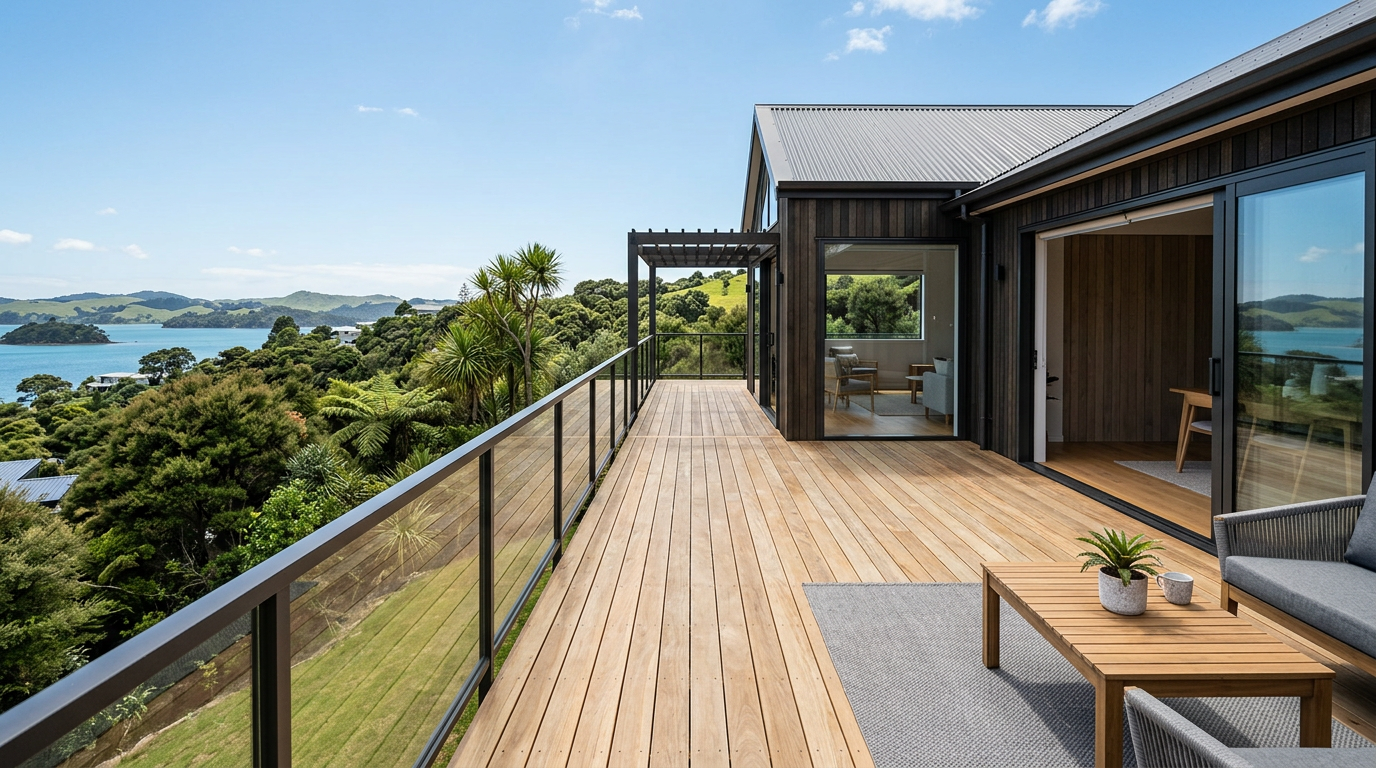
When hiring a deck builder in New Zealand, checking their insurance is just as important as checking their workmanship. A properly insured deck builder protects you from financial loss if something goes wrong during or after construction — whether that's an injury on site, accidental property damage, or a structural defect discovered later.
Why Insurance Matters for Deck Building
Decks are structural building elements and, depending on their size and height, may require a building consent under the New Zealand Building Code. Work done without proper cover — or by an uninsured builder — can leave you personally liable for accidents, damage, or remediation costs. Always ask to see proof of insurance before signing any contract.
For decks over 1.5 metres above ground level, a building consent is almost always required. Even for lower decks, Schedule 1 exemptions under the Building Act have specific conditions — always confirm with your local council before assuming consent is not needed. You can find guidance at MBIE Building Performance.
The Key Types of Insurance a Deck Builder Should Carry
1. Public Liability Insurance
Public liability insurance is the most fundamental cover a deck builder should hold. It covers third-party bodily injury or property damage that occurs as a result of the builder's work or activities. For example, if a subcontractor drops a beam and damages your fence, or a visitor trips over building materials and is injured, public liability insurance responds to those claims.
As a guide, most reputable NZ builders carry a minimum of $1 million in public liability cover, though $2 million or more is increasingly common on residential projects. Always ask what the policy limit is and whether it covers both on-site and off-site incidents.
2. Contract Works Insurance (Construction All-Risk)
Contract works insurance (sometimes called construction all-risk or CAR insurance) covers the physical work itself while it is under construction. If a storm rolls through mid-build and damages the partially completed deck, or materials are stolen from site, this policy covers the cost of reinstating the work.
This cover is particularly important in New Zealand given our variable climate — high winds, heavy rain, and even earthquakes can affect an exposed construction site. Check whether the policy covers your existing property as well as the new works, and confirm who holds the policy — the builder or you as the homeowner.
3. Professional Indemnity Insurance
Professional indemnity (PI) insurance covers claims arising from errors in design, advice, or professional services. If your deck builder is also providing design services — specifying timber grades, joist spans, or connection details — PI insurance protects you if that advice turns out to be incorrect and causes loss.
Not all deck builders carry PI insurance, particularly those who only build from plans prepared by others. However, if your builder is designing the deck as well as building it, PI cover is strongly advisable.
4. Employers' Liability Insurance
If the deck builder employs staff or uses subcontractors, employers' liability insurance covers claims from workers injured on your site that fall outside ACC entitlements. While ACC covers most workplace injuries in New Zealand, there can be gaps — particularly around loss of earnings claims or situations where negligence is alleged.
5. Tools and Equipment Insurance
While this primarily protects the builder rather than you, a builder whose tools are stolen or damaged mid-project may face delays completing your job. Knowing they carry tools and equipment cover gives you confidence the project won't stall unexpectedly.
What About Licensed Building Practitioners?
In New Zealand, certain building work — including structural elements of a deck — must be carried out or supervised by a Licensed Building Practitioner (LBP). LBPs are registered with the Building Practitioners Board (administered by MBIE) and are required to meet competency standards. While LBP registration is not the same as insurance, it is a strong indicator of professionalism.
You can verify a builder's LBP status at Licensed Building Practitioners. Always ask for their LBP number and check it is current.
A Quick Comparison Table
| Insurance Type | What It Covers | Who It Mainly Protects |
|---|---|---|
| Public Liability | Injury or damage to third parties | You and the public |
| Contract Works | Damage to the build in progress | The project |
| Professional Indemnity | Errors in design or advice | You as the client |
| Employers' Liability | Worker injury claims beyond ACC | Workers and builder |
| Tools & Equipment | Builder's tools and plant | The builder |
Questions to Ask Your Deck Builder
- Can you provide a certificate of currency for your public liability insurance?
- Does your contract works policy cover my existing property?
- Are you an LBP, and can I see your licence number?
- Do you carry professional indemnity if you are designing the deck?
- Are your subcontractors covered under your policy, or do they hold their own?
When to Call a Professional
Deck building that involves structural connections, posts set into the ground, or decks above 1.5 metres will almost certainly require a building consent and must involve an LBP. Even for lower, simpler decks, hiring a qualified professional with the right insurance is strongly recommended. An uninsured or unlicensed builder may be cheaper upfront, but the risk to you — financially and physically — is significant.
You can find qualified, insured deck builders in your area through tradedirectory.co.nz.




 Licensed Building Practitioner (LBP)