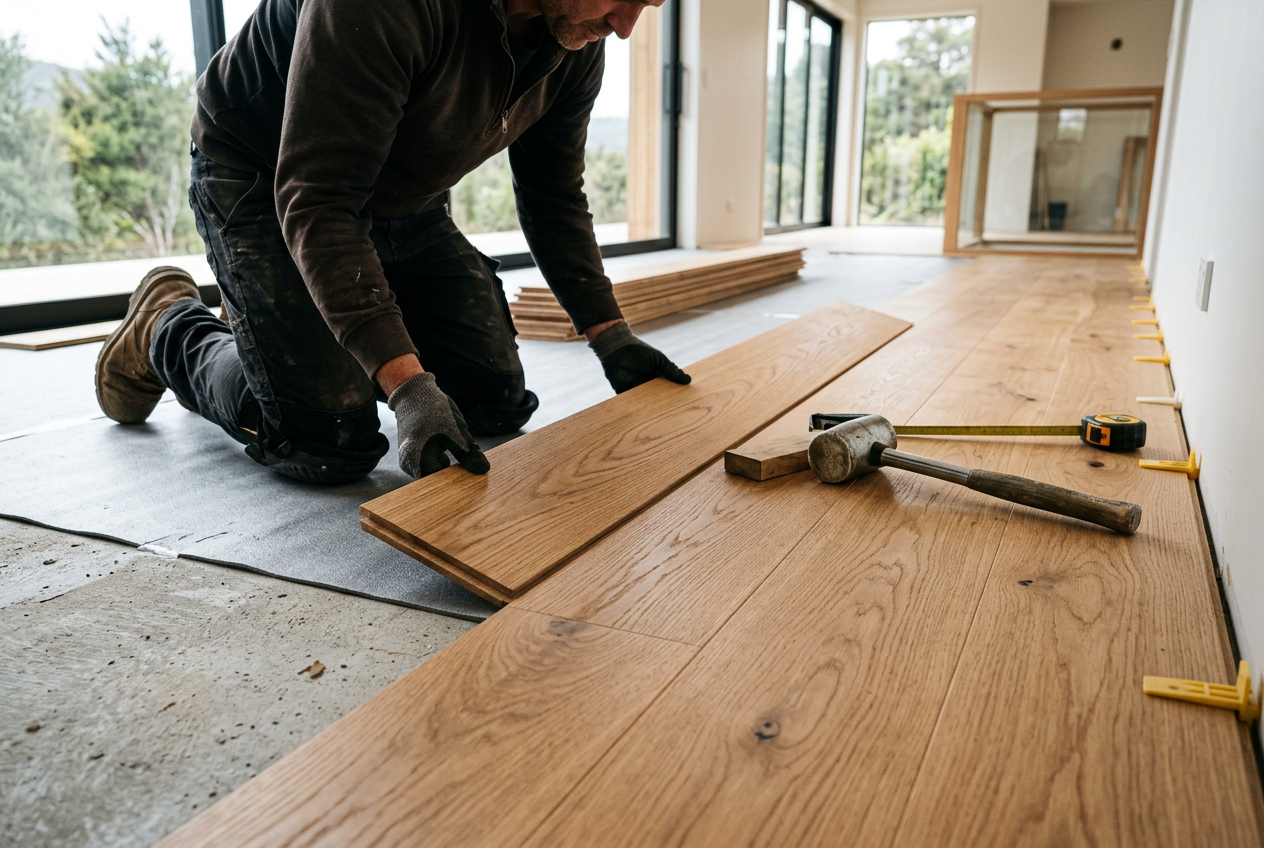
Getting a flooring quote in New Zealand is much smoother — and the price you receive is far more accurate — when you come prepared. Flooring installers need specific details about your space, your existing floor, and your preferences before they can give you a meaningful figure. Here's what to have ready before you pick up the phone or send that email.
Room Measurements
The single most important piece of information is the size of the area to be floored. Measure each room in metres — length and width — and note any alcoves, wardrobes, or bay windows that are part of the space. If you have an irregular-shaped room, sketch a rough floor plan with dimensions.
Installers typically quote in square metres (m²), and they'll add a waste allowance (usually 5–15% depending on the product and pattern direction) on top of your net area. Having accurate measurements means you won't be surprised by the final material quantity. If you're unsure how to measure, many installers will visit and measure for free or for a small fee that's credited against the job.
The Number of Rooms and Their Locations
Let the installer know:
- How many rooms or areas are involved
- Whether they are on a ground floor, upper floor, or below ground (e.g. a basement or concrete slab)
- Whether any areas are wet or high-moisture zones (bathrooms, laundries, kitchens)
Floor level and substrate type affect both product choice and installation method, so this information matters from the start.
Your Existing Floor (Substrate)
Installers need to know what's currently under your feet. Common substrates in NZ homes include:
| Substrate | Common in |
|---|---|
| Timber tongue-and-groove | Older NZ homes, suspended floors |
| Particleboard / plywood | Many post-1970s homes |
| Concrete slab | Modern builds, garages, some extensions |
| Existing tiles or vinyl | Renovations |
Let the installer know:
- What the existing floor covering is (carpet, tiles, vinyl, timber)
- Whether it's being removed or going over the top
- Any known issues — squeaky boards, damp, uneven areas, or previous water damage
Subfloor condition can significantly affect the quote, as levelling, moisture barriers, or repairs may be needed before installation.
The Flooring Product You're Considering
If you already have a product in mind, share the details:
- Product type — solid timber, engineered timber, laminate, luxury vinyl plank (LVP), carpet, tiles
- Brand and product name or code if you've already chosen something
- Colour and finish preferences if you're still deciding
If you haven't chosen yet, that's fine — a good installer can advise on what suits your space, lifestyle, and budget. Mention if you have pets, young children, or high foot traffic, as these affect product recommendations. You can browse options at suppliers like Bunnings or Mitre 10 to get a feel for what's available before your consultation.
Moisture and Heating Considerations
NZ's varied climate means moisture management is important, especially in older homes or wetter regions. Let the installer know:
- Whether the home has underfloor heating (some flooring products aren't compatible)
- If there's a subfloor ventilation issue or known dampness
- Your region — a South Island home may have different requirements to an Auckland property
BRANZ provides good guidance on moisture management in NZ buildings, and your installer should be familiar with the relevant requirements under the NZ Building Code.
Access and Site Conditions
Practical details help the installer plan the job accurately:
- Stairs — are there any, and how many?
- Furniture removal — will you move it yourself, or do you need the installer to?
- Parking and access — is the property easy to get to with a van and materials?
- Timing — do you have a target start date or a fixed deadline (e.g. before tenants move in)?
Your Budget Range
Being upfront about your approximate budget isn't awkward — it's helpful. It allows the installer to recommend products and solutions that are realistic for your situation, rather than quoting for something out of reach. Flooring costs in NZ vary widely depending on product and complexity, so a ballpark figure helps everyone.
Photos
If you can't have the installer visit straight away, send a few photos of:
- The existing floor surface
- Any problem areas (damage, unevenness, moisture staining)
- The overall room layout
This gives the installer a much clearer picture before they arrive or before they prepare a preliminary quote.
When to Call a Professional
Flooring installation is generally not restricted building work under the NZ Building Code, so homeowners can legally install some flooring themselves. However, for best results — particularly with timber, engineered wood, or large tile jobs — hiring a qualified flooring installer is strongly recommended. Poor installation can void product warranties and cause costly problems down the track.
If your flooring project involves underfloor heating, any associated electrical work must be carried out by a registered electrician (see EWRB), and any plumbing connections must be done by a licensed plumber (see PGDB).
For building consent questions — for example, if you're changing floor levels as part of a renovation — check with your local council or visit MBIE Building Performance.
You can find experienced, local flooring installers right here on tradedirectory.co.nz.