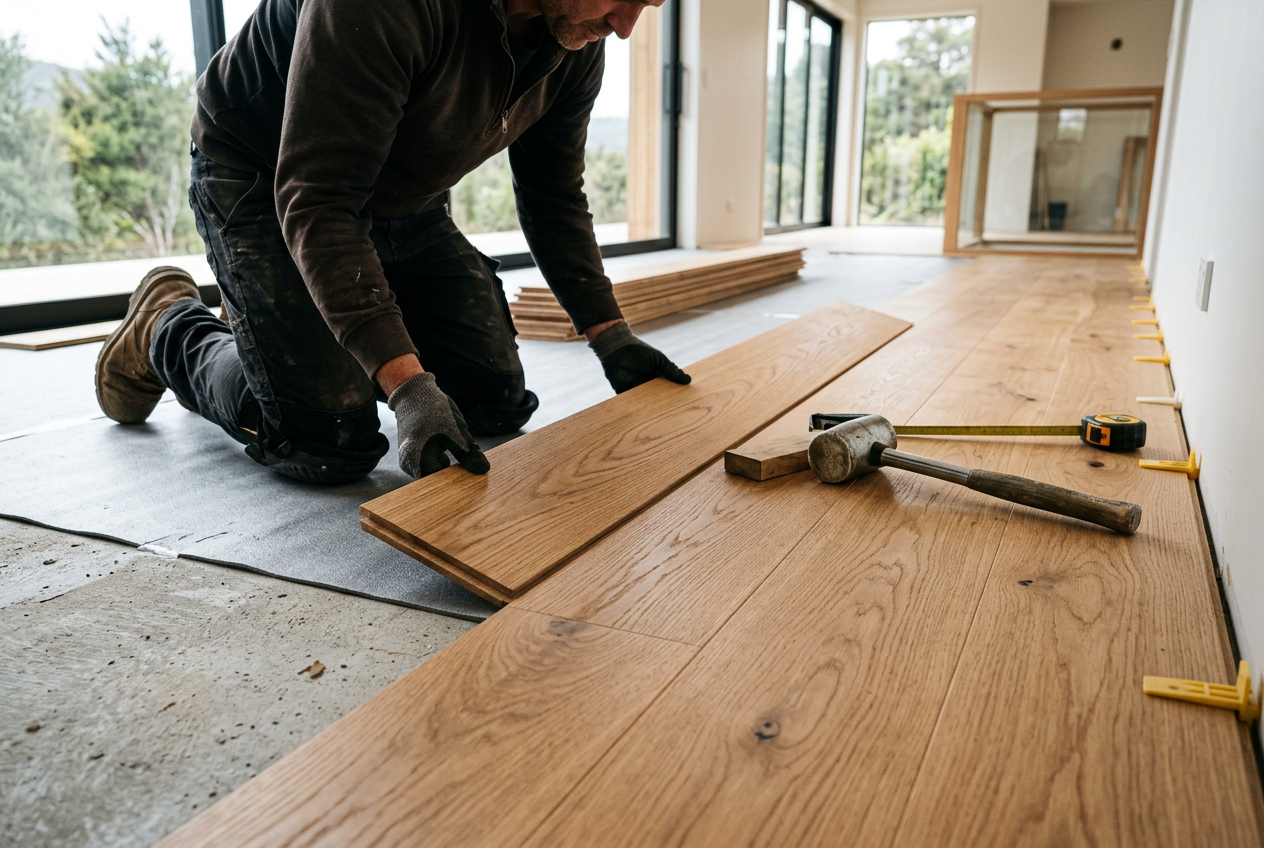
Finding damage on your brand-new flooring is frustrating, but in New Zealand you have solid protections under consumer law and manufacturer warranties. Whether the issue is scratches, lifting edges, buckling, or discolouration, the key is acting quickly, documenting everything, and knowing who is responsible.
Identify the Type of Damage First
Before making any calls, take a close look at what's gone wrong. Flooring damage shortly after installation generally falls into a few categories:
- Installation defects – gaps, uneven joins, lifting edges, poor adhesion, or incorrect subfloor preparation
- Product defects – warping, delamination, surface faults, or colour inconsistencies that are a manufacturing issue
- Accidental damage – scratches, dents, or staining caused by you, your family, or tradespeople working in the space after installation
- Environmental issues – excessive moisture, humidity swings, or subfloor movement causing the floor to buckle or gap
Understanding the cause matters because it determines who is responsible — the installer, the manufacturer, or yourself.
Your Rights Under NZ Consumer Law
In New Zealand, the Consumer Guarantees Act 1993 (CGA) is your strongest protection. When a tradesperson installs flooring, they guarantee the work will be carried out with reasonable care and skill, and that the finished result will be fit for purpose. If the installation is defective, you are entitled to have it remedied — at no cost to you.
Similarly, if the flooring product itself is faulty, the supplier or manufacturer must repair, replace, or refund it. You don't have to accept a repair if the fault is serious or if previous repair attempts have failed.
Consumer NZ has excellent guidance on how to use the CGA and what to do if a trader refuses to help.
Manufacturer Warranties — What to Check
Most flooring products sold in NZ come with a manufacturer's warranty, which may cover anything from 5 years to a lifetime depending on the product and brand. Read the warranty document carefully — it will specify:
- What faults are covered (and what voids the warranty)
- Whether professional installation is required to maintain cover
- Conditions around subfloor preparation, moisture barriers, and acclimatisation
- The claims process and timeframes
Many warranties require the flooring to have been acclimatised to the room's temperature and humidity before installation, and installed over a correctly prepared subfloor. If your installer skipped these steps, the manufacturer may decline a product warranty claim — but you would still have recourse against the installer under the CGA.
Steps to Take Immediately
- Document everything – photograph and video the damage clearly, including close-ups and wider shots showing the room context.
- Don't attempt repairs yourself – DIY fixes can complicate warranty and legal claims.
- Contact the installer in writing – email is best so you have a record. Describe the fault clearly and ask them to inspect and remedy it.
- Contact the supplier or manufacturer – if you believe it's a product fault, notify them at the same time.
- Keep all paperwork – invoices, product specifications, warranty documents, and any written communications.
If the installer is unresponsive or disputes liability, you can escalate to the Disputes Tribunal (for claims up to $30,000) or seek advice from Consumer NZ.
Moisture and Subfloor Issues — A Common NZ Problem
New Zealand's variable climate — particularly in regions like Auckland, Wellington, and the West Coast — means moisture management is critical for flooring longevity. Timber and engineered timber floors are especially sensitive to humidity changes. If your floor is buckling or gapping, a moisture problem in the subfloor may be the cause.
Under the NZ Building Code, subfloors must meet specific moisture requirements (refer to Clause E3 — Internal Moisture). A competent installer should test subfloor moisture levels before laying any floor. If they didn't, and moisture damage results, this is likely an installation defect.
BRANZ publishes research and guidance on moisture management in NZ buildings that can be useful background reading.
What If the Damage Was Accidental?
If you or another tradesperson caused the damage after installation was complete, your options are more limited. Check whether your home and contents insurance covers accidental damage to floor coverings — many policies do. Contact your insurer promptly and ask about making a claim.
Hiring a Qualified Flooring Installer Matters
The best way to avoid post-installation problems is to hire an experienced, reputable flooring installer from the start. A skilled professional will:
- Assess and prepare the subfloor correctly
- Acclimatise the product as required
- Follow manufacturer installation guidelines (which protects your warranty)
- Provide a written quote and warranty on their workmanship
You can find qualified local flooring installers on tradedirectory.co.nz.
When to Call a Professional
If the damage is extensive, if there's an underlying structural or moisture issue, or if your installer is not cooperating, it's worth getting an independent flooring inspector to assess the damage and provide a written report. This report can be invaluable if you need to escalate to the Disputes Tribunal or pursue a legal remedy. Look for inspectors with recognised industry experience or accreditation.
For any concerns about subfloor structural integrity, consult a Licensed Building Practitioner (LBP).







