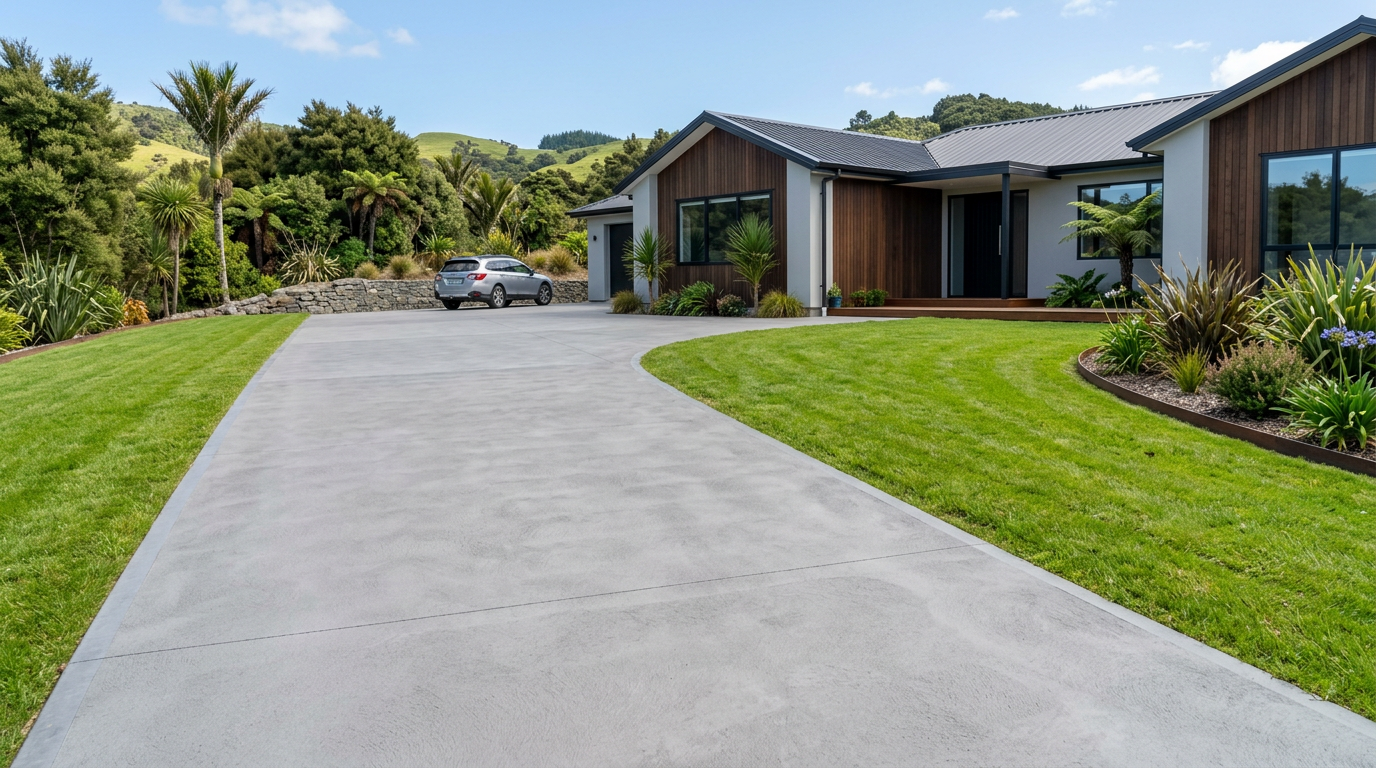
Rain and fresh concrete are a bad combination — but how bad depends on the timing. If rain falls before the concrete has had time to set and cure properly, it can dilute the cement paste, weaken the surface, and cause a range of defects that are difficult and costly to fix. Understanding what's happening chemically, and knowing how to protect your pour, can save you a lot of grief.
Why Timing Is Everything
Fresh concrete goes through several stages after it's poured: initial set, final set, and curing. During the first few hours, the mix is still plastic and highly vulnerable. Rain hitting the surface at this stage adds extra water to the mix, which raises the water-to-cement ratio — the single biggest factor affecting concrete strength and durability.
As a general guide:
| Time After Pour | Risk Level | Likely Effect of Rain |
|---|---|---|
| 0–2 hours | Very High | Surface washout, severe weakening |
| 2–4 hours | High | Surface pitting, dusting, reduced strength |
| 4–8 hours | Moderate | Surface scaling, possible delamination |
| 8–24 hours | Low–Moderate | Minor surface blemishes, monitor closely |
| 24+ hours | Low | Usually minimal impact if curing is maintained |
These are approximate guides only — actual timing varies with mix design, ambient temperature, humidity, and wind. In New Zealand's variable climate, conditions can change rapidly, especially in coastal or alpine regions.
What Damage Can Rain Actually Cause?
- Surface dusting and scaling: Excess water weakens the top layer, leaving a soft, powdery surface that wears away easily.
- Crazing and cracking: Rapid wetting followed by drying can cause a network of fine surface cracks.
- Pitting and blistering: Raindrops impact the plastic surface, leaving small craters or causing air pockets to rise.
- Delamination: The top layer separates from the body of the slab, especially if finishing was done too early or rain interrupted the bleed water process.
- Reduced compressive strength: A higher water-to-cement ratio means the concrete simply won't reach its design strength — often specified as 17.5 MPa or 25 MPa for residential slabs under NZS 3109 and NZS 3604.
How to Protect Fresh Concrete from Rain
Before the Pour
Check the forecast carefully. In New Zealand, MetService provides hourly forecasts — use them. If significant rain is likely within 24 hours, consider rescheduling. Your concreter should be doing this as standard practice.
During and After the Pour
- Have polythene sheeting on hand — heavy-duty 0.2 mm (200 µm) black or clear polythene is widely available at Bunnings or Mitre 10. It can be laid over the surface quickly if a shower rolls in.
- Use temporary shelters or gazebos for smaller pours.
- Avoid working rain water into the surface — never spread or trowel rainwater back into the concrete, as this dramatically weakens the paste.
- Wait for bleed water to evaporate before finishing — if rain interrupts this process, the results can be unpredictable.
Curing After Rain
Once the concrete has reached final set (typically 6–8 hours in normal NZ conditions, longer in cold weather), proper curing is still essential. Curing keeps moisture in the slab so the cement continues to hydrate and gain strength. Options include:
- Polythene sheeting weighted at the edges
- Curing compounds (spray-applied membrane)
- Wet hessian covered with polythene
Curing should continue for a minimum of 3 days for standard mixes, and ideally 7 days — longer in cold or windy conditions. BRANZ provides good guidance on curing best practice for NZ conditions.
How to Assess Rain Damage
Once the concrete has hardened, inspect the surface carefully:
- Scratch test: Drag a nail or screwdriver across the surface. If it scratches easily and produces powder, the surface layer is weak.
- Visual check: Look for pitting, crazing, delamination (hollow sound when tapped), or uneven colour.
- Strength concerns: If you suspect the structural integrity of a slab is compromised (e.g., a house foundation or garage floor), a professional assessment — including core testing — may be warranted.
Minor surface blemishes on a decorative slab may be repairable with a surface grinder or overlay product. Structural damage is a different matter and should be assessed by a qualified professional.
Cold and Wet Weather Concreting in New Zealand
New Zealand's South Island and central North Island can experience near-freezing temperatures, which slow the set dramatically and extend the vulnerable window. MBIE Building Performance and BRANZ both provide guidance on cold-weather concreting. In cold conditions, concrete should be protected from both rain and frost — frost on fresh concrete is just as damaging as heavy rain.
When to Call a Professional
If your concrete was rained on heavily during the first few hours, or if you notice significant surface defects after hardening, it's worth getting a qualified concreter to assess the damage before you invest in flooring, tiling, or other finishes on top. Structural slabs — including house foundations — should always be assessed by a licensed professional if you have any doubts about strength or integrity. You can find experienced local concreters on tradedirectory.co.nz.
Note: Concrete work associated with building consents must comply with the NZ Building Code and relevant standards. Always confirm consent requirements with your local council before starting significant concrete work.



 Site Safe





