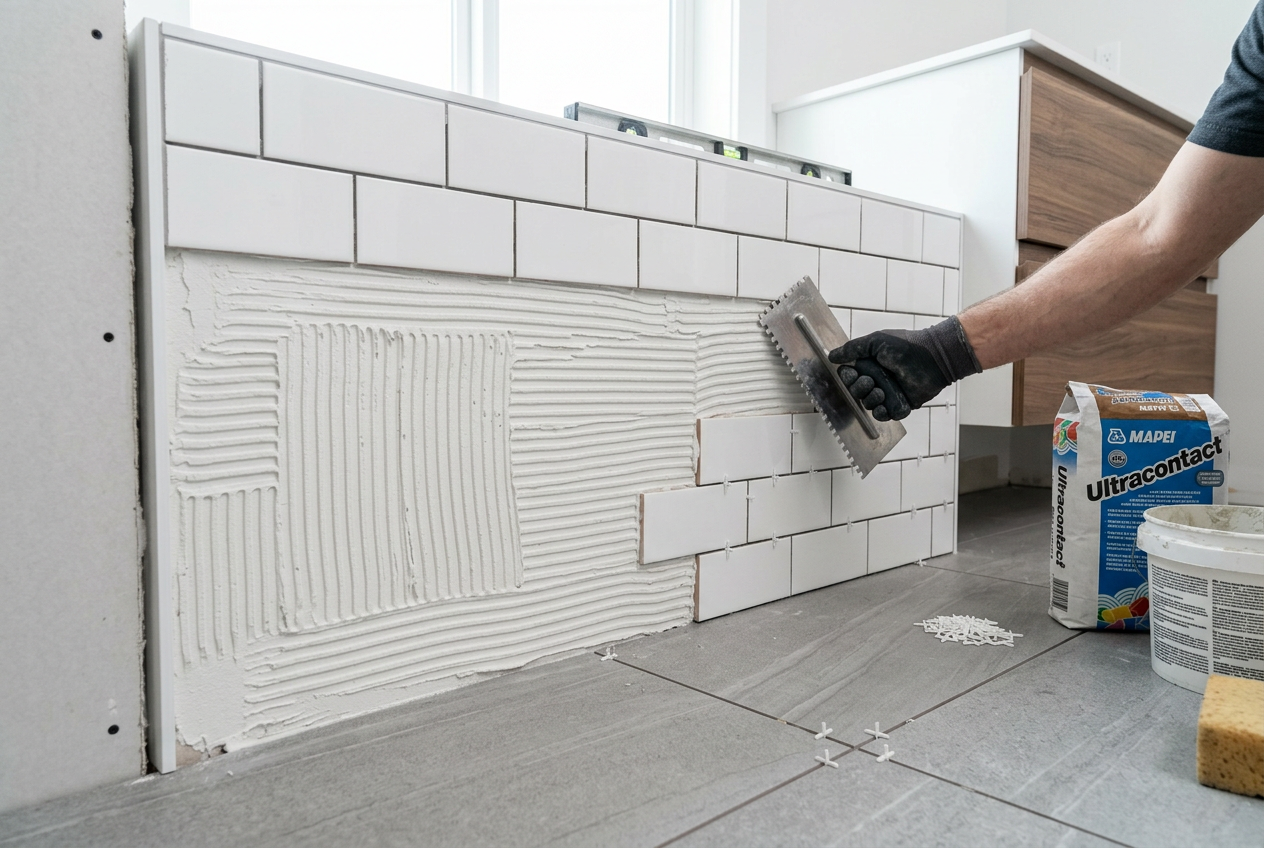
Using wall tile adhesive on a floor is a mistake that can seem harmless at first — but it almost always leads to problems down the track. Wall and floor adhesives are engineered for very different conditions, and using the wrong one can result in loose tiles, cracked grout, and an expensive re-tile job.
Why Wall and Floor Adhesives Are Different
Tile adhesives aren't one-size-fits-all. Wall tile adhesives are typically lighter, faster-setting, and formulated to hold tiles vertically without slumping. They're designed for low-stress environments where tiles aren't being walked on.
Floor tile adhesives, on the other hand, are engineered to handle:
- Compressive loads — the weight of people, furniture, and appliances pressing down constantly
- Shear stress — the sideways forces created when people walk across the surface
- Thermal and moisture movement — especially in wet areas like bathrooms and laundries
- Larger, heavier tiles — floor tiles are often thicker and heavier than wall tiles
Wall adhesives simply don't have the structural strength or flexibility to cope with these demands.
What Actually Goes Wrong
If you lay floor tiles using wall adhesive, here's what you're likely to experience:
- Tiles crack or pop off — the adhesive bond fails under foot traffic, often within months
- Grout cracks — as tiles flex slightly under load, the grout joints break down
- Hollow spots — the adhesive may not compress and spread properly under the tile, leaving voids that cause tiles to rock and eventually break
- Moisture ingress — in wet areas, a failed bond lets water get underneath tiles, leading to mould and substrate damage
- Substrate damage — water sitting under loose tiles can damage your floor structure, including timber framing or sheet flooring
In wet areas like bathrooms, this can become a serious issue under the NZ Building Code, particularly around Clause E3 (Internal Moisture), which requires wet area linings and finishes to prevent moisture penetrating to the building structure.
How to Choose the Right Floor Tile Adhesive
For floor tiling, always look for a product specifically rated for floor use. Key things to check:
| Feature | Wall Adhesive | Floor Adhesive |
|---|---|---|
| Compressive strength | Low | High |
| Flexibility | Minimal | Moderate to high |
| Suitable for foot traffic | No | Yes |
| Suitable for wet areas | Sometimes | Yes (check label) |
| Large format tile support | No | Yes (with correct product) |
For most residential floor tiling, a polymer-modified cement-based adhesive (often called a grey or white powder mixed with water) is the standard choice. Brands like Ardex and Mapei offer a wide range of floor-rated adhesives suitable for different substrates and tile types.
Sika also produces tile adhesives and grouts suited to NZ conditions — always read the product data sheet to confirm floor suitability.
Large Format Tiles
If you're using tiles larger than 600×600mm (increasingly popular in NZ homes), you'll need an adhesive specifically rated for large format tiles. These products have higher non-slip and coverage properties to prevent lippage and hollow spots.
Heated Floors (In-Slab Heating)
If you're tiling over underfloor heating, you'll need a flexible, heat-resistant adhesive rated for that application. Standard adhesives — wall or floor — may not cope with the thermal cycling. Check with your adhesive manufacturer.
Wet Areas and NZ Building Code Compliance
Bathrooms, laundries, and kitchen splash zones are classified as wet areas under the NZ Building Code. Using the wrong adhesive in these spaces can compromise waterproofing systems and breach compliance requirements. If your tiling is part of a renovation involving waterproofing membranes, make sure your adhesive is compatible with the membrane product — some membranes require specific adhesives to maintain their warranty.
You can find guidance on wet area requirements through BRANZ and MBIE Building Performance.
What If You've Already Used Wall Adhesive on a Floor?
If tiles have already been laid with wall adhesive, monitor them closely. Tap each tile with a coin or knuckle — a hollow sound indicates a poor bond. If tiles are hollow, loose, or cracked, the safest option is to lift and re-lay them with the correct adhesive. The longer you leave it, the more likely you are to cause damage to the substrate underneath.
When to Call a Professional
While tiling is a popular DIY project, floor tiling — especially in wet areas — requires careful product selection, correct substrate preparation, and proper waterproofing. If you're unsure about:
- Which adhesive suits your specific substrate (concrete slab, plywood, fibre cement sheet)
- Waterproofing requirements in bathrooms or laundries
- Large format tiles or heated floors
- Whether your project needs a building consent (check with your local council — most like-for-like tile replacements are exempt under Schedule 1, but always confirm)
…it's well worth getting a qualified tiler involved. A professional will know the right products for your specific situation and ensure the job is done to code. You can find experienced local tilers on tradedirectory.co.nz.

 Site Safe
 SiteWise


 BCITO Qualified