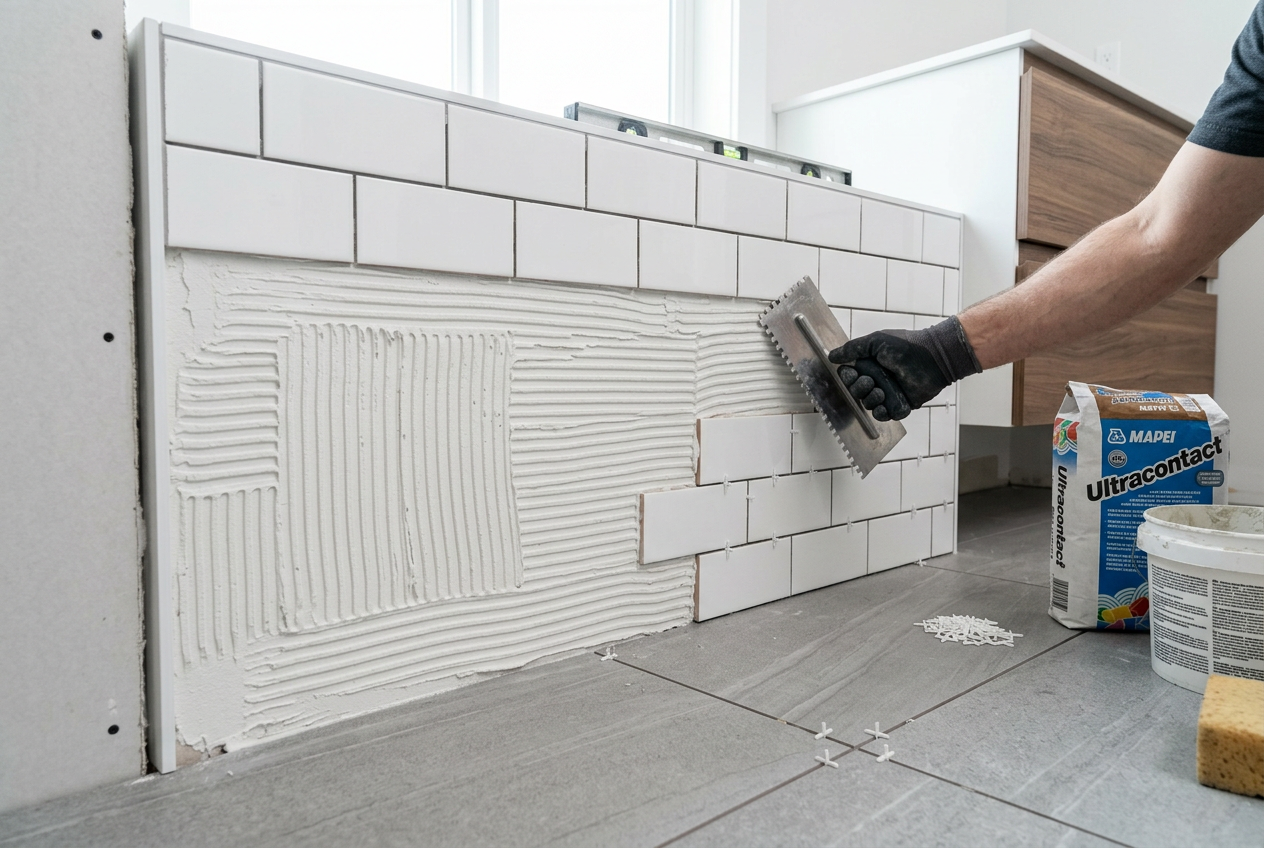
Mixing two different batches of tile adhesive together is generally a bad idea and something professional tilers strongly advise against. Even when the products look identical, differences in formulation, age, or batch chemistry can lead to unpredictable bonding, inconsistent set times, and — in the worst cases — failed tiles that need to be pulled up and relaid.
Why Batches Can Differ Even Within the Same Product
Tile adhesives are manufactured in batches, and while reputable manufacturers work hard to maintain consistency, small variations can occur between production runs. These differences might include:
- Polymer content — the bonding agents that give adhesive its flexibility and grip
- Powder particle size — affecting how the adhesive mixes and spreads
- Moisture content — particularly relevant in bags that have been stored differently
- Additive ratios — accelerators, retarders, and anti-slump agents can vary slightly
When you combine two bags from different batches, you're essentially creating a hybrid product that hasn't been tested or certified. The resulting mix may behave unpredictably.
What Can Actually Go Wrong
Inconsistent Set Times
Different batches may have slightly different open times (the window during which you can adjust tiles before the adhesive skins over). Mixing them can shorten or extend this window unpredictably, making it difficult to work at a consistent pace — especially on larger floor or wall areas.
Reduced Bond Strength
The primary job of tile adhesive is to bond your tiles firmly to the substrate. If the chemical balance is disrupted by mixing batches, the adhesive may not achieve its rated bond strength. This is a particular concern in wet areas like bathrooms and kitchens, where tiles are subject to thermal movement and moisture. BRANZ research highlights that adhesive failure in wet areas is one of the leading causes of water ingress and subsequent building damage.
Colour and Texture Variation
If you're using a coloured or grey adhesive that's visible at grout joints, mixing batches can result in subtle colour differences that show through — especially with light-coloured or translucent tiles like marble or large-format porcelain.
Voided Product Warranty
Most adhesive manufacturers — including well-known NZ-available brands like Ardex and Mapei — specify that their products must be used as directed. Mixing batches, or mixing different products together, typically voids any product warranty. If tiles fail and you need to make a claim, you may find yourself without recourse.
Compliance Issues in Wet Areas
Under the NZ Building Code, wet areas (bathrooms, laundries, and kitchens) must meet specific waterproofing and durability requirements — particularly Clause E3 (Internal Moisture). Using adhesive in a way that deviates from the manufacturer's instructions could mean your installation doesn't meet these requirements, which matters if you're selling your home or making an insurance claim.
What About Mixing Two Different Products Entirely?
Mixing two completely different adhesive products — say, a standard wall adhesive with a flexible floor adhesive — is even riskier. These products are formulated with different polymer systems and performance characteristics. The resulting mix is an unknown quantity with no tested data behind it. Never mix different adhesive products together.
The same caution applies to adding extra water to stretch a batch that's starting to stiffen. Once an adhesive has begun to go off, re-tempering it with water weakens the final bond significantly.
How to Avoid Batch-Mixing Problems
- Buy all your adhesive at once — estimate your coverage carefully before starting and purchase enough from the same production batch where possible. Batch numbers are usually printed on the bag.
- Check batch numbers — when buying multiple bags, compare the batch codes on the packaging. Many suppliers at Bunnings, Mitre 10, or PlaceMakers can help you select bags from the same batch.
- Mix one bag at a time — never combine the tail end of one bag with the start of another in the same bucket.
- Store adhesive correctly — keep bags dry, off the ground, and away from direct sunlight. Moisture ingress can alter the chemistry of a bag even before it's opened.
- Use within the shelf life — check the use-by date on every bag. Expired adhesive should not be used, regardless of how it looks.
A Note on Tile Coverage and Waste
Underestimating how much adhesive you need is one of the main reasons homeowners end up mixing batches mid-job. As a general guide, allow for at least 10–15% extra adhesive (and tiles) to account for cuts, waste, and any areas that need to be redone. Your tiler or supplier can help you calculate coverage based on tile size and the notch trowel size required.
When to Call a Professional
If you're tiling a wet area such as a bathroom, shower, or laundry, or laying large-format tiles on a floor, it's well worth engaging a qualified tiler. Wet area tiling in particular involves waterproofing membranes and substrate preparation that, if done incorrectly, can lead to serious moisture damage and potential Building Code non-compliance. A skilled tiler will also know exactly how to manage adhesive quantities to avoid batch issues altogether. You can find experienced local tilers on tradedirectory.co.nz.

 Site Safe
 SiteWise


 BCITO Qualified





