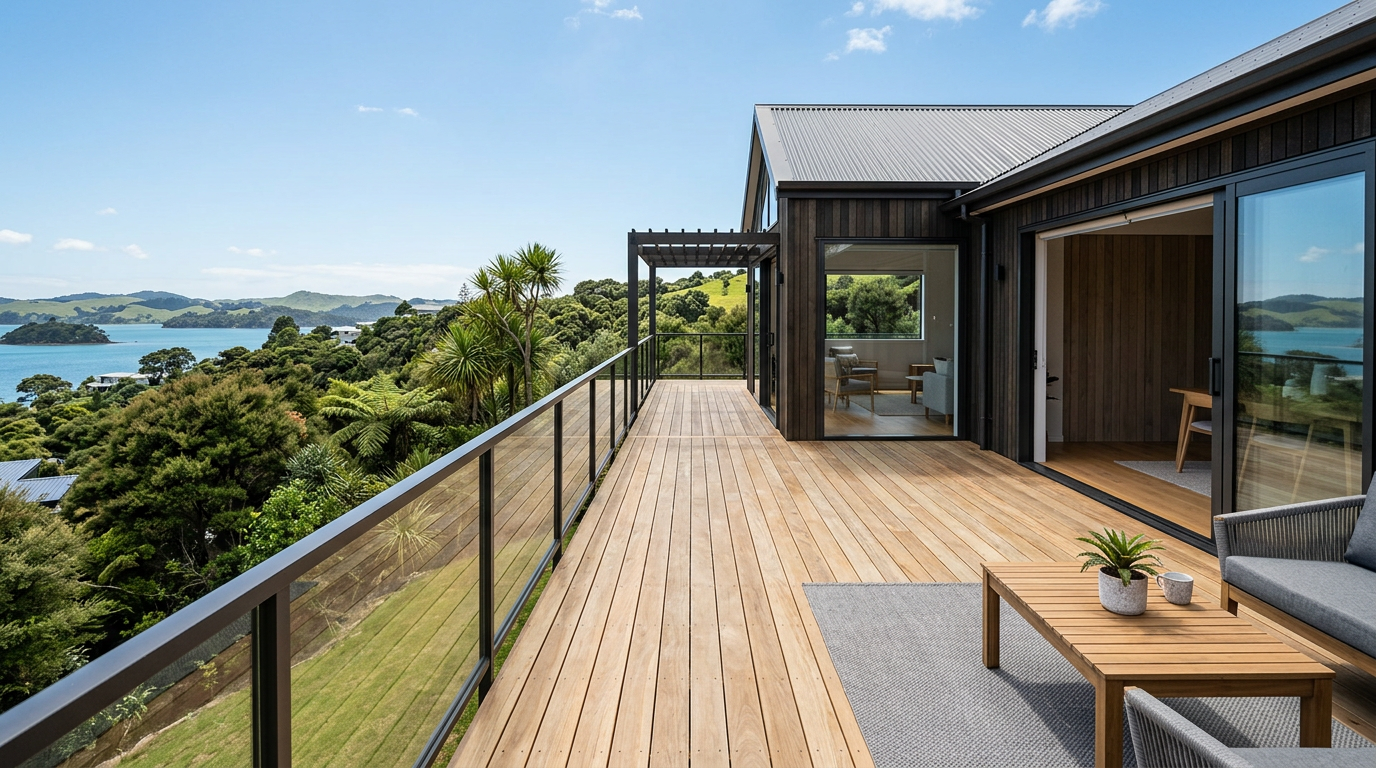
If your new deck requires a building consent, a council building inspector will visit your site at key stages of construction to make sure the work matches your approved plans and complies with the NZ Building Code. Inspections are not something to dread — they are a straightforward quality check that protects you, your family, and the long-term value of your home.
Does Your Deck Need a Building Consent?
Not every deck triggers a consent requirement. Under Schedule 1 of the Building Act 2004, some low-level decks may be exempt — generally those no more than 1.5 metres above ground level and meeting other specific criteria. However, the rules depend on your local council, your site conditions, and how the deck connects to your house. Always confirm with your local council before starting work, as getting this wrong can be costly. You can find general guidance at MBIE Building Performance.
What Inspections Are Typically Required?
When a consent is required, your council will specify which inspection stages apply. These are listed on your consent documentation. Common inspection stages for a new deck include:
- Footing/foundation inspection — before concrete is poured, the inspector checks that holes are the correct depth, diameter, and location as per the approved plans
- Framing/pre-wrap inspection — the structural framing (bearers, joists, posts) is checked before decking boards are fixed, so the inspector can see all the connections and fixings
- Final inspection — once the deck is complete, including handrails, balustrades, steps, and any weatherproofing details
Some councils may combine stages or require additional inspections depending on the complexity of the build. Check your consent paperwork carefully.
What Does the Inspector Actually Look At?
Footings and Foundations
The inspector will confirm that concrete footings or piles are positioned correctly, are the right size, and are deep enough to reach stable ground. In areas with expansive soils or high wind zones, requirements can be more stringent. New Zealand's timber framing standard NZS 3604 is commonly referenced for residential deck structures.
Structural Framing
This is often the most critical inspection. The inspector checks:
- Post sizes, spacing, and connections to footings
- Bearer and joist sizing and spans
- Joist hangers, bolts, and hurricane ties (all fixings must be the correct type and grade — stainless steel or hot-dipped galvanised in exposed or coastal locations)
- How the deck ledger (if used) is attached to the house structure
Decking Boards and Weatherproofing
The inspector will check that decking boards are fixed correctly and that any junction with the house wall complies with NZ Building Code Clause E2 (External Moisture). Poor flashing at the ledger connection is one of the most common causes of moisture damage in NZ homes, so this detail gets close attention.
Handrails and Balustrades
For decks more than 1 metre above the ground (or the threshold specified in your consent), balustrades are mandatory under Building Code Clause F4 (Safety from Falling). The inspector will check:
- Balustrade height (typically a minimum of 1 metre)
- That gaps between balusters are less than 100 mm (to prevent a 100 mm sphere — approximating a child's head — from passing through)
- That handrails are secure and can withstand the required load
Steps and Access
Steps must have consistent riser heights and tread depths, and handrails must be provided where required. The inspector will check these meet the approved plans and Building Code requirements.
How to Book an Inspection
You (or your builder) are responsible for booking inspections with your council at the right time — before work is covered up. Most councils offer online booking. Give enough notice (typically 48–72 hours, but check with your council). Make sure your approved consent plans are on site for the inspector to reference.
What Happens If the Work Fails an Inspection?
If the inspector identifies issues, they will issue a notice to fix or note the deficiencies on their report. You'll need to correct the work and rebook the inspection before proceeding. This is why it pays to use an experienced deck builder who knows what inspectors look for. Failing an inspection is not the end of the world, but it does add time and cost.
Getting Your Code Compliance Certificate
Once all inspections are passed, you can apply for a Code Compliance Certificate (CCC). This is an important document — it confirms the work was done to the Building Code and should be kept with your property records. Without a CCC, you may face difficulties when selling your home or making an insurance claim.
For more on the consent and CCC process, visit MBIE Building Performance or BRANZ for technical guidance.
When to Call a Professional
Deck building that requires a consent is Licensed Building Practitioner (LBP) restricted work when it involves the primary structure. This means the structural elements must be carried out or supervised by an LBP-licensed tradesperson, who must also provide a Record of Work at the end of the project. Hiring a qualified deck builder not only ensures the work is done right — it protects you legally. You can find experienced local deck builders on tradedirectory.co.nz.
If your deck involves any electrical work (outdoor lighting, power points) or plumbing, those elements must be completed by licensed tradespeople registered with the EWRB or PGDB respectively.




 Licensed Building Practitioner (LBP)