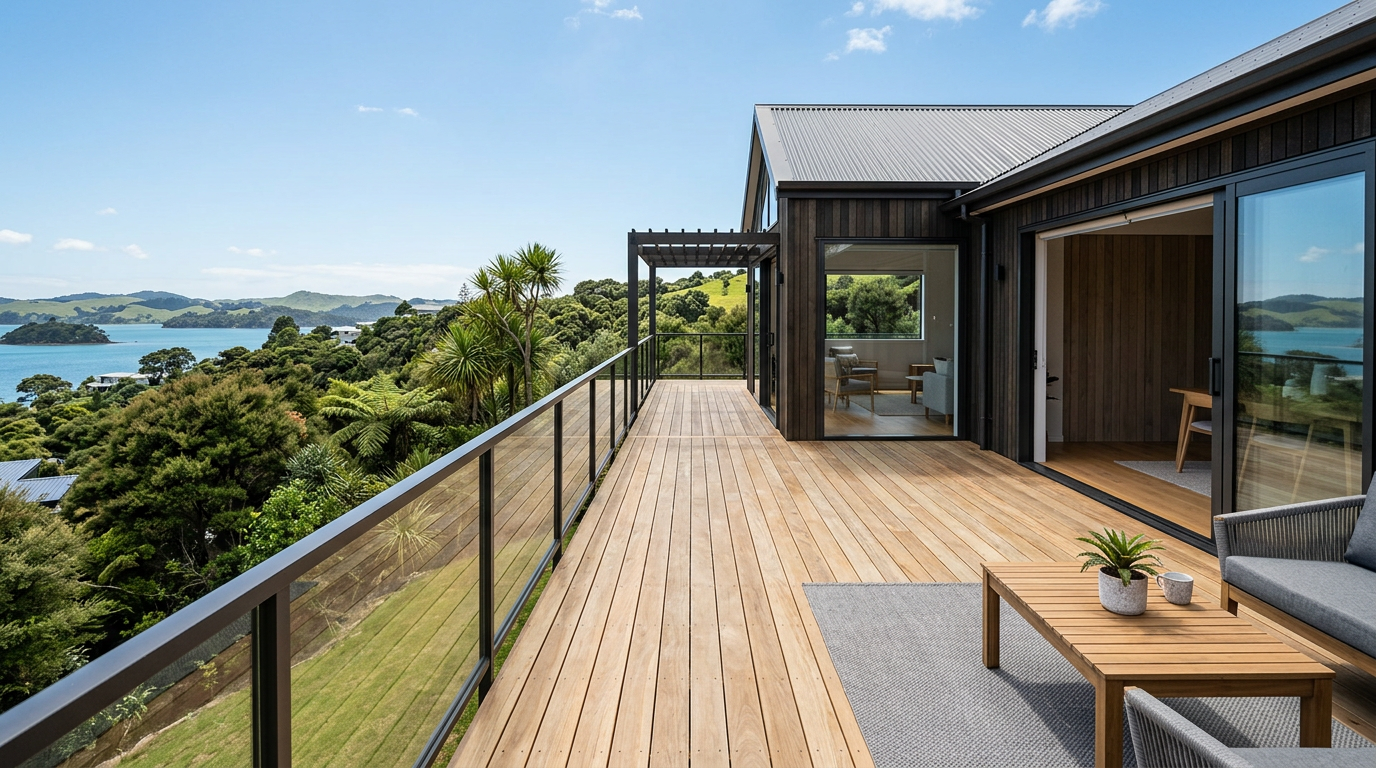
For in-ground deck posts in New Zealand, you need H5 treated timber — full stop. This is the minimum hazard level required by the NZ Building Code for timber that is in direct contact with the ground, where the risk of decay and insect attack is highest. Using a lower treatment level risks premature rot, structural failure, and potential liability issues if your deck ever needs a building consent sign-off.
Understanding Timber Hazard (H) Treatment Levels
New Zealand uses a Hazard Level (H) classification system to indicate how much preservative treatment timber has received and what conditions it can withstand. The higher the H number, the more protection the timber has against moisture, fungi, and insects.
Here's a quick overview of the levels most relevant to deck construction:
| Hazard Level | Typical Use | In-Ground? |
|---|---|---|
| H3.1 | Above-ground, exposed to weather | No |
| H3.2 | Above-ground, exposed to weather (higher risk) | No |
| H4 | Ground contact, fresh water contact | Marginal — check with your council |
| H5 | In-ground, high decay/insect risk | Yes — required |
| H6 | Marine/saltwater environments | Yes (coastal) |
For posts set directly into the ground — whether concreted in or not — H5 is the correct and required treatment level under New Zealand conditions.
Why H5 Is Required for In-Ground Posts
Timber in contact with soil is exposed to constant moisture, soil fungi, and in many parts of New Zealand, subterranean termites and wood-boring insects. The NZ Building Code requires that structural timber used in ground contact situations is durable enough to last the intended life of the structure — typically 50 years for a house.
H4 timber is sometimes used for ground contact in lower-risk situations (such as sleepers in well-drained, dry conditions), but for structural posts that carry load — like deck posts — H5 is the standard required by NZS 3604, the timber-framed buildings standard that most residential decks are designed to.
Always confirm the specific requirements with your local council, as conditions vary across NZ regions.
What to Look for When Buying H5 Posts
When you head to your timber merchant or hardware store, look for:
- The H5 stamp or brand mark on the timber itself — this is your assurance it meets the standard.
- Species: Radiata pine is the most common H5 treated timber in NZ. Some suppliers also stock treated hardwoods.
- Size: Common deck post sizes are 100×100 mm or 150×150 mm, depending on your deck's span and height. Your structural design or building consent documents will specify the required size.
- End-grain sealer: Always apply a cut-end preservative (available at Bunnings or Mitre 10) to any cut ends before installation. The treatment doesn't penetrate deeply into end grain, so cutting exposes untreated timber.
You can source H5 posts from PlaceMakers, Mitre 10, or Bunnings.
Does Your Deck Need a Building Consent?
This is an important question. In New Zealand, many decks are exempt from building consent under Schedule 1 of the Building Act — but only if they meet specific criteria (such as being no more than 1.5 m above ground level and not attached to the primary structure in certain ways).
However, even exempt work must still comply with the NZ Building Code, including using the correct H5 treatment for in-ground posts. Always check with your local council before starting work to confirm whether your deck requires consent and what documentation you'll need. You can find general guidance at MBIE Building Performance.
Handling H5 Timber Safely
H5 treated timber contains copper-based preservatives (and historically some products contained other chemicals). When working with it:
- Wear gloves, safety glasses, and a dust mask when cutting or sanding.
- Never burn treated timber offcuts — the smoke is toxic.
- Wash hands thoroughly before eating or drinking.
- Dispose of offcuts through your local council's waste facilities, not in your home compost or green waste.
Refer to WorkSafe NZ for further guidance on safe handling of treated timber.
Alternatives to Timber In-Ground Posts
If you'd prefer to avoid treated timber altogether, there are alternatives:
- Galvanised steel post stirrups or brackets set into a concrete footing — this keeps the timber post above ground, meaning you may only need H3.2 or H4 timber for the post itself. This is a popular and practical option.
- Concrete piles — poured in situ or precast.
- Powder-coated or hot-dip galvanised steel posts — used in some contemporary deck designs.
Discuss the best option for your site conditions with a qualified deck builder.
When to Call a Professional
While a competent DIYer can build a simple deck, there are good reasons to engage a qualified tradesperson:
- Structural sizing of posts, beams, and joists must comply with NZS 3604 or be designed by a structural engineer — getting this wrong is a safety risk.
- If your deck requires a building consent, the work may need to be carried out or supervised by a Licensed Building Practitioner (LBP).
- Decks attached to the house involve weathertightness considerations under NZ Building Code clause E2 — poor detailing here can cause serious water damage.
- Elevated decks (over 1.5 m) have additional structural and safety requirements.
You can find experienced, local deck builders on tradedirectory.co.nz who understand NZ Building Code requirements and can ensure your deck is built safely and to standard.




 Licensed Building Practitioner (LBP)





