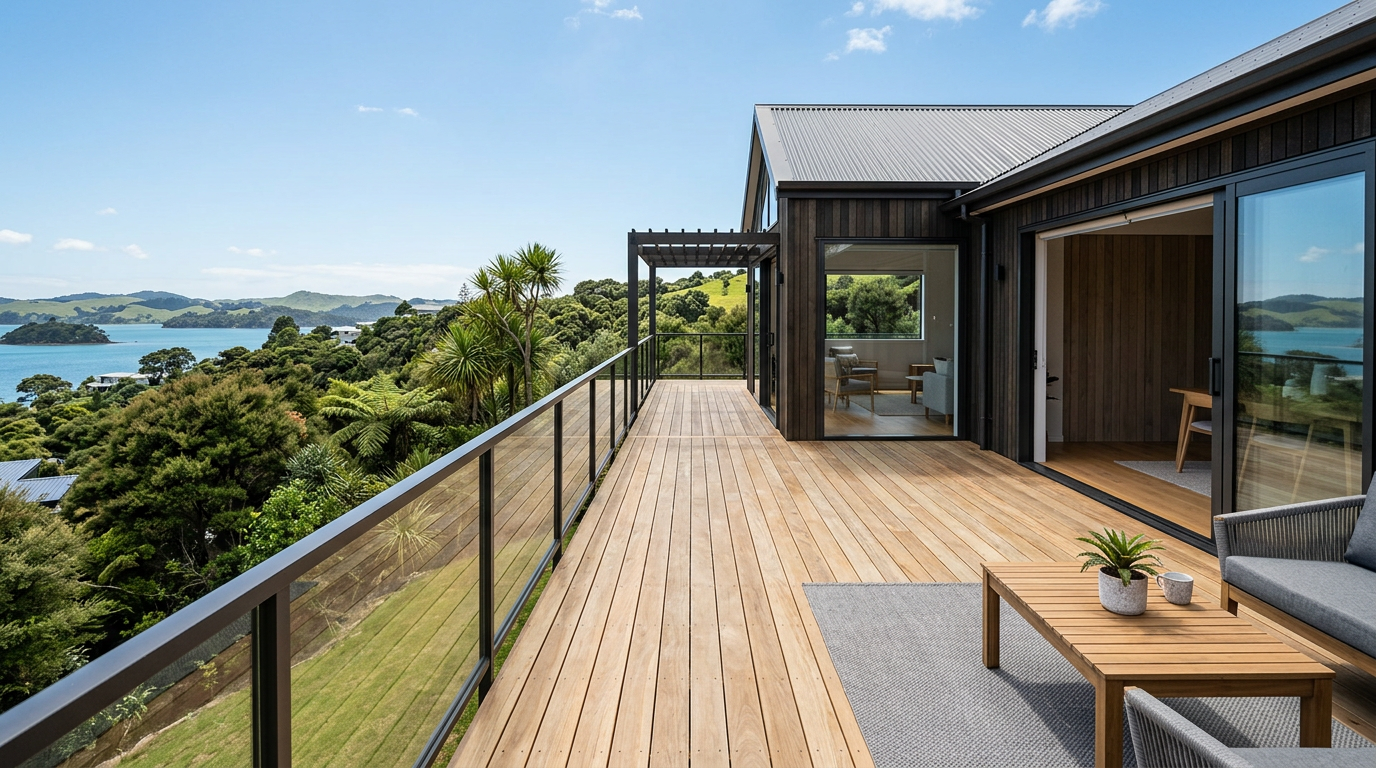
Choosing the right fixings for hardwood decking is one of the most important decisions you'll make — get it wrong and you'll face corrosion, staining, board movement, or even structural failure within a few years. In New Zealand, hardwoods like kwila (merbau), vitex, and spotted gum are popular decking timbers, and each has properties that demand specific fixing solutions. Here's a practical guide to help you choose wisely.
Why Fixings Matter More with Hardwood
Hardwood decking is denser and more durable than treated pine, but it also contains natural oils and tannins that react aggressively with certain metals. Kwila (merbau), one of the most common imported hardwoods in NZ, is notorious for leaching reddish-brown tannins when wet. If you use standard zinc-plated or galvanised fixings, you'll get unsightly rust staining on your deck surface and accelerated corrosion of the fixing itself — sometimes within a single season.
Hardwoods also require pre-drilling before fixing, as their density makes them prone to splitting if you drive screws or nails without a pilot hole.
Corrosion Resistance: The Non-Negotiable Starting Point
New Zealand's coastal climate, UV exposure, and frequent rain mean corrosion resistance isn't optional — it's a code requirement. Under the NZ Building Code (specifically Clause B2 – Durability), fixings must be fit for purpose for the expected life of the structure. For decks, that generally means a minimum 15-year durability requirement.
BRANZ research confirms that in NZ conditions — especially within 500 metres of the coast — you need fixings rated for the environment. As a general guide:
- Inland/sheltered locations: Type 316 stainless steel or hot-dip galvanised (HDG) fixings
- Coastal or marine environments (within ~500 m of the sea): Type 316 stainless steel is strongly preferred
- Severe marine environments: Consult a specialist — standard stainless may still be insufficient
Avoid electroplated zinc, bright steel, or standard galvanised fixings with hardwood decking. These will corrode and stain, often voiding any timber warranty.
Types of Fixings for Hardwood Decking
1. Stainless Steel Screws (Face Fixing)
The most common method. Use Type 316 stainless steel decking screws with a countersunk head. Key points:
- Always pre-drill hardwood with a pilot hole slightly smaller than the screw shank
- Countersink the head so it sits just below the surface — this prevents water pooling around the head
- Use screws long enough to penetrate the joist by at least 40–50 mm
- Square-drive or Torx (star) heads give better torque and reduce cam-out compared to Phillips heads
Face-fixed screws are visible on the deck surface. Some homeowners dislike the look, but they're reliable, easy to inspect, and straightforward to replace individual boards if needed.
2. Hidden / Concealed Fixing Clips
For a cleaner finish, hidden fixing systems grip the edge of each board and fix to the joist below, leaving no visible fasteners on the deck surface. Popular systems include clip-based products available at Bunnings and Mitre 10, as well as specialist decking suppliers.
- Ensure any clips are stainless steel or marine-grade polymer — avoid zinc-plated clips with hardwood
- Hidden fixings also help maintain consistent board spacing (typically 5–8 mm gaps for drainage and expansion)
- Check the clip system is compatible with your specific board profile and thickness
3. Structural Joist and Bearer Fixings
The fixings connecting your deck frame to the house and holding joists to bearers are just as critical:
- Use hot-dip galvanised (HDG) or stainless steel joist hangers and framing anchors — products from brands like Simpson Strong-Tie (available at PlaceMakers) are widely used in NZ
- Bolts, coach screws, and joist hanger nails should all meet the same corrosion-resistance standard as your decking screws
- Where the deck ledger attaches to the house, use stainless or HDG coach screws and ensure the connection is properly flashed to prevent water ingress — this is a common source of rot and structural issues
Spacing and Layout Tips
| Factor | Recommendation |
|---|---|
| Board gap (drainage/expansion) | 5–8 mm |
| Pilot hole diameter | Slightly less than screw shank |
| Screw penetration into joist | Minimum 40–50 mm |
| Fixings per board per joist | 2 (one each side for wider boards) |
| End distance from board end | At least 25 mm to avoid splitting |
Hardwoods expand and contract less than softwoods, but spacing is still important for drainage and to prevent cupping.
Building Consent Considerations
Many decks in NZ require a building consent, particularly if they are more than 1.5 metres above ground level or attached to the house. Some lower decks may qualify as Schedule 1 exempt work under the Building Act — but always confirm with your local council before starting, as exemptions have specific conditions. The MBIE Building Performance website has detailed guidance on when consent is required.
If your deck is consented, the inspector will check that fixings meet the durability requirements of the NZ Building Code.
When to Call a Professional
If your deck is elevated, attaches to the house structure, or requires any electrical work (outdoor lighting, power points), you should involve qualified tradespeople. Electrical work must be carried out by a registered electrician — this is restricted work under the Electrical Workers Registration Board (EWRB) rules.
For the structural build itself, a Licensed Building Practitioner (LBP) is required to carry out or supervise restricted building work on consented projects. You can find qualified local deck builders on tradedirectory.co.nz — using a professional ensures your fixings, framing, and overall build meet NZ code requirements and won't let you down.




 Licensed Building Practitioner (LBP)





