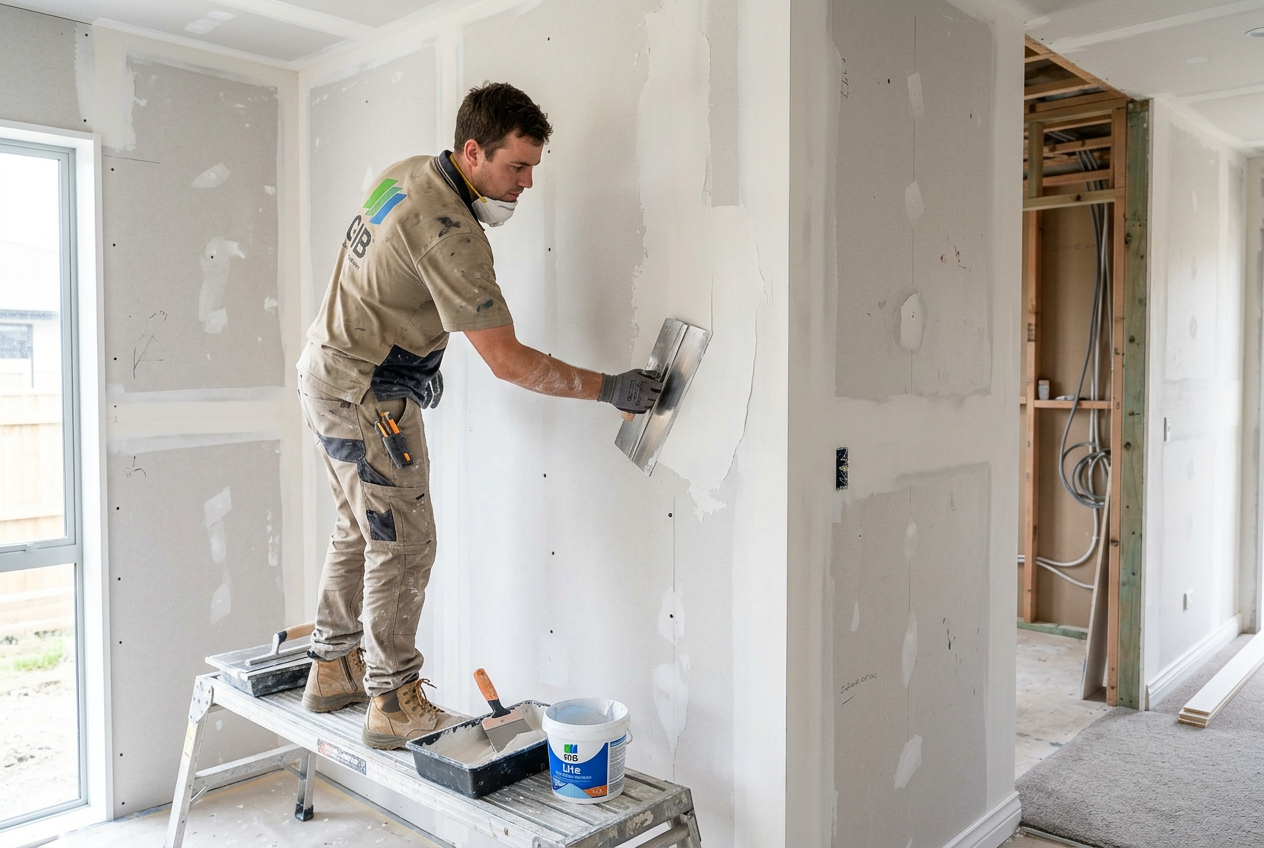
When getting quotes for plastering work in New Zealand, specifying the correct finish level is one of the most important things you can do. It sets clear expectations for both you and your plasterer, helps you compare quotes fairly, and ensures the final result suits your paint or wallcovering choice. Without it, you may end up paying for more than you need — or worse, not enough.
What Are Plaster Finish Levels?
In New Zealand, plasterboard (also called GIB board) finishing is typically described using a Level 1 to Level 5 system, which aligns with international best practice and is referenced in technical guidance from GIB, the leading NZ plasterboard manufacturer. Each level describes how much work goes into preparing the surface after the boards are fixed.
| Level | Description | Typical Use |
|---|---|---|
| Level 1 | Tape embedded in compound, tool marks acceptable | Fire-rated or acoustic areas hidden from view (e.g., above ceilings) |
| Level 2 | Tape embedded, one coat of compound over tape and fasteners | Garages, storage rooms, areas to be tiled |
| Level 3 | Two coats over tape and fasteners, smooth finish | Areas receiving heavy or medium texture coatings |
| Level 4 | Three coats, sanded smooth | Standard interior walls and ceilings for flat or low-sheen paint |
| Level 5 | Level 4 plus a skim coat or topping compound over the entire surface | High-gloss paint, critical lighting conditions, premium finishes |
For most NZ homes, Level 4 is the standard finish for painted walls and ceilings. If you're planning a high-sheen or gloss paint — or if your room has raking (angled) natural light that will highlight any imperfections — you should consider specifying Level 5.
Why Lighting Conditions Matter
One thing many homeowners overlook is how lighting affects the appearance of a plastered surface. Raking light — sunlight coming in at a low angle through windows — is notorious for revealing even minor surface imperfections that look perfectly fine under normal lighting. If your room has large windows, skylights, or you're using gloss or semi-gloss paint, discuss this with your plasterer before signing off on a finish level. A Level 4 finish that looks great in a hallway may show every slight ridge in a sun-drenched living room.
Finish Levels and Paint Choice
Your paint choice and finish level need to work together. Paint manufacturers like Resene and Dulux recommend that high-sheen paints are only applied over surfaces that have been prepared to at least a Level 5 standard. Using a flat or low-sheen paint over a Level 4 finish is generally fine for most living areas. Always check the paint manufacturer's surface preparation guidelines before specifying your finish level.
Areas That Are Often Tiled
If you're plastering a bathroom or kitchen area that will be tiled, a Level 2 finish is usually sufficient — the tiles and adhesive will cover the surface. However, any areas that will be painted (such as above the tile line) should still be finished to Level 4. Make sure your quote clearly identifies which areas receive which finish level. For wet areas, the work must also comply with NZ Building Code clause E3 (internal moisture), and waterproof membrane systems may be required before tiling.
Solid Plaster vs. Plasterboard Finishing
If your home has solid plaster walls (common in older NZ homes, particularly those built before the 1970s), the finish level system above doesn't directly apply. Solid plaster work — including three-coat systems using base coat, brown coat, and finish coat — is a different skill set. When getting quotes for solid plaster repairs or new solid plaster work, ask your plasterer to describe the number of coats and the final surface texture (e.g., smooth, sand finish, or textured). BRANZ has useful guidance on plaster systems for NZ conditions.
What to Include in Your Quote Request
To get accurate, comparable quotes, make sure you specify:
- The finish level (e.g., Level 4 for standard painted walls)
- The areas to be plastered (room by room, with approximate square metreage if possible)
- Any special conditions — raking light, high-gloss paint planned, or feature walls
- Whether stopping (finishing) only is required, or if GIB board fixing is also included
- The paint system you intend to use, so the plasterer can advise accordingly
Being specific upfront means you're comparing like-for-like when quotes come back.
Building Consent Considerations
Most interior plastering work does not require a building consent under Schedule 1 of the Building Act, but this depends on the scope of work. If your project involves structural changes, alterations to fire-rated walls, or work in a multi-unit dwelling, a consent may be required. Always check with your local council if you're unsure. You can find general guidance at MBIE Building Performance.
When to Call a Professional
Plastering — particularly achieving a Level 4 or Level 5 finish — is a skilled trade that takes years to master. While a homeowner can patch small holes, achieving a seamless, paint-ready finish across large areas is best left to a qualified plasterer. A poor finish will show through paint and be costly to fix. If your project involves fire-rated or acoustic wall systems (common in multi-unit housing), the work must be completed in accordance with the GIB system specifications, and documentation may be required for your building consent. You can find qualified local plasterers on tradedirectory.co.nz.

 Master Painters NZ member








