Renovating an older New Zealand home is exciting, but it often uncovers electrical systems that no longer meet current safety standards or the NZ Building Code. Depending on the scope of your renovation, you may be legally required to upgrade certain electrical components — and almost all electrical work must be carried out by a licensed professional.
Why Older NZ Homes Need Electrical Attention
Many homes built before the 1990s were wired with materials and methods that are now considered outdated or unsafe. Common issues include old wiring insulation that has become brittle, ceramic fuse boards instead of modern circuit breakers, undersized cabling that can't handle today's appliance loads, and a lack of residual current devices (RCDs) — the safety switches that protect against electric shock.
The MBIE Building Performance website outlines how the NZ Building Code applies to renovation work. When you alter or add to an existing electrical installation, the work — and sometimes adjacent areas — must be brought up to current standards.
What Triggers a Required Upgrade?
Not every renovation automatically requires a full rewire, but certain triggers commonly apply:
- Adding new circuits or outlets — any new wiring must comply with current standards, including NZS 3000 (the Wiring Rules).
- Upgrading a kitchen or bathroom — these wet areas require RCD protection and specific circuit arrangements under the NZ Building Code (clauses G9 and G12 relate to electricity and hot water).
- Installing a new switchboard — if your switchboard is replaced or significantly altered, it must meet current requirements, including RCD protection for socket outlet and lighting circuits.
- Adding a heat pump, EV charger, or other high-draw appliance — these typically need a dedicated circuit.
- Removing walls — if wiring runs through walls being demolished, it must be re-routed and inspected.
Key Upgrades Commonly Required
1. Switchboard Replacement
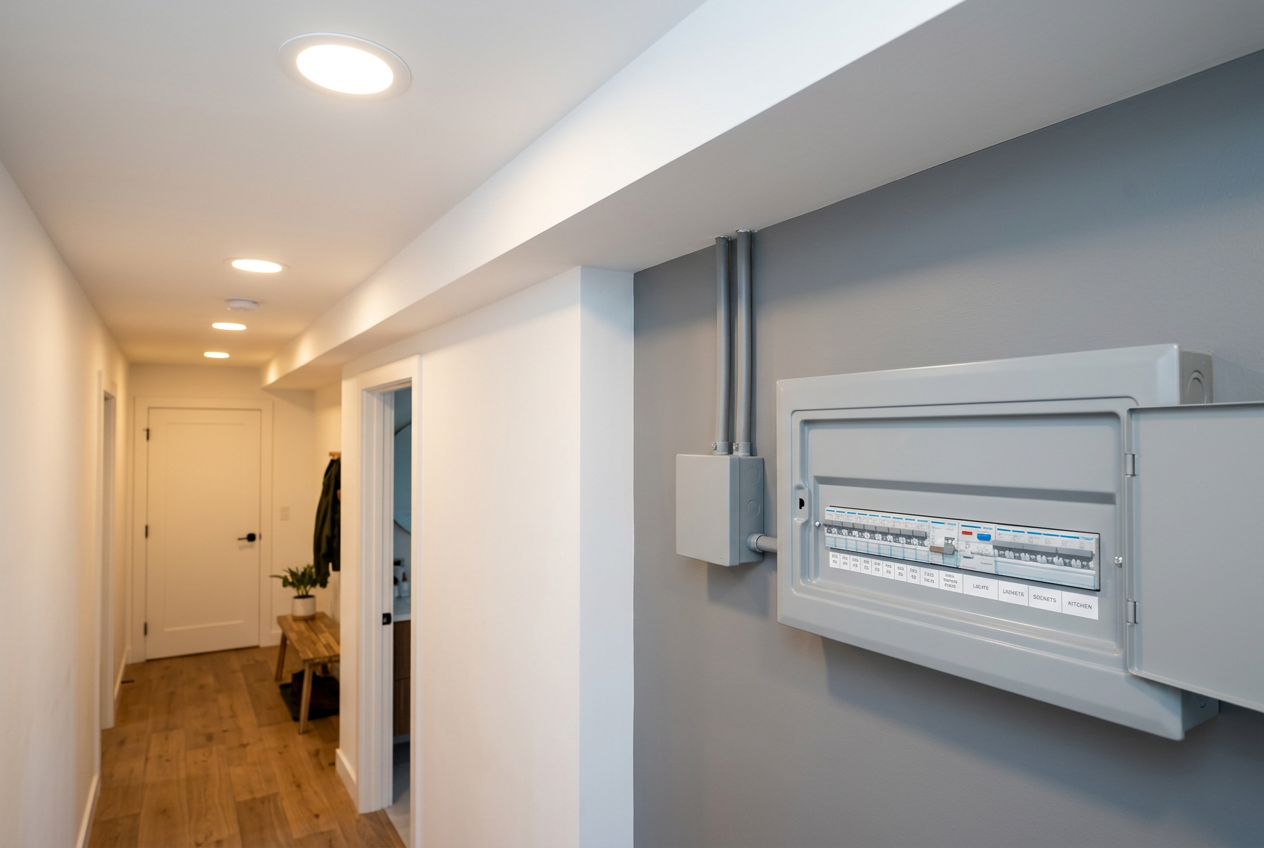
Old ceramic fuse boards or early circuit-breaker panels are often replaced during renovations. A modern consumer unit (switchboard) includes RCDs and miniature circuit breakers (MCBs) that provide far better protection. This is one of the most impactful safety upgrades you can make.
2. RCD (Safety Switch) Installation
Under current NZ electrical regulations, RCDs are required on socket outlet circuits and lighting circuits in new or altered installations. If your home doesn't have them, a renovation is a good time to add them. RCDs can save lives by cutting power within milliseconds if a fault is detected.
3. Earthing and Bonding
Older homes sometimes have inadequate earthing — the system that safely directs fault current to the ground. A licensed electrician will check that earthing meets current standards, particularly in kitchens and bathrooms where water and electricity are in close proximity.
4. Rewiring Old Cable
If your home still has rubber-insulated or early PVC wiring, it may need to be replaced. Degraded insulation is a fire risk. Your electrician will advise whether a partial or full rewire is needed based on the condition of existing cables.
5. Smoke Alarms
While not strictly electrical trade work, the Tenancy Services Healthy Homes standards and the Building Code require working smoke alarms. Hardwired interconnected alarms are best practice in a full renovation.
What Is Restricted Electrical Work?
In New Zealand, almost all electrical wiring work is restricted by law. Under the Electricity Act 1992 and associated regulations, only a registered electrician (or someone under their direct supervision) may carry out, inspect, and certify electrical installation work.
The Electrical Workers Registration Board (EWRB) maintains the register of licensed electricians. After completing restricted work, your electrician must issue you a Certificate of Compliance (CoC) — keep this document safe, as you'll need it when selling the property.
What homeowners can do themselves: You may replace a light fitting like-for-like (same type, same location) or change a socket faceplate — but even these tasks carry risk if you're unsure. When in doubt, call a professional.
⚠️ Safety note: Never attempt to work on your switchboard, rewire circuits, or work near the main supply. Electrical faults cause fires and fatalities. Always isolate circuits at the board and confirm they are dead before touching any wiring — and ideally, leave it to a licensed electrician.
Do You Need a Building Consent?
Most electrical work does not require a separate building consent, but if your renovation involves structural changes or additions, the electrical work will be inspected as part of that consent process. Check Schedule 1 of the Building Act for exemptions, and always confirm with your local council before starting work.
When to Call a Professional
You should engage a licensed electrician for any of the following:
- Switchboard upgrades or replacements
- Installing new circuits (kitchen, bathroom, EV charger, heat pump)
- Any rewiring work
- Adding or relocating power points and light fittings beyond simple like-for-like replacement
- Fault-finding in older wiring
- Pre-purchase electrical inspections on older homes
A qualified local electrician will assess your home, advise on what's required, and issue the necessary compliance documentation. You can find licensed electricians in your area on tradedirectory.co.nz.

 Site Safe
 Licensed Electrical Inspector







