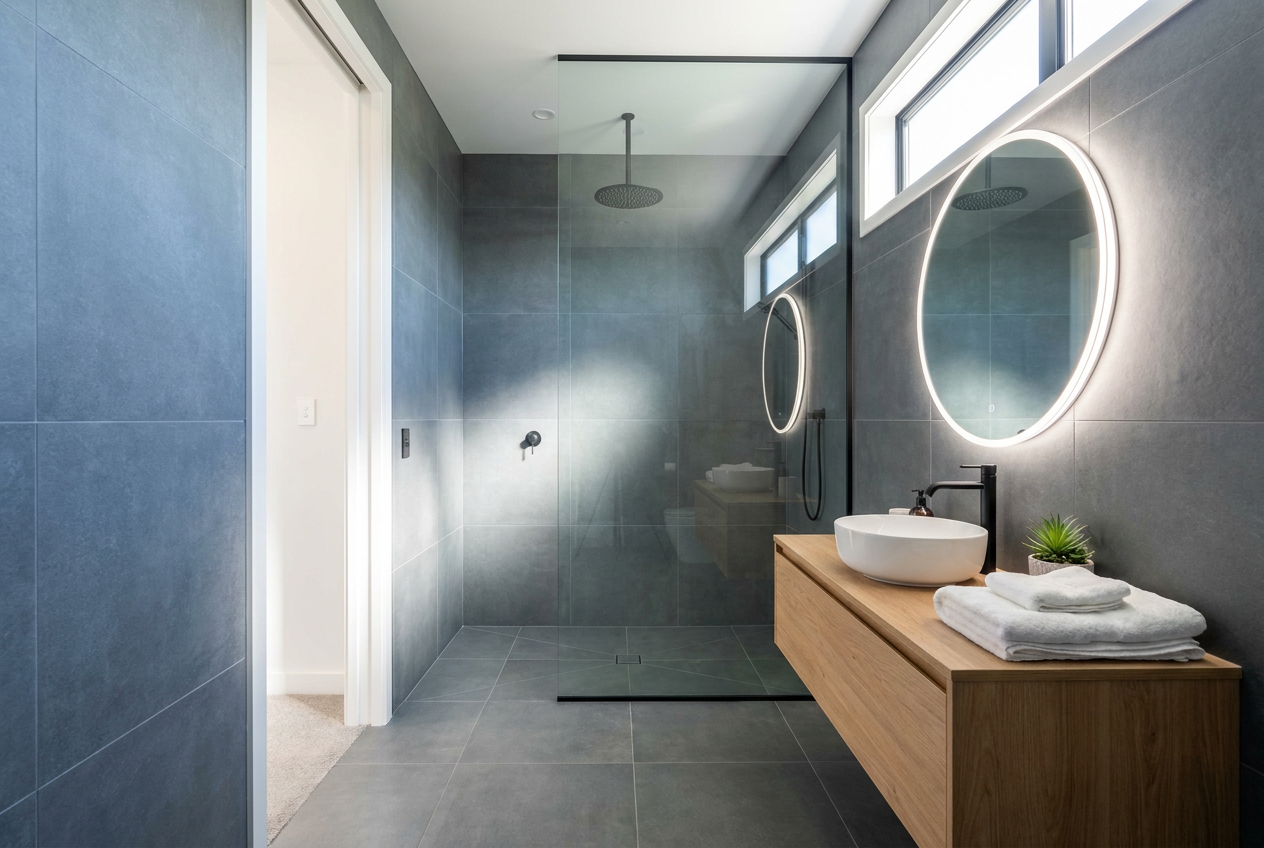
A waterproofing inspection is a mandatory hold point in the building consent process for most wet area work in New Zealand. Before tiles, linings, or any other finishes go over a waterproof membrane, a council building inspector must visit the site to confirm the work meets the NZ Building Code — particularly clauses E3 (Internal Moisture) and E2 (External Moisture). Getting this inspection right the first time saves you from costly rework later.
Why Is a Waterproofing Inspection Required?
Water damage is one of the most common and expensive building defects in New Zealand homes. The MBIE Building Performance framework requires that wet areas — bathrooms, ensuites, laundries, and sometimes kitchens — are waterproofed to a standard that prevents moisture from penetrating into the building structure. A building consent will typically list a waterproofing inspection as a mandatory inspection point, meaning work cannot legally proceed past this stage without sign-off.
If you skip this inspection and cover the membrane, you may be required to remove linings for a retrospective check — an expensive and disruptive process.
What Does the Inspector Actually Check?
The inspector's job is to verify that the waterproofing installation complies with the approved consent documents and the Building Code. Here's what they typically look at:
Membrane Type and Product Suitability
- The membrane product used must be appropriate for the application (e.g. shower floor vs. balcony deck).
- Inspectors may ask for the product's technical data sheet or CodeMark certificate to confirm it's a compliant system.
- Common systems include liquid-applied membranes, sheet membranes, and tanking systems.
Coverage and Application
- The membrane must cover all required surfaces — floor, walls to the correct height (typically the required height (check your consent documents and the relevant NZ Standard or manufacturer's specification, as the required height varies by application) and 100–150 mm upstands elsewhere, though this varies by consent).
- There should be no pinholes, thin spots, or missed areas. Inspectors may check this visually or by reviewing the applicator's records.
- The number of coats applied must match the manufacturer's specification.
Curing and Dryness
- The membrane must be fully cured before inspection. Applying tiles over an uncured membrane is a common cause of failure.
- The inspector may ask for evidence of cure time, especially for liquid-applied products.
Junctions and Penetrations
- Corners, coves, and junctions between floor and wall are high-risk areas. Inspectors check that these are properly reinforced with tape or fillet beads as required by the system.
- Pipe penetrations (waste outlets, tap tails) must be correctly sealed and flashed into the membrane.
Falls and Drainage
- The floor must have adequate fall to the waste (typically a minimum of 1:100 for shower floors) so water drains away rather than pooling.
- Waste outlets must be correctly positioned and integrated with the membrane.
Substrate Condition
- The substrate (usually a GIB Aqualine or similar moisture-resistant board, or a concrete slab) must be sound, clean, and properly prepared before the membrane was applied.
- GIB and similar manufacturers publish specific substrate preparation requirements that inspectors may reference.
Who Can Apply the Waterproofing?
In New Zealand, waterproofing of wet areas is not classified as restricted building work in the same way as structural or weathertight work — however, if the work is done under a building consent, it must be carried out by someone competent to do so. Many homeowners hire a Licensed Building Practitioner (LBP) or a specialist waterproofing contractor to ensure the work meets consent requirements. You can find qualified local waterproofers on tradedirectory.co.nz.
Note that associated plumbing work (waste pipes, water supply) is restricted work and must be carried out by a licensed plumber registered with the Plumbers Gasfitters & Drainlayers Board.
How to Prepare for the Inspection
- Book early — council inspection slots can be in demand, especially in busy areas.
- Have the product data sheets and consent documents on site.
- Ensure the membrane is fully cured and the area is clean and accessible.
- Do not start tiling or lining until you have written confirmation of a pass.
- Check with your local council about their specific requirements, as these can vary.
Schedule 1 Exemptions — Do You Still Need an Inspection?
Some minor building work is exempt from requiring a consent under Schedule 1 of the Building Act 2004. However, even exempt work must still comply with the Building Code. If you're unsure whether your project needs a consent — and therefore a formal inspection — always check with your local council before starting. MBIE Building Performance has useful guidance on what work requires consent.
When to Call a Professional
Waterproofing failures are expensive and can cause serious structural damage. If you're planning any wet area renovation, it's strongly recommended to engage a qualified waterproofing contractor who understands NZ Building Code requirements and can provide documentation for the inspector. A professional will also be familiar with compliant product systems from suppliers such as Ardex, Mapei, and Sika. Find a trusted local waterproofing professional on tradedirectory.co.nz.

 Site Safe


 SiteWise

 Licensed Building Practitioner (LBP)




