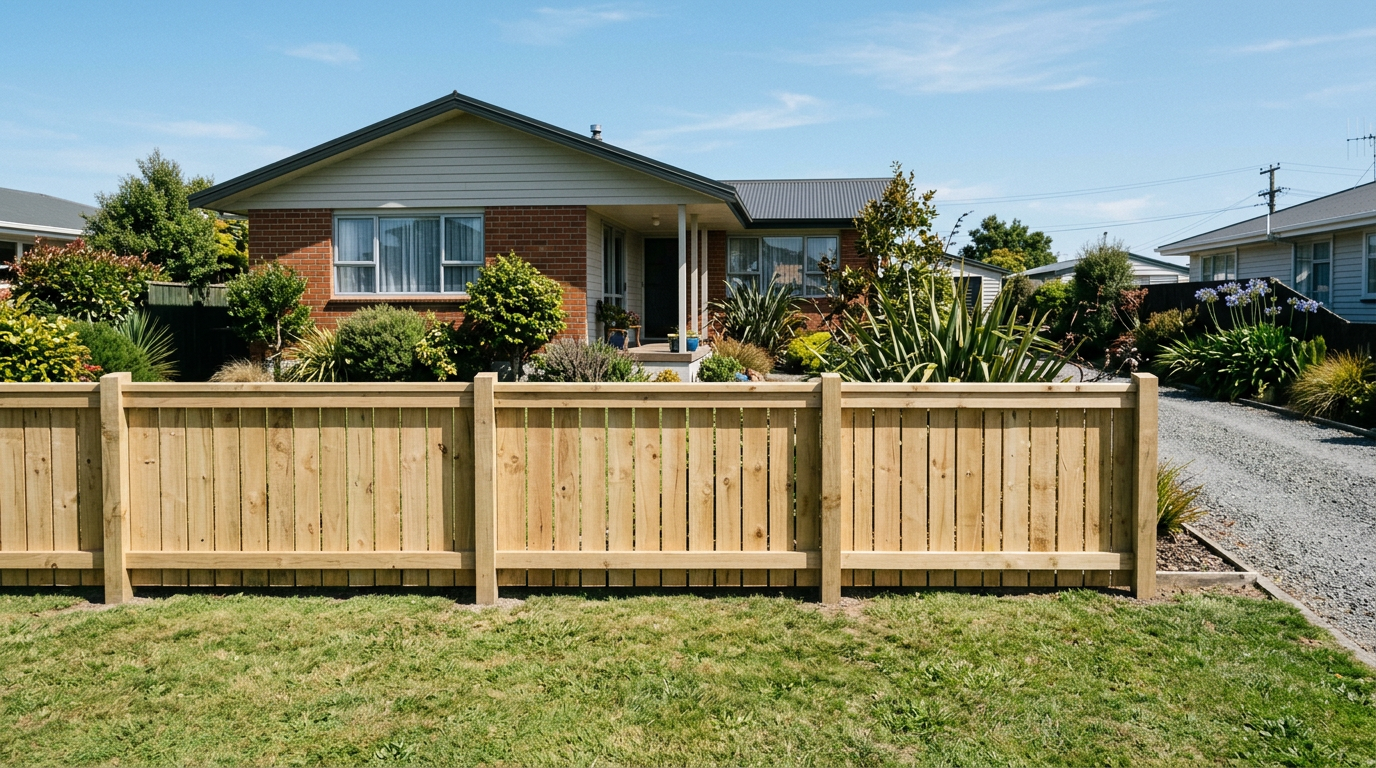
When you hire a fencer in New Zealand, they'll typically take care of most of the heavy lifting — materials, tools, and installation. But there are a handful of things that are best sorted by you before work begins. Understanding who's responsible for what will help your project run smoothly and avoid any surprises on the day.
What a Fencer Will Usually Supply
Most professional fencers work as a supply-and-install service, meaning they source and bring everything needed to complete the job. You can generally expect your fencer to supply:
- Posts – timber (pine or hardwood), steel, or concrete depending on the fence type
- Rails and palings – treated timber, fibre cement or other cladding materials, or other cladding materials
- Concrete – for setting posts in the ground
- Fixings and hardware – nails, screws, brackets, hinges, and latches
- Gates – if included in the quote, often pre-hung or built on site
- Tools and equipment – post-hole borers, levels, saws, compactors
Some fencers also supply specialty products like Colorsteel or Colorbond steel panels, aluminium slats, or pre-made trellis sections. Always confirm what's included in your quote — a good fencer will itemise materials clearly.
If you have a preference for a specific brand, timber species, or colour, mention it early. Some fencers are happy to accommodate requests, though this may affect pricing and lead times.
What You May Need to Organise Yourself
While fencers handle most of the physical work, there are several things that typically fall on the homeowner's side:
1. Boundary Location and Survey
Your fencer will need to know exactly where your legal boundary sits. If you're unsure, do not assume — a fence built over the boundary can cause serious legal and neighbourly disputes. You may need to engage a licensed cadastral surveyor to peg the boundary before work starts. Check your property's title and LIM report first, as pegs may already be in place.
2. Neighbour Communication and Cost Sharing
Under the Fencing Act 1978, both neighbours may share the cost of a boundary fence. It's your responsibility to discuss this with your neighbour before hiring a fencer. If you reach an agreement, get it in writing. If there's a dispute, the Act provides a formal process — your local council or Citizens Advice Bureau can point you in the right direction.
3. Building Consent (If Required)
Most residential fences in New Zealand don't need a building consent, but there are exceptions. Fences over 2 metres in height, retaining walls combined with fences, or fences near a boundary with a road may require consent. Schedule 1 of the Building Act 2004 lists exemptions, but rules vary by council — always check with your local council before starting work. MBIE Building Performance has useful guidance on when consent is needed.
4. Utility Location
Before any post holes are dug, underground services (power, gas, water, telecommunications) need to be identified. In New Zealand, you can contact Dial Before You Dig (0800 248 344) to get utility plans for your property. Some fencers will do this as part of their process, but confirm this upfront — it's ultimately the site owner's responsibility to ensure safe digging.
5. Site Preparation and Access
Clear the fence line of vegetation, garden beds, stored items, or structures before your fencer arrives. If access is tight — for example, a rear section with a narrow gate — let your fencer know so they can plan for equipment. Removing an old fence is sometimes included in a quote, but not always, so clarify this ahead of time.
6. Finishing Treatments (Sometimes)
Many fencers install bare timber and leave painting or staining to the homeowner. If you want your fence painted or oiled, ask whether this is included or whether you'll need to arrange it separately. Products from Resene, Dulux, or Wattyl are popular choices for timber fence finishing in NZ.
A Quick Reference Table
| Task | Usually the Fencer | Usually the Homeowner |
|---|---|---|
| Supply posts, rails, fixings | ✅ | |
| Supply concrete | ✅ | |
| Tools and machinery | ✅ | |
| Boundary survey | ✅ | |
| Neighbour agreement | ✅ | |
| Building consent (if needed) | ✅ | |
| Utility location (Dial Before You Dig) | Confirm upfront | ✅ |
| Site clearing | ✅ | |
| Painting/staining | Confirm upfront | Sometimes ✅ |
| Removal of old fence | Confirm upfront | Sometimes ✅ |
Getting a Clear Quote
A professional fencer should provide a written quote that clearly lists what's included — materials, labour, removal of existing fencing, and any finishing work. If anything is vague, ask for clarification before signing. Quotes can vary significantly based on fence type, terrain, and materials, so it's worth getting two or three from local fencers.
When to Call a Professional
Fencing is not restricted trade work in New Zealand (unlike electrical or plumbing), so homeowners can legally build their own fences. However, for anything involving retaining walls over a certain height, fences near electrical lines, or complex sloped sites, it's strongly advisable to use a qualified fencer. Poor installation can lead to fence failure, boundary disputes, or safety hazards. You can find experienced local fencers on tradedirectory.co.nz.
If your fence project involves any electrical work — such as an electric gate motor — that work must be carried out by a registered electrician. See the Electrical Workers Registration Board for more information.





