Fire wardens are a cornerstone of workplace fire safety in New Zealand, helping ensure everyone knows what to do in an emergency. Whether you manage a small office, a retail shop, or a large commercial building, understanding the warden's role — and how often to practise evacuation — can make a real difference when it counts.
What Is a Fire Warden?
A fire warden (sometimes called an evacuation warden or floor warden) is a designated person responsible for coordinating the safe evacuation of people from a building or area during a fire or other emergency. They are not firefighters — their job is to guide people out safely and account for everyone, then leave the building themselves.
Fire wardens are typically appointed by the employer or building owner and should be trained in their specific duties before taking on the role.
Key Responsibilities of a Fire Warden
Fire wardens generally carry out the following duties:
- Raising the alarm — ensuring the fire alarm is activated and that Fire and Emergency New Zealand (FENZ) has been called (111)
- Directing evacuation — guiding staff, visitors and contractors to the nearest safe exit and assembly point
- Sweeping their area — checking toilets, meeting rooms, storerooms and other spaces to ensure no one is left behind
- Assisting people with disabilities or mobility needs — following a pre-agreed plan for anyone who may need extra help
- Preventing re-entry — keeping people away from the building until FENZ gives the all-clear
- Reporting to the chief warden — confirming their area is clear and accounting for all persons
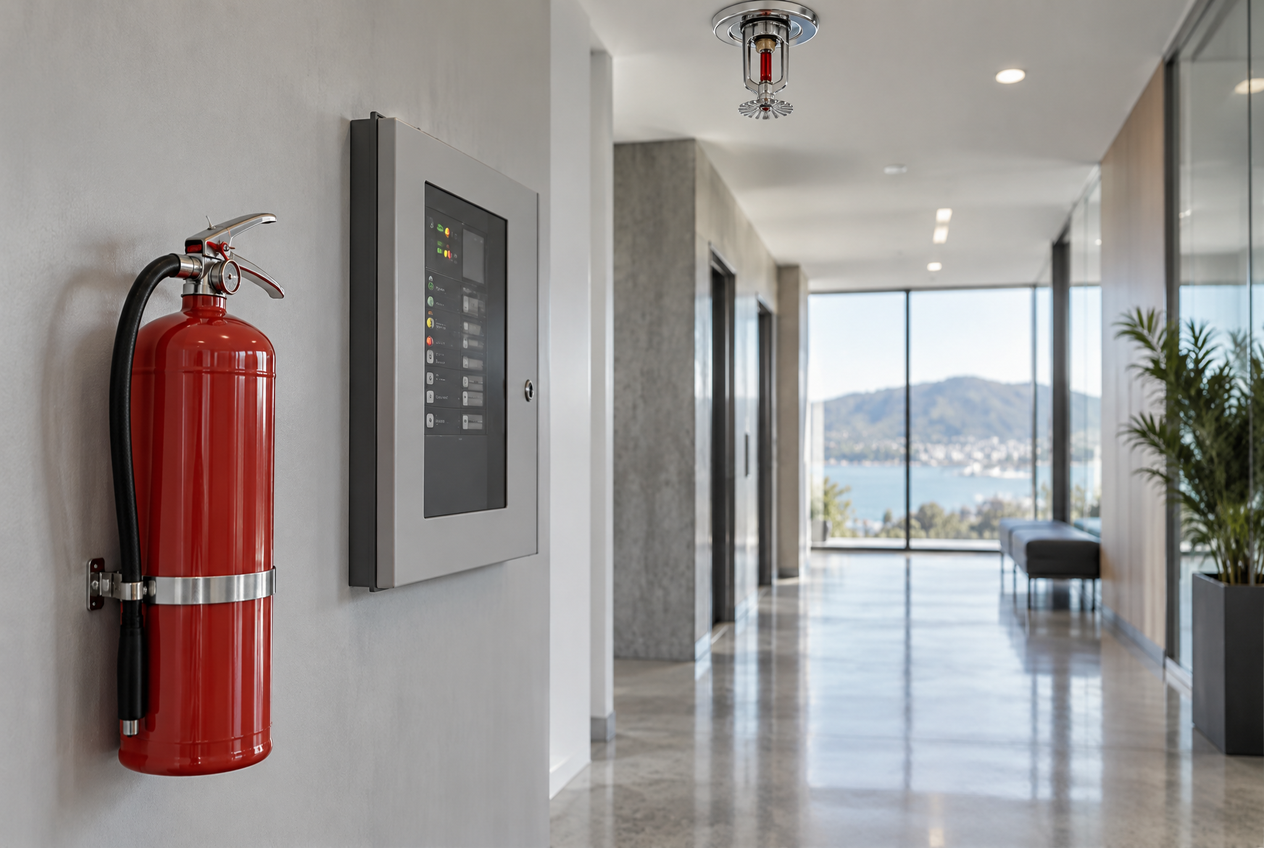
- Knowing the location of fire equipment — including extinguishers, hose reels, fire doors and manual call points
Larger buildings typically have a chief warden who coordinates all floor or area wardens and liaises with FENZ on arrival.
Legal Requirements in New Zealand
Under the Health and Safety at Work Act 2015 (HSWA), employers (as PCBUs — persons conducting a business or undertaking) have a duty to manage emergency risks, which includes having an emergency plan and ensuring workers know what to do. WorkSafe NZ provides guidance on these obligations.
For buildings that require an evacuation scheme, the Fire and Emergency New Zealand Act 2017 sets out the framework. Buildings that must have an approved evacuation scheme include workplaces where more than a certain number of people are present, or where vulnerable people are accommodated — check with FENZ or your local council to confirm whether your building needs one. FENZ approves evacuation schemes and can advise on warden numbers and structure.
Commercial and public buildings may also have specified systems (such as automatic fire alarms, sprinklers, emergency lighting and fire doors) listed on a compliance schedule. These must be maintained by suitably qualified persons, and the building owner must provide an annual Building Warrant of Fitness (BWOF) to the council. Guidance on this is available from MBIE Building Performance.
How Often Should You Run Fire Drills?
For buildings with an approved evacuation scheme, FENZ generally requires evacuation drills to be carried out at set intervals — commonly every six months for most workplaces, though the frequency can vary depending on the type of building and the conditions of the approved scheme. Always check your specific approved scheme document and confirm requirements with FENZ, as intervals can differ.
For workplaces without a formal approved scheme, WorkSafe NZ still expects employers to practise their emergency procedures regularly as part of their health and safety obligations. Annual drills at a minimum are widely considered good practice, but more frequent drills are better — especially after significant staff changes.
Tips for Effective Fire Drills
- Run drills at different times of day to reflect real-world conditions
- Include scenarios where a primary exit is blocked
- Brief staff beforehand so they understand the purpose, then debrief afterwards to identify any issues
- Record the date, time, number of participants and any problems found
- Update your evacuation scheme if the drill reveals gaps
Fire Warden Training — What's Involved?
Fire warden training should cover:
- The building's evacuation plan and assembly points
- How to raise the alarm and use manual call points
- Basic fire extinguisher use (when safe to do so)
- Sweep and search procedures
- Assisting people with disabilities
- Communication with the chief warden and FENZ
Training is typically delivered by a licensed fire protection specialist or a registered training provider. It should be refreshed regularly — at least every one to two years, or whenever there are significant changes to the building layout, occupancy or staff. New wardens should be trained before they take on the role.
| Role | Key Duty | Typical Training Frequency |
|---|---|---|
| Fire Warden | Sweep area, guide evacuation | Every 1–2 years |
| Chief Warden | Coordinate all wardens, liaise with FENZ | Every 1–2 years |
| All Staff | Know exits, assembly point, alarm response | At induction + regular refreshers |
Smoke Alarms in Residential Settings
If you're a landlord rather than a commercial building owner, the rules are different. Rental properties must have working photoelectric smoke alarms installed within 3 metres of each bedroom door (long-life or hard-wired). Check Tenancy Services for current smoke alarm requirements under the Residential Tenancies Act and Healthy Homes Standards and FENZ for general home fire-safety advice.
When to Call a Professional
Fire safety compliance can be complex, and getting it wrong puts lives at risk. You should engage a licensed fire protection specialist if you need to:
- Develop or update an evacuation scheme for FENZ approval
- Arrange formal fire warden training
- Inspect, test or maintain specified systems (fire alarms, sprinklers, emergency lighting, fire doors) — this work must be carried out by a suitably qualified person, often a council-registered Independent Qualified Person (IQP)
- Assess whether your building needs a compliance schedule or BWOF
You can find qualified local fire protection specialists on tradedirectory.co.nz.