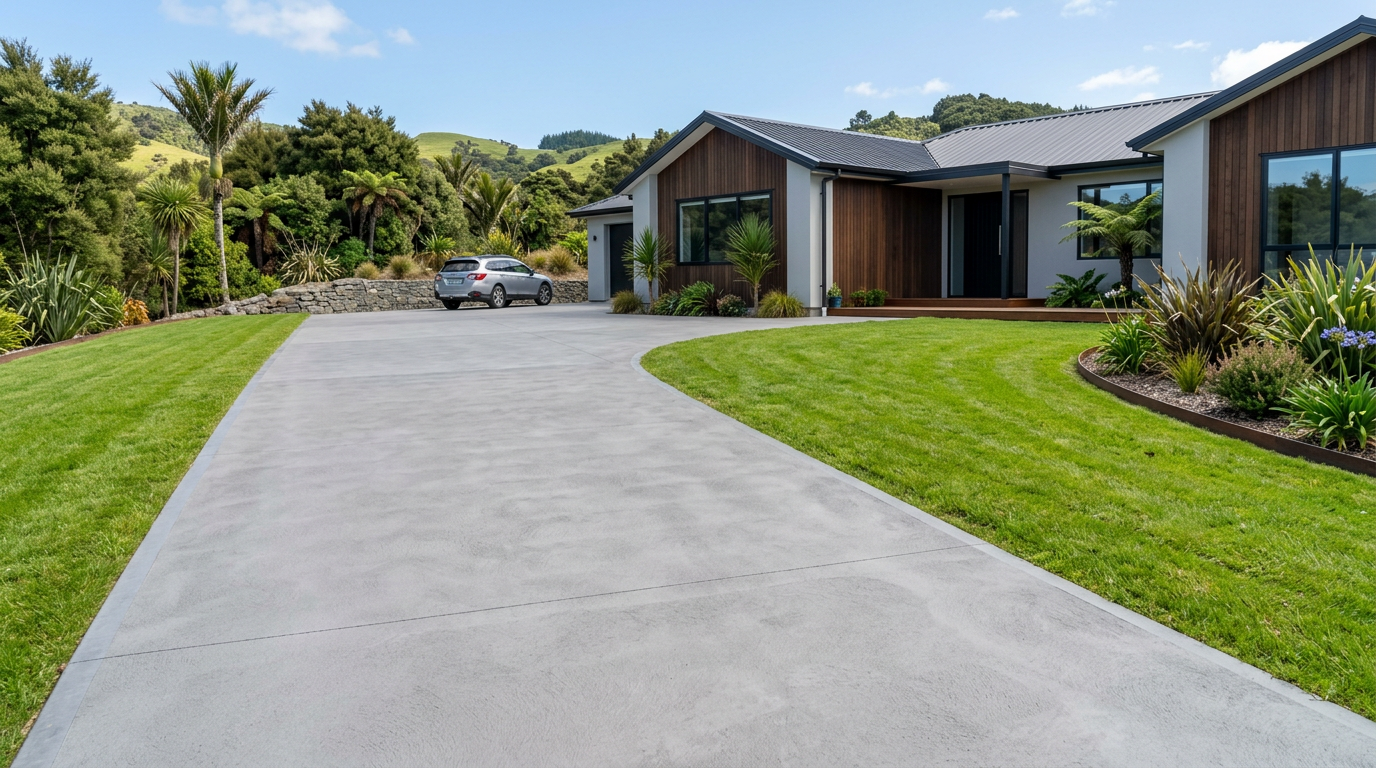
Getting the base right is the single most important step in building a gravel driveway that won't turn into a rutted, muddy mess after the first wet winter. In most NZ conditions, a well-compacted AP65 sub-base topped with AP40 or AP20 metal gives you a stable, free-draining foundation before you add your decorative gravel surface. Here's how to plan it properly.
Why the Base Matters So Much
Gravel driveways fail from the bottom up. Without a solid, compacted base, vehicle loads push the surface material down into soft ground, creating ruts and potholes. NZ's variable soils — from Auckland's heavy clays to Canterbury's silty loams — mean ground conditions vary enormously, and what works in one region may need adjustment in another. A proper layered base spreads the load, drains water away, and stops the surface gravel from disappearing into the subgrade over time.
Understanding the Layers
A well-built gravel driveway typically has three distinct layers:
1. Subgrade (the existing ground)
Before anything else, excavate to a consistent depth — usually 200–350 mm below your finished surface level, depending on soil type and expected traffic. Remove all topsoil, organic material, and vegetation roots. Soft or unstable spots should be dug out and backfilled with compactable material. If you hit very soft ground (it deflects underfoot when you walk on it), consider getting a geotechnical opinion before proceeding.
2. Sub-base — AP65 Crushed Aggregate
AP65 (also called "65 mm crusher run" or "road base metal") is the workhorse of driveway construction. It contains a range of particle sizes from fine dust up to 65 mm, which compact together to form a dense, interlocked mass. Lay it in 100–150 mm compacted layers and compact each layer thoroughly with a plate compactor or roller before adding the next. For a typical residential driveway with car and light truck traffic, aim for a total compacted sub-base depth of 150–200 mm.
3. Wearing Course — AP40 or AP20
Once the sub-base is solid, add a 50–75 mm compacted layer of AP40 (40 mm crusher run) as a transition layer, or go straight to AP20 if you want a finer, tidier finish. AP20 compacts well and provides a reasonably smooth surface. Compact this layer too — don't skip this step.
Optional: Decorative Top Dressing
If you want a specific look — pea gravel, river stones, or coloured chip — add a 25–40 mm layer on top of the compacted AP20. Keep in mind that loose decorative gravel can scatter and will need occasional top-ups.
Geotextile Fabric — Worth Using?
Laying a geotextile separation fabric between the subgrade and your sub-base is strongly recommended on clay or silty soils. It prevents fine soil particles from migrating up into your aggregate layers (a process called pumping), which can cause the base to lose stability over time. Geotextile fabric is widely available at Bunnings and Mitre 10. Overlap joins by at least 300 mm and pin edges down before placing aggregate.
Drainage — Don't Overlook It
Poor drainage is the number-one cause of driveway failure in NZ's wet climate. Your driveway should have a crossfall of at least 2–3% (20–30 mm per metre) to direct water to the sides. Make sure water drains away from your house and doesn't pond near foundations. If your driveway runs alongside a boundary, check with your local council about stormwater discharge rules — you generally cannot direct runoff onto a neighbour's property. MBIE Building Performance has useful guidance on stormwater management under the NZ Building Code.
Do You Need a Building Consent?
In most cases, a residential gravel driveway is exempt from building consent under Schedule 1 of the Building Act 2004 — but this depends on your specific site, council, and whether the work affects stormwater or retaining. Always confirm with your local council before starting, as rules vary. Some councils also have specific requirements around vehicle crossings (the section from the road to your boundary), which may require a separate crossing permit from the council or NZTA.
For guidance on the Building Code and consent exemptions, visit MBIE Building Performance.
Recommended Layer Summary
| Layer | Material | Compacted Depth |
|---|---|---|
| Sub-base | AP65 crusher run | 150–200 mm |
| Transition | AP40 crusher run | 50–75 mm |
| Surface | AP20 or decorative gravel | 25–50 mm |
Depths are a general guide. Increase sub-base depth for heavy vehicles or soft ground.
Tips for a Better Result
- Hire or borrow a plate compactor — hand tamping is not sufficient for driveways.
- Order aggregate from a local quarry or landscape supplier; they can advise on locally available equivalents to AP65/AP40/AP20.
- Edge restraints (timber, concrete kerbing, or steel edging) help keep gravel contained and reduce ongoing maintenance.
- Allow for settlement — your driveway may drop slightly in the first few months and may need a top-up of surface material.
- Check BRANZ resources for general guidance on ground preparation and drainage best practice.
When to Call a Professional
While a gravel driveway is one of the more DIY-friendly outdoor projects, there are situations where you should bring in a qualified driveway layer or civil contractor:
- Steep slopes (over about 1:8 gradient) — drainage and erosion control become complex.
- Very soft, waterlogged, or unstable ground — may need lime stabilisation or engineered fill.
- Large driveways or those used by heavy vehicles — design loads increase significantly.
- Retaining walls required — walls over 1.5 m typically require building consent and may need an LBP or engineer. See Licensed Building Practitioners.
- Vehicle crossing construction at the road boundary — often requires council approval and may need a contractor approved by your council.
You can find experienced local driveway layers and civil contractors on tradedirectory.co.nz.
Sources & Further Reading
- MBIE Building Performance — Building Code and consent exemptions
- BRANZ — Ground preparation and drainage guidance
- WorkSafe NZ — Safe use of compaction equipment
- Bunnings — Landscaping and driveway materials
- Mitre 10 — Aggregate and geotextile products
- Licensed Building Practitioners — When you need an LBP

 Site Safe
 SiteWise

 ISO 9001 / 45001 / 14001


 SARNZ (Scaffolding Association)