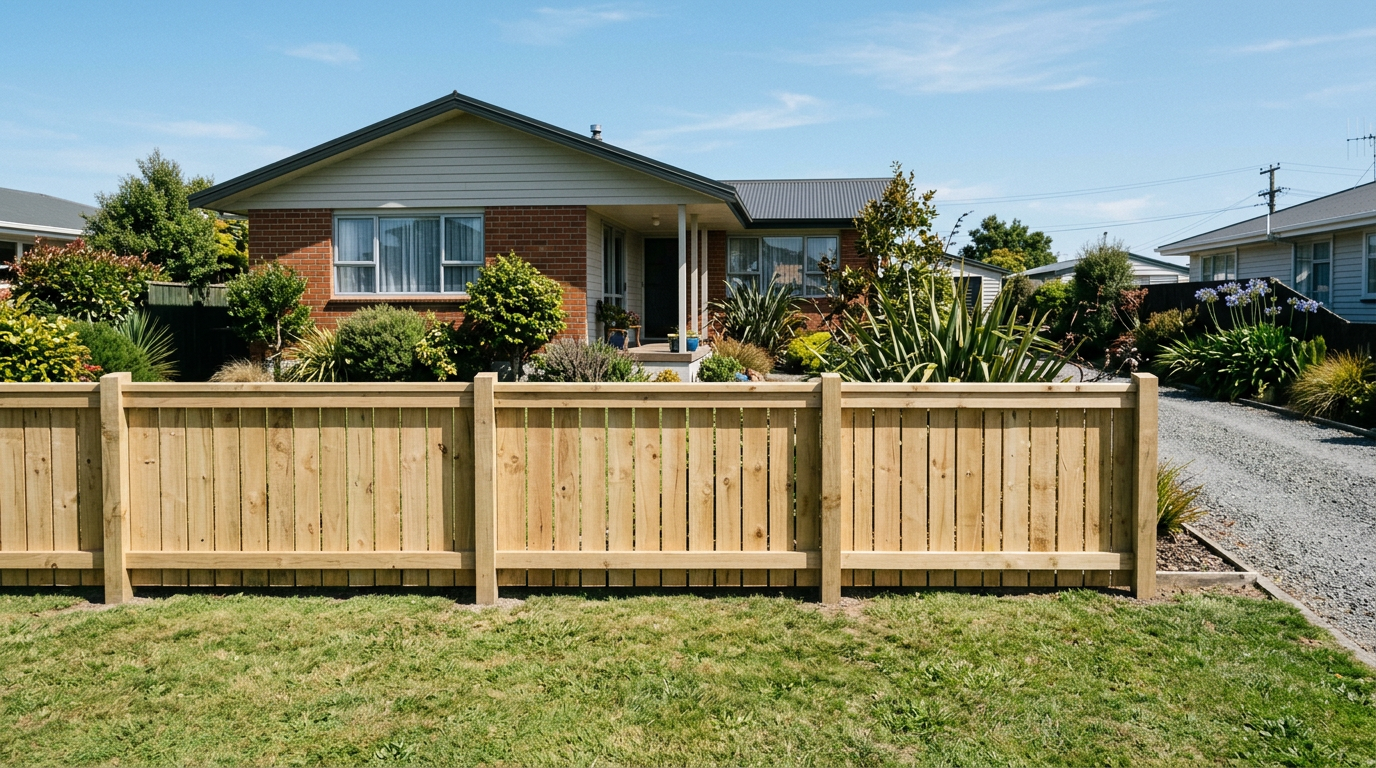
Choosing the right fence paling is one of those decisions that seems straightforward until you're standing in the timber yard weighing up your options. Treated pine and cedar are the two most popular choices for NZ homeowners — and they each have genuine strengths. The one that lasts longer for you depends on your local climate, how much maintenance you're prepared to do, and what you want your fence to look like in ten years' time.
A quick overview of each option
Treated pine palings
Treated pine (typically radiata pine that has been pressure-treated with preservative) is the workhorse of the NZ fencing world. The treatment process forces preservative chemicals deep into the timber, giving it resistance to rot, fungal decay, and insect attack. Look for palings rated H3.2 for above-ground exterior use — this is the minimum treatment level recommended for fence palings exposed to the weather. H4 is used where timber is in ground contact (posts, for example).
Treated pine is widely available at Bunnings, Mitre 10, and PlaceMakers, making it easy to source replacements if a paling gets damaged. It takes paint and stain well, which means you have full control over the final colour.
Cedar palings
Cedar (most commonly western red cedar, imported from North America) is a naturally durable timber. Its heartwood contains oils that resist moisture, rot, and insects without any chemical treatment. Cedar is lighter than pine, dimensionally stable (meaning it's less prone to warping and cupping as it dries), and has a beautiful straight grain that many homeowners find more attractive.
The trade-off is cost and availability. Cedar palings are noticeably more expensive than treated pine, and sourcing consistent lengths and grades can be trickier depending on your region. Left uncoated, cedar weathers to a silver-grey patina — some people love this look; others don't.
Head-to-head comparison
| Criteria | Treated Pine (H3.2) | Western Red Cedar |
|---|---|---|
| Durability (above ground) | 15–25+ years with maintenance | 20–30+ years with minimal maintenance |
| Natural rot resistance | Chemical treatment required | Naturally resistant (heartwood oils) |
| Dimensional stability | Moderate — can warp/cup as it dries | High — stable, less movement |
| Weight | Heavier | Lighter — easier to handle |
| Appearance | Uniform, takes paint/stain well | Attractive grain, weathers to silver-grey |
| Maintenance required | Regular painting or staining recommended | Oil or stain every few years, or leave to weather |
| Rough cost guide | Lower (budget-friendly) | Noticeably higher (premium product) |
| NZ availability | Excellent — widely stocked | Good in cities, can be limited regionally |
| DIY friendliness | Easy to cut, nail, or screw | Easy — lighter and very workable |
| Suitability for coastal NZ | Good if well-maintained and painted | Very good — natural oils help resist salt air |
Cost figures vary by region and supplier. Always get current quotes from your local timber yard.
Durability in NZ conditions
New Zealand's climate varies enormously — from the humid, wet winters of Northland and the West Coast to the hot, dry summers of Hawke's Bay and Central Otago. Both timbers can perform well across these regions, but the conditions do affect how you should maintain them.
In high-rainfall or coastal areas, cedar's natural oils give it an edge, particularly if you're happy to let it weather or apply a penetrating oil every few years. Treated pine in these environments needs a good quality exterior stain or paint system — products from Resene or Dulux are well-suited to NZ conditions — and regular recoating to keep moisture out.
In drier inland areas, treated pine performs very reliably and the lower cost makes it an easy choice for large runs of fencing.
BRANZ research consistently highlights that the biggest factor in timber fence longevity isn't the species — it's how well the timber is finished and maintained. A well-painted treated pine fence will outlast a neglected cedar one every time.
Cost considerations
As a rough guide only, treated pine palings are typically a fraction of the price of cedar on a per-paling basis. For a standard boundary fence, this difference adds up quickly. If budget is tight, treated pine is the sensible choice — the money saved can go toward quality paint or stain that will genuinely extend the fence's life.
Cedar's higher upfront cost can be justified if you want a premium look, plan to leave the fence uncoated (saving on ongoing paint costs), or are building a feature fence where appearance matters.
Maintenance: what's actually involved?
- Treated pine: Clean down every year or two, check for any bare or peeling areas, and recoat with a quality exterior stain or paint. Resene's Woodsman range and Dulux Weathershield are popular choices for NZ fences.
- Cedar: If left to weather naturally, simply hose off lichen or mould as needed. If you want to preserve the warm colour, apply a UV-stabilised penetrating oil (such as products from Wattyl) every two to three years.
Can you DIY a fence in NZ?
Fencing is generally not restricted building work in New Zealand, so most homeowners can build their own fence without needing a licensed tradesperson — provided the fence doesn't form part of a retaining wall over 1.5 metres or a swimming pool barrier (which has specific requirements under the NZ Building Code). Always check with your local council if you're unsure, especially near boundaries.
That said, a well-built fence requires accurate post setting, correct spacing, and good finishing — and mistakes are expensive to fix. If you'd rather leave it to a professional, you can find qualified local fencers on tradedirectory.co.nz who can advise on the best timber for your specific site.
Our recommendation
Choose treated pine if: you're fencing a large area on a budget, you're happy to paint or stain regularly, or you want maximum flexibility in colour and finish. It's the practical, proven choice for most NZ sections.
Choose cedar if: you want a premium, naturally beautiful fence that requires less frequent coating, you're in a coastal or high-humidity area, or you're building a feature fence where looks matter as much as longevity.
For most everyday boundary fences, treated pine H3.2 with a quality stain system is the best value — it will easily last 20+ years if maintained. Cedar is a worthwhile upgrade when budget allows and the aesthetic payoff is worth it to you.





