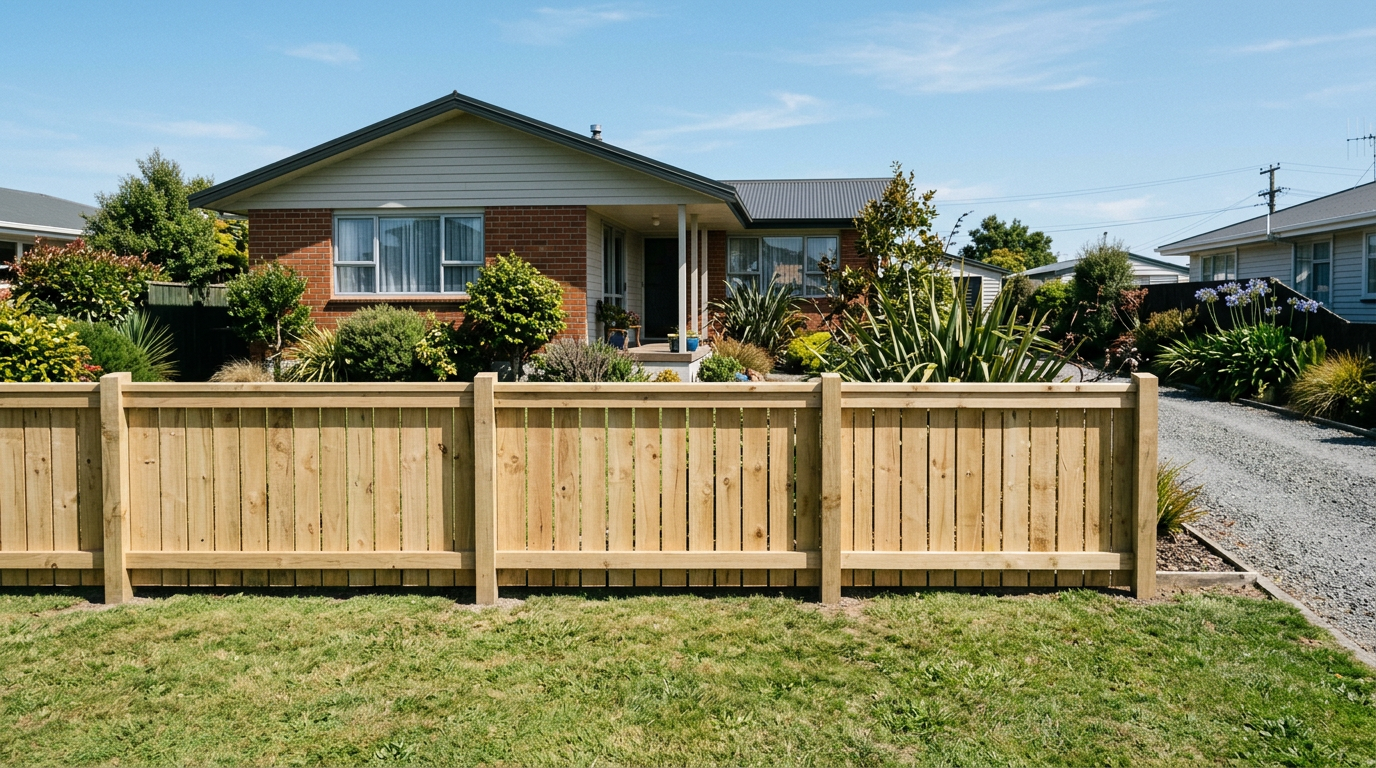
Choosing between timber and steel fencing is one of the most common decisions NZ homeowners face when planning a boundary, privacy, or garden fence. Both materials have genuine strengths, but the right choice depends on your climate, budget, aesthetic preferences, and how much ongoing maintenance you are prepared to do. This guide walks you through everything you need to know to make a confident, well-informed decision.
What Each Material Involves
Timber fencing uses treated or untreated wood — most commonly H3.2 or H4 Hazard Level treated pine, macrocarpa, or cedar — set into the ground or mounted on concrete footings. It is the traditional NZ choice and suits a wide range of styles from rustic paling fences to sleek horizontal slat designs.
Steel fencing covers a broad category including tubular steel, Colorsteel (a New Zealand-made pre-painted steel product), corrugated iron/steel panels, and powder-coated steel post-and-rail systems. Steel fences are increasingly popular for contemporary homes and lifestyle blocks.
Key Factors That Affect Your Choice
Climate and Location
New Zealand's climate varies significantly from north to south, and this directly affects how each material performs:
- Coastal and high-humidity areas (Northland, Bay of Plenty, West Coast): Salt air accelerates corrosion in untreated or poorly coated steel. Timber can also rot faster without proper treatment. In these zones, choose H4-treated timber or marine-grade powder-coated or galvanised steel.
- High-UV regions (Central Otago, Hawke's Bay): Intense UV degrades untreated timber quickly and can fade painted steel. Quality paint or stain systems are essential.
- High-wind zones (Wellington, exposed rural sites): Both materials need robust post sizing and spacing. Steel generally has a structural advantage in extreme wind.
- Cold/frost-prone areas (Southland, Central Otago): Timber can be prone to moisture uptake and cracking through freeze-thaw cycles; well-coated steel performs reliably.
Durability and Lifespan
| Material | Typical Lifespan | Main Risk |
|---|---|---|
| H3.2 treated pine | 15–25 years | Rot, borer if coating fails |
| Macrocarpa / cedar | 20–30+ years | Weathering, greying |
| Powder-coated steel | 20–30+ years | Rust if coating is scratched |
| Galvanised steel | 25–40+ years | Cosmetic rust at cut edges |
| Colorsteel panels | 15–25 years | Panel denting, edge rust |
Maintenance Requirements
Timber needs regular maintenance — typically a quality exterior stain or paint every 3–7 years depending on exposure. Products from Resene and Dulux offer purpose-built timber fence stains suited to NZ conditions. Neglected timber will grey, crack, and eventually rot at the base.
Steel is generally lower maintenance once installed, but any scratch or chip in the coating must be touched up promptly to prevent rust spreading underneath. Powder-coated finishes are more durable than standard paint but are not indestructible.
Cost Drivers — What to Expect
Fencing costs vary widely depending on materials, post type, ground conditions, fence height, and your region. Rather than quoting figures that may not reflect your situation, here are the key cost drivers:
- Material grade: H4-treated timber and marine-grade steel cost more upfront but last longer in harsh conditions.
- Post installation: Concrete-set posts add labour and material cost but are more durable than direct-buried timber posts.
- Fence height: Taller fences use more material and may trigger consent requirements (see below).
- Ground conditions: Rocky or sloping ground increases labour time significantly.
- Finishing: Staining, painting, or powder-coating adds cost but protects your investment.
- Labour rates: These vary by region — Auckland and Wellington typically have higher rates than provincial areas.
Always get multiple written quotes from qualified tradespeople before committing. A reputable fencer will assess your site, soil type, and exposure before recommending a specification.
Building Consent and NZ Regulations
This is an area where many homeowners get caught out. Under the NZ Building Act, some fencing work is exempt from building consent under Schedule 1, but there are important limits:
- Fences up to 2.5 metres high are generally exempt from building consent, but this depends on location, proximity to boundaries, and whether the fence forms part of a retaining structure.
- Pool fencing is a special case — it must comply with NZ Building Code clause F9 (pool and spa barriers) and the Fencing of Swimming Pools Act 1987. Pool barriers almost always require a building consent and a compliance schedule.
- Retaining walls combined with fencing may require consent depending on height and surcharge loading.
Always confirm consent requirements with your local council before starting work. Rules vary between territorial authorities and your specific site conditions matter. You can find general guidance at MBIE Building Performance.
Step-by-Step: What a Professional Fencing Job Involves
- Site assessment — measuring the boundary, checking ground conditions, identifying services (call Before U Dig: 0800 248 344).
- Material selection — choosing the right timber treatment level or steel specification for your exposure zone.
- Post installation — setting posts in concrete at the correct depth (typically 600–900 mm depending on height and soil).
- Rails and infill — attaching horizontal rails and fixing palings, panels, or slats.
- Finishing — applying stain, paint, or confirming factory coating is intact.
- Cleanup and inspection — removing spoil, checking alignment and gate operation.
DIY vs Hiring a Professional
Fencing is one of the more DIY-accessible outdoor projects for a competent homeowner — it does not involve restricted building work (unlike electrical, plumbing, or gas work). However, consider hiring a professional if:
- Your site has difficult ground conditions (rock, clay, steep slope).
- You need pool fencing that must meet compliance requirements.
- The fence is long or complex.
- You want a warranty on workmanship.
For quality materials, Mitre 10, Bunnings, and PlaceMakers all stock a wide range of treated timber and steel fencing products suited to NZ conditions.
When to Call a Professional
Call a qualified fencing tradesperson when:
- Pool fencing is involved — compliance with F9 and the Fencing of Swimming Pools Act is non-negotiable and inspected by council.
- The fence is on or near a boundary dispute — a professional can help document the work correctly.
- Ground conditions are poor — a professional has the equipment to set posts correctly in difficult soil.
- You want a structural guarantee — a licensed building practitioner (LBP) can provide this for certain work. Check credentials at Licensed Building Practitioners.
- The project is large or time-sensitive — professional teams complete work faster and with less risk of costly mistakes.
You can find qualified, reviewed fencing tradespeople in your area right here on tradedirectory.co.nz.
Practical Tips for Getting Good Value
- Get at least three written quotes — specify the same materials and post spacing so quotes are comparable.
- Ask about treatment levels — insist on the correct Hazard Level for your exposure (H3.2 minimum above ground, H4 for in-ground contact).
- Check references and recent work — ask to see a completed job in similar conditions to yours.
- Plan for contingency — budget an extra 10–15% for unexpected ground conditions or material price changes.
- Consider the total cost of ownership — a cheaper timber fence that needs repainting every two years may cost more over 20 years than a quality powder-coated steel alternative.





