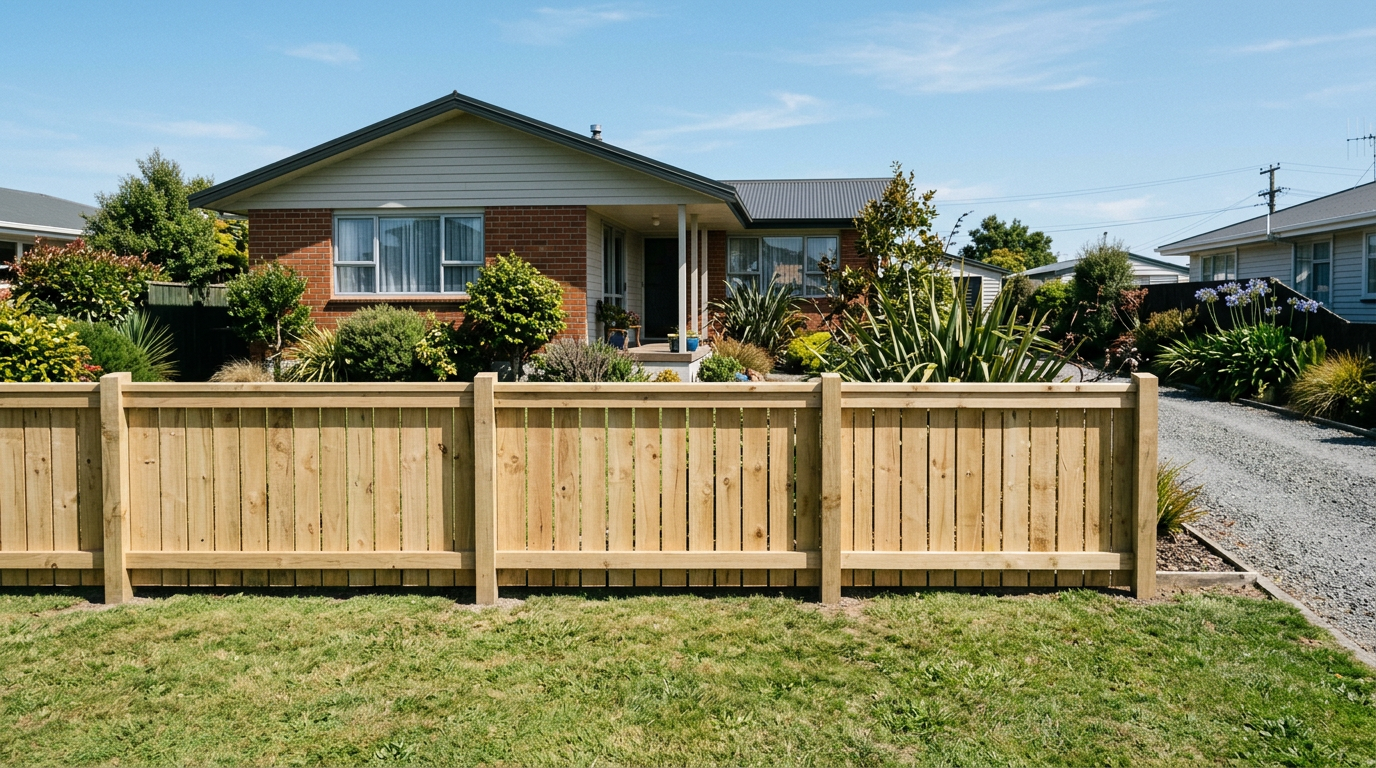
Choosing the right fence for your NZ home is more than a cosmetic decision — it affects your privacy, security, property value, and how much time you'll spend on upkeep over the years. Timber, aluminium, and PVC are the three most common fencing materials in New Zealand, and each has genuine strengths and real drawbacks. This guide gives you an honest, practical comparison so you can make the right call for your section.
Overview of Each Option
Timber Fencing
Timber is the classic Kiwi choice, and for good reason. It's versatile, widely available, and blends naturally into most landscapes. Common species used in NZ include treated pine (H3.2 or H4 rated for ground contact), macrocarpa, and kwila. Treated pine is the most affordable and readily available from suppliers like Mitre 10 and PlaceMakers. Hardwoods like kwila and macrocarpa are more durable but cost more upfront.
Timber does require ongoing maintenance — typically a stain, oil, or paint every few years — and is vulnerable to rot, borer, and weathering if neglected, particularly in wetter regions like the West Coast, Northland, or Wellington's exposed hillsides.
Aluminium Fencing
Aluminium has grown significantly in popularity for NZ homes, particularly for pool fencing, boundary fencing, and contemporary architectural styles. It's lightweight, rust-proof, and virtually maintenance-free. Powder-coated aluminium holds its colour well and won't corrode even in coastal environments — a major advantage in NZ where many homes are close to the sea.
Aluminium fencing is more expensive upfront than timber, but the low maintenance cost over its lifespan often makes it competitive on a total-cost basis. It's not as easy to customise on-site as timber, and some homeowners find it looks less warm or natural.
PVC Fencing
PVC (sometimes called vinyl fencing) is the low-maintenance option that looks clean and white straight out of the box. It won't rot, rust, or need painting, and it's easy to wipe down. However, PVC has some real limitations in the NZ context: it can become brittle and discolour over time with UV exposure, and it doesn't handle high winds as well as timber or aluminium without robust post systems. It's less common in NZ than in Australia or North America, so product availability and local installer experience can be more limited.
Head-to-Head Comparison
| Criteria | Timber | Aluminium | PVC |
|---|---|---|---|
| Upfront cost (guide only) | Lower | Medium–High | Medium |
| Lifespan | 15–30+ yrs (with maintenance) | 30–50+ yrs | 20–30 yrs |
| Maintenance required | High (staining/painting) | Very low | Low |
| Coastal/humid suitability | Poor–Fair (treated only) | Excellent | Good |
| Wind resistance | Good | Good | Fair |
| Aesthetic warmth | Excellent | Moderate | Low–Moderate |
| Customisability | Excellent | Moderate | Low |
| DIY friendliness | Good | Moderate | Moderate |
| Eco credentials | Good (sustainably sourced) | Moderate (recyclable) | Poor (plastic) |
| Pool fencing compliance | Possible (check NZ Building Code) | Common choice | Possible |
Cost Considerations
As a rough guide only, timber paling fences are generally the most affordable to install per metre, making them popular for long boundary runs. Aluminium slat or picket fencing sits at a higher price point but requires little ongoing spend. PVC sits somewhere in between for supply, though installation costs vary depending on the system.
Don't forget to factor in long-term costs: a timber fence that isn't maintained can fail within a decade, while a quality powder-coated aluminium fence may need nothing more than an occasional hose-down for 30+ years. BRANZ research consistently highlights that lifecycle costs — not just upfront price — should drive material decisions.
For pool fencing specifically, all materials must comply with the NZ Building Code clause F9 and the Fencing of Swimming Pools Act 1987. Your local council will inspect the installation, so always check requirements before you build. A licensed building practitioner can help ensure compliance — find one at LBP.
NZ-Specific Conditions to Consider
New Zealand's climate varies enormously — from the humid subtropics of Northland to the cold, wet south of Southland, and the salt-laden winds of coastal areas everywhere. This matters a lot for fencing:
- Coastal areas: Aluminium (powder-coated) is the clear winner. Untreated or poorly treated timber will deteriorate rapidly. PVC holds up reasonably well but can yellow with UV.
- High-wind zones (Wellington, Canterbury nor'westers, exposed rural sections): Timber and aluminium both perform well when properly installed with adequate post depth and spacing. PVC needs careful engineering.
- Wet/humid regions: Use H4-treated timber at minimum for any ground contact. Aluminium is worry-free. PVC can trap moisture at joins if not installed correctly.
- Fire-prone areas: Check with your local council. Timber carries obvious fire risk; aluminium and PVC are generally safer in this regard.
DIY or Hire a Pro?
Timber fencing is the most DIY-friendly option — most competent homeowners can build a basic paling fence with the right tools and some research. Aluminium panel systems often come as kits and are manageable for a confident DIYer, though cutting and fitting requires care. PVC systems can also be DIY-installed, but getting posts perfectly plumb and joins watertight takes practice.
For anything involving pool fencing, retaining walls over 1.5 metres, or fences on boundaries with easements or resource consent requirements, it's strongly advisable to use a qualified fencer. Mistakes can be costly to fix and may not pass council inspection. You can find experienced local fencing contractors on tradedirectory.co.nz.
Safety note: Before digging any post holes, always check for underground services. Contact Dial Before You Dig (0800 248 344) — hitting a power or gas line is a serious hazard. WorkSafe NZ has guidance on safe excavation practices.
Our Recommendation
There's no single best fencing material — it depends on your situation:
- Best for budget-conscious homeowners on a long inland boundary: Treated pine timber. Maintain it properly and it'll serve you well for decades.
- Best for coastal or low-maintenance lifestyles: Powder-coated aluminium. The higher upfront cost pays off in time and hassle saved.
- Best for a clean, modern look with minimal upkeep: Aluminium slat fencing is hard to beat in NZ conditions.
- Best for pool fencing: Aluminium is the most popular and practical choice for NZ pool compliance.
- PVC: A reasonable option if you find a quality product and experienced installer, but do your homework — it's less proven in NZ conditions than the other two.
Whatever you choose, quality installation matters as much as the material itself. A poorly set post will cause any fence to fail prematurely. If you're unsure, get a quote from a qualified fencer — it's often better value than a DIY job that needs redoing.





