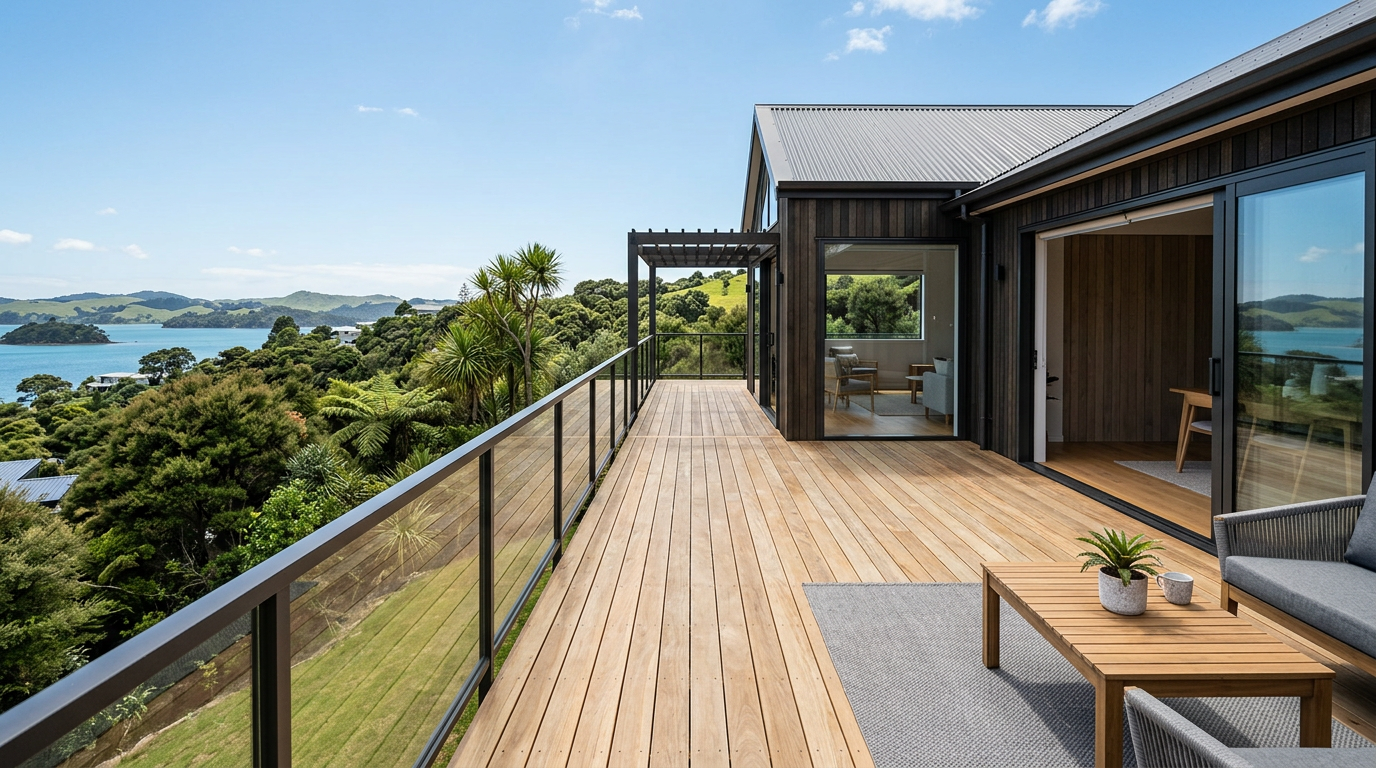
Summer is prime time for outdoor living in New Zealand, but it's also when your deck takes a beating — intense UV, foot traffic, BBQ spills, and coastal salt spray can all take their toll. A bit of seasonal maintenance now will protect your investment, keep your deck safe underfoot, and save you from costly repairs down the track.
Why Summer Deck Maintenance Matters
NZ's summer sun is notoriously harsh. Our high UV index accelerates the breakdown of timber oils and coatings, causing surfaces to grey, crack, and splinter faster than in many other countries. Add in humidity, summer rain events, and coastal salt air in places like Auckland, Wellington, and the Bay of Plenty, and you have a recipe for rapid deterioration if your deck is left unchecked.
Regular maintenance extends the life of your deck significantly. BRANZ research consistently shows that well-maintained timber decks can last many decades, while neglected ones may need full replacement within ten years. Prevention is always cheaper than replacement.
Know Your Deck Type
Before you start, identify what your deck is made from, as maintenance requirements differ:
| Deck Type | Oiling/Staining | Cleaning Method | Key Risk |
|---|---|---|---|
| Untreated hardwood (kwila, vitex) | Annual oiling | Soft brush + deck wash | Greying, cracking |
| Treated pine (H3.2/H4) | Stain or paint | Soft brush + deck wash | Rot if coating fails |
| Cedar | Oil or clear coat | Gentle wash | UV greying |
| Composite (e.g. Trex, Futurewood) | None required | Soap and water | Mould, staining |
| Aluminium | None | Rinse with water | Salt corrosion |
Summer Deck Maintenance Checklist
Work through this checklist at the start of summer (November–December) and again mid-season if your deck gets heavy use.
Cleaning
- Clear the deck — move furniture, pots, and the BBQ. Check underneath for trapped moisture, leaf litter, or debris between boards.
- Sweep thoroughly — remove all loose dirt, leaves, and cobwebs before wetting the surface.
- Apply a deck cleaner — use a purpose-made deck wash (available at Bunnings or Mitre 10) diluted to the manufacturer's instructions. Products containing oxalic acid are effective at lifting tannin stains and grey weathering from timber.
- Scrub with a stiff-bristled brush — always scrub along the grain of the timber, not across it, to avoid raising the grain.
- Rinse well — use a garden hose on a moderate setting. Avoid high-pressure water blasting on timber decks as it can damage the wood fibres and force water into joints. A low-pressure setting is fine for composite decking.
- Allow to dry fully — at least 48 hours of dry weather before applying any oil or coating.
Inspection
- Check all fixings — look for raised nail heads, loose screws, or corroded fasteners. In coastal areas, stainless steel fixings are essential; standard zinc-plated screws will corrode rapidly.
- Inspect the framing — peer underneath the deck and look for signs of rot, insect damage, or sagging joists. Probe suspect timber with a screwdriver; soft or spongy timber indicates decay.
- Look at the ledger board — where the deck attaches to the house is a common failure point. Check the flashing is intact and there's no moisture ingress into the wall framing.
- Check balustrades and handrails — give them a firm shake. Under the NZ Building Code, balustrades on decks more than 1 metre above ground must withstand specific loads and have no climbable gaps. Loose or non-compliant balustrades are a safety hazard.
- Inspect board gaps — boards should have a consistent gap (typically 5–6 mm) for drainage. Boards that have cupped, warped, or closed up may need replacing.
Oiling and Coating Timber Decks
- Choose the right product — penetrating deck oils (such as those from Resene or Wattyl) are ideal for hardwoods. Film-forming stains and paints suit treated pine but require more preparation if peeling occurs.
- Apply in the right conditions — early morning or late afternoon is best. Avoid applying oil in direct hot sun as it dries too quickly and won't penetrate properly. Aim for temperatures between 10°C and 30°C.
- Apply thin, even coats — two thin coats are better than one thick coat. Work along the grain and wipe off any excess before it becomes tacky.
- Allow full cure time — keep foot traffic off the deck for the time specified on the product label, usually 24–48 hours.
Composite and Aluminium Decks
- Wash composite decking with warm soapy water and a soft brush. Avoid oil-based products — they can stain composite surfaces.
- Remove any mould or mildew with a composite-safe cleaner; check the manufacturer's guidelines as harsh chemicals can void warranties.
- Rinse aluminium decking with fresh water, especially in coastal areas, to remove salt deposits.
Common Mistakes to Avoid
- Pressure washing timber at high pressure — this damages wood fibres and can force water into the substructure.
- Oiling a wet or dirty deck — oil won't penetrate properly and will peel prematurely.
- Ignoring the subframe — most deck failures start below the surface. Don't just focus on what looks good from above.
- Using the wrong timber treatment level — decking in ground contact or in very wet areas requires H4 or H5 treated timber per NZ standards. Using H3.2 in the wrong application leads to premature rot.
- Skipping the ledger flashing check — water ingress at the ledger is one of the most common causes of structural damage to both the deck and the house wall behind it.
When to Call a Professional
Some deck maintenance tasks are well within a capable homeowner's ability — cleaning, oiling, and tightening loose screws are all DIY-friendly. However, call a qualified deck builder or Licensed Building Practitioner (LBP) if you notice:
- Structural rot or significant timber decay in joists, posts, or the ledger board
- Sagging, bouncy, or uneven deck boards that suggest framing issues
- Non-compliant balustrades — any structural repair or replacement of balustrades on a deck over 1 metre high is restricted building work under the NZ Building Code and must be carried out or supervised by an LBP
- Deck requiring consent — if you're replacing more than minor elements, check with your local council whether a building consent is required
- Electrical work on the deck — any outdoor lighting, power outlets, or spa pool wiring is restricted electrical work and must be done by a registered electrician licensed with the EWRB
Safety note: Always check for overhead power lines before using ladders around your deck. If your deck has any electrical fittings, do not attempt DIY repairs — contact a registered electrician.
For peace of mind, find a qualified local deck builder or tradesperson on tradedirectory.co.nz who can carry out a professional inspection and any remedial work.




 Licensed Building Practitioner (LBP)





