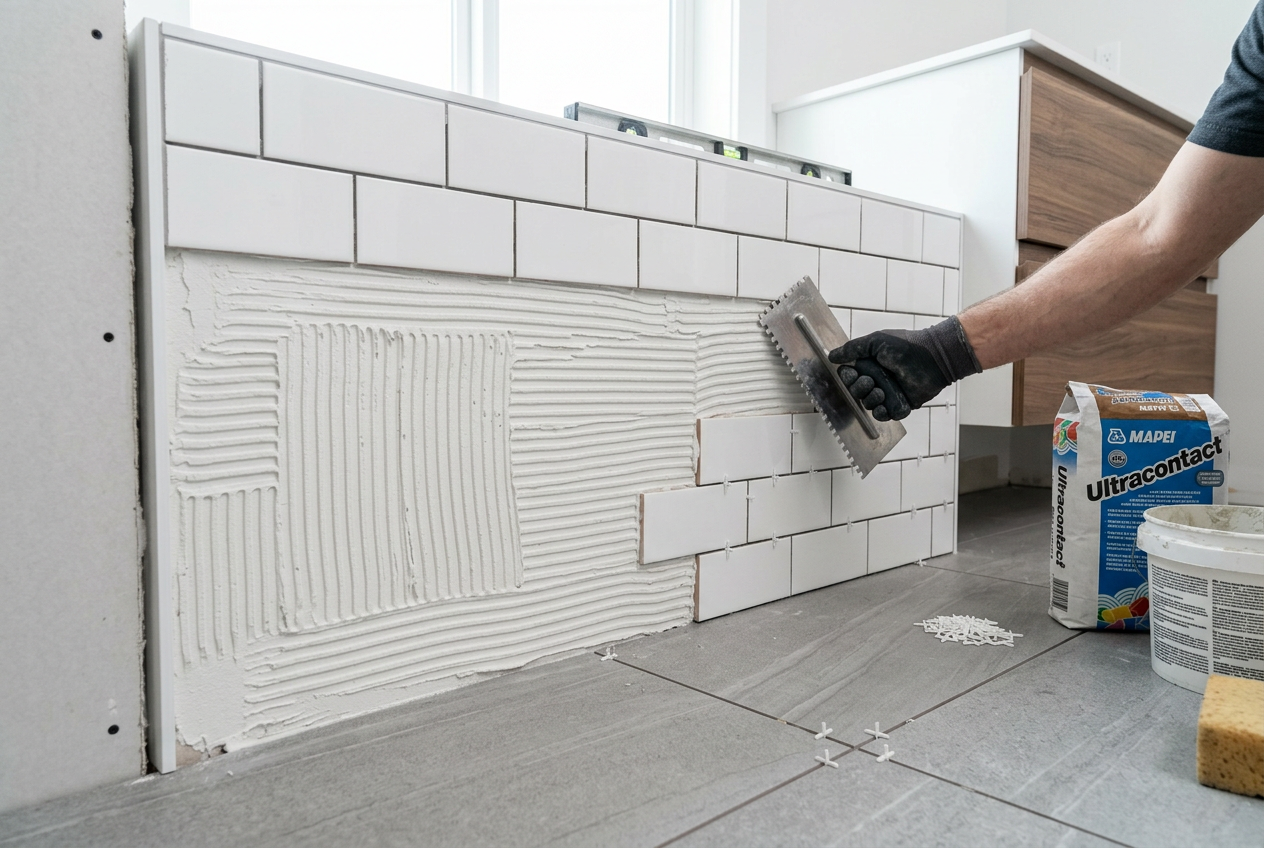
Both options are perfectly valid in New Zealand, and many tilers are happy either way — but the right choice depends on your budget, confidence, and how much involvement you want in the project. Understanding the trade-offs before you commit can save you time, money, and a few headaches.
The Case for Letting Your Tiler Source the Tiles
Most experienced tilers have strong relationships with tile suppliers and distributors, which can work in your favour.
- Trade pricing: Many tilers buy tiles at trade rates, sometimes passing savings on to you (or at least keeping the overall quote competitive).
- Product knowledge: A tiler who sources tiles regularly knows which products are suitable for wet areas, underfloor heating, outdoor use, or high-traffic floors — and which ones are a nightmare to cut or lay.
- Accountability: If the tiler supplies the tiles and something goes wrong — wrong quantity, damaged batch, or a product that doesn't perform — the responsibility sits with them, not you.
- Correct quantities: Calculating tile quantities (including the standard 10–15% wastage allowance for cuts and breakages) is something tilers do every day. Getting it wrong can mean costly delays waiting for more stock.
- Matching grout and adhesive: Your tiler will select a compatible adhesive and grout system. Using the wrong products can cause tiles to delaminate or grout to crack — a real risk if you're mixing and matching from different sources.
The Case for Supplying Your Own Tiles
There are good reasons why many homeowners prefer to choose and purchase their own tiles.
- Design control: You get to browse at your own pace, compare options across multiple retailers, and choose exactly the look you want without feeling rushed.
- Budget transparency: You know exactly what you're paying for the tiles themselves, separate from labour.
- Unique or imported tiles: If you've found something special — perhaps a handmade encaustic tile or a specific imported range — your tiler may not be able to source it. Supplying them yourself is often the only option.
- Retailer loyalty or rewards: If you have a trade account or loyalty points at a retailer like Mitre 10 or Bunnings, buying yourself can make financial sense.
Key Risks When You Supply Your Own Tiles
If you go down the DIY-supply route, be aware of a few important pitfalls.
Quantity errors
Underordering is the most common mistake. Always buy at least 10% extra — some tilers recommend 15% for diagonal or herringbone patterns. If your tile is discontinued and you run short mid-job, you may not be able to find more.
Suitability for the application
Not all tiles are created equal. The NZ Building Code sets requirements for slip resistance in wet areas (refer to clause F2 — Hazardous Building Materials), and tiles used in showers or around baths must be appropriate for wet-area use. Check the tile's slip rating (R-rating or P-rating) with your supplier before purchasing. Your tiler can advise on what's suitable.
Damaged or faulty tiles
If you supply tiles that arrive damaged or turn out to be faulty, the cost and delay of replacement falls on you. Inspect every box carefully before your tiler starts.
Adhesive and grout compatibility
Some tiles — particularly large-format, natural stone, or glass tiles — require specific adhesives. If you supply tiles but leave the tiler to source adhesive and grout, make sure they know the tile specifications. Products from reputable NZ suppliers like Ardex, Mapei, or Sika are widely used by professional tilers and are a good benchmark for quality.
A Useful Comparison
| Factor | You Supply Tiles | Tiler Supplies Tiles |
|---|---|---|
| Design choice | Full control | Limited to tiler's suppliers |
| Pricing | Retail or trade (if you have access) | Often trade pricing |
| Quantity risk | Your responsibility | Tiler's responsibility |
| Product suitability | You must verify | Tiler verifies |
| Accountability for faults | Shared or yours | Tiler's |
| Convenience | More effort for you | Hands-off |
What to Discuss With Your Tiler Before Deciding
Before making a call, have an honest conversation with your tiler. Ask:
- Do you have access to trade pricing, and will that be reflected in my quote?
- What tile brands or suppliers do you recommend for this application?
- If I supply tiles, will your quote change, and who is responsible if I underorder?
- Are there any tile types you won't work with (e.g., very small mosaics, certain natural stones)?
A good tiler will be upfront about all of this. For tips on what to look for in a quality tile installation, BRANZ publishes research and guidance on building materials and installation standards.
When to Call a Professional
Tiling in wet areas — showers, bathrooms, and laundries — must comply with the NZ Building Code, particularly clause E3 (Internal Moisture). While tiling itself is not restricted work in the same way as electrical or plumbing, the waterproofing membrane beneath tiles in wet areas is a critical building element. If done incorrectly, it can lead to serious moisture damage and may affect your home's insurance or consent compliance. Always use a qualified, experienced tiler for wet-area work. You can find licensed and experienced local tilers on tradedirectory.co.nz.
For any plumbing work associated with your tiling project (moving waste pipes, installing new fixtures), make sure a licensed plumber carries out that work — this is restricted work under the Plumbers, Gasfitters and Drainlayers Board.

 Site Safe
 SiteWise


 BCITO Qualified





