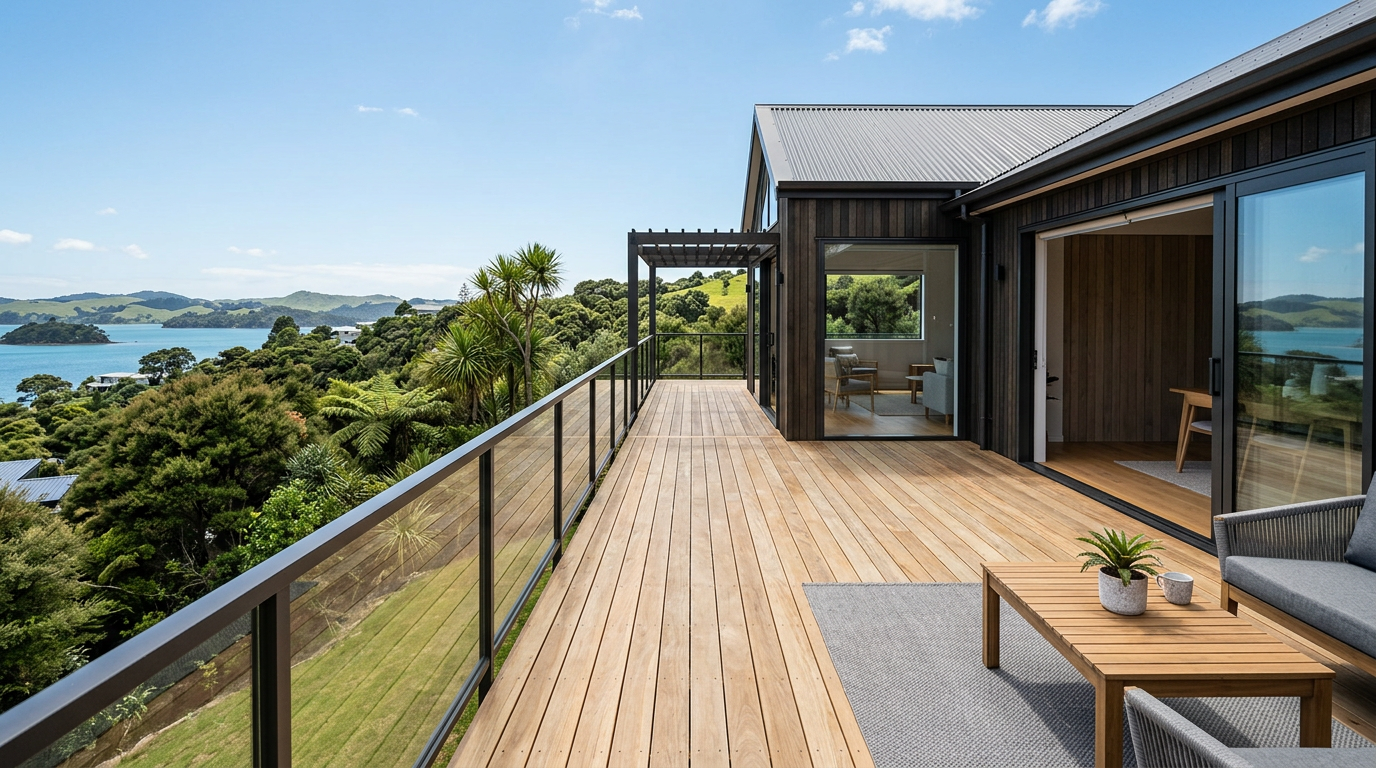
Paying a deposit to a deck builder is standard practice in New Zealand — it helps cover the cost of materials and secures your place in their schedule. As a guide, a deposit of 10–30% of the total quoted price is typical, though this can vary depending on the size of the job and the materials involved. Knowing what's reasonable, what to put in writing, and what red flags to watch for will help you start your project on the right foot.
Why Deck Builders Ask for a Deposit
Building a deck involves real upfront costs. Your builder will often need to purchase timber, fixings, decking boards, and other materials before a single post goes in the ground. A deposit helps them:
- Cover material costs before work begins
- Reserve time in their schedule for your project
- Commit both parties to the agreement
This is a legitimate and widely accepted part of the building trade in New Zealand. Most reputable builders will ask for one.
How Much Is a Fair Deposit?
As a general guide for NZ deck builds:
| Job Size | Typical Deposit Range |
|---|---|
| Small deck (under $10,000) | 10–20% |
| Medium deck ($10,000–$30,000) | 20–30% |
| Large or complex deck (over $30,000) | Negotiable, often staged payments |
These are approximate ranges only — actual amounts depend on the builder, materials, and your location. For larger projects, it's common to agree on staged payments tied to milestones (e.g., foundations complete, framing complete, decking laid, final sign-off). This approach protects both you and the builder.
Be cautious of any builder asking for more than 30–40% upfront, especially before a contract is signed or consent is obtained.
What Should Be in Place Before You Pay
Before handing over any money, make sure you have:
- A written contract or quote that clearly outlines the scope of work, materials, timeline, and payment schedule
- Confirmation of any required building consent — many decks over 1.5 metres above ground level require a building consent under the NZ Building Code. Check with your local council, as Schedule 1 exemptions may apply to lower decks, but this varies. See MBIE Building Performance for guidance on what requires consent
- Proof the builder is legitimate — check they hold a Licensed Building Practitioner (LBP) licence if the work is restricted building work. Decks attached to a house may qualify as restricted building work, meaning an LBP is legally required
- A receipt or written acknowledgement of your deposit payment
Red Flags to Watch Out For
Unfortunately, not every tradesperson operates with integrity. Watch out for these warning signs:
- Asking for a large cash deposit with no written agreement
- No physical address or verifiable business details
- Pressure to pay immediately or before a quote is confirmed
- Unwillingness to provide references or examples of previous work
- No mention of building consent when your deck likely needs one
If something feels off, trust your instincts. Consumer NZ has useful advice on dealing with tradespeople and your rights as a consumer.
Protecting Yourself With a Solid Contract
A good contract doesn't need to be complicated, but it should cover:
- Total price and what's included (and excluded)
- Payment schedule — deposit amount, milestone payments, and final payment
- Start and estimated completion dates
- Materials to be used (species of timber, decking board brand, fixings type)
- What happens if costs change (variation clauses)
- Dispute resolution process
For larger projects, you might consider using a standard contract form. BRANZ is a good resource for understanding building standards and best practice in NZ construction.
Staged Payments: A Smarter Approach for Bigger Decks
For decks costing $15,000 or more, consider negotiating a staged payment structure rather than a single large deposit. For example:
- 30% deposit on signing / before materials are ordered
- 30% on completion of foundations and framing
- 30% on completion of decking and balustrades
- 10% on final inspection and sign-off
This keeps cash flow manageable for the builder while ensuring you're not paying for work that hasn't been done yet.
When to Call a Professional
If your deck is attached to your home, elevated more than 1.5 metres, or includes features like a roof or integrated electrical lighting, you'll almost certainly need a licensed professional involved. Decks attached to a house may be restricted building work, meaning the design and construction must be carried out or supervised by a Licensed Building Practitioner. Any electrical work (outdoor lighting, power points) must be done by a registered electrician — check the Electrical Workers Registration Board to verify credentials.
Always confirm consent requirements with your local council before work begins — rules vary by region and deck design.
You can find qualified, reputable deck builders in your area on tradedirectory.co.nz.




 Licensed Building Practitioner (LBP)