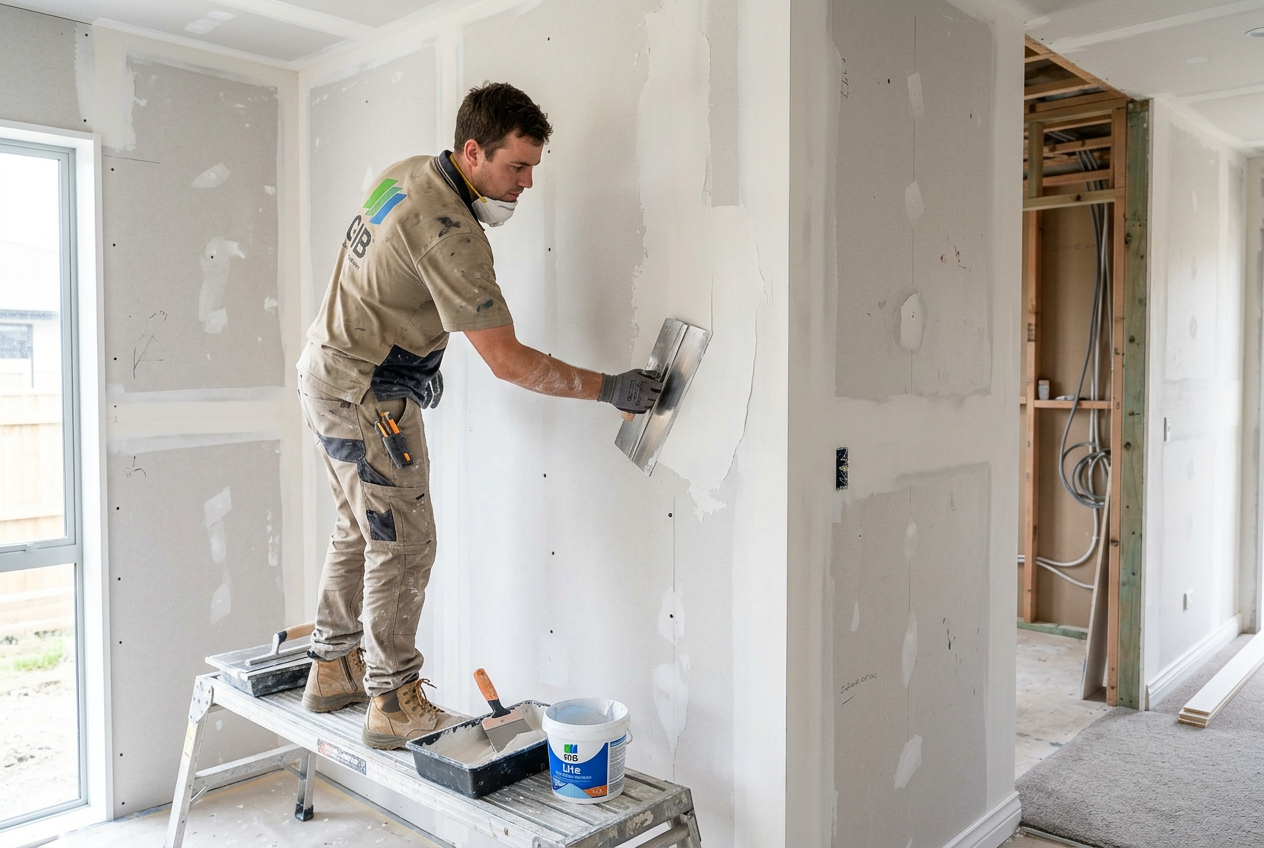
Yes, ideally you should have your plasterer and painter at least pencilled in — and ideally confirmed — before your build is even framed. In New Zealand's busy construction market, quality tradespeople are often booked weeks or months in advance, and getting them lined up early can save you costly delays down the track. Understanding the typical build sequence will help you plan smarter.
Why Trade Sequencing Matters
A new build or major renovation follows a fairly predictable order of trades. Framing comes early, but plastering and painting happen much later — typically after the roof is on, windows and doors are installed, insulation is in, and all the "rough-in" work (electrical, plumbing, and any ducting) is complete. Even so, the time between framing and plastering can be surprisingly short once things get moving, and if your plasterer isn't booked, you could be left waiting.
Delays in plastering flow directly into delays in painting, flooring, joinery installation, and your final code compliance inspection. In short, a gap in your trade schedule can push out your entire completion date.
The Typical Build Sequence for Plastering and Painting
Here's a simplified overview of where plastering and painting sit in a standard NZ new build:
| Stage | Trades Involved |
|---|---|
| Foundations & framing | Builder, engineer |
| Roof, windows, doors | Builder, roofer, glazier |
| Rough-in services | Electrician, plumber, gasfitter |
| Insulation | Insulation installer |
| Plasterboard stopping | Plasterer |
| Priming & painting | Painter |
| Flooring, joinery, fixtures | Various trades |
| Final fit-off (electrical, plumbing) | Electrician, plumber |
| Code compliance inspection | Building inspector |
As you can see, plastering and painting sit right in the middle of the build — they're the gateway to finishing trades. If they're delayed, everything behind them is delayed too.
How Far in Advance Should You Book?
This varies by region and how busy the market is, but as a general guide:
- In main centres (Auckland, Wellington, Christchurch, Hamilton), experienced plasterers and painters can be booked 4–12 weeks or more in advance.
- In regional areas, availability may be better, but specialist tradespeople can still be scarce.
- Post-disaster rebuild areas (such as parts of Hawke's Bay after Cyclone Gabrielle) may have very tight availability.
The safest approach is to start conversations with tradespeople as soon as your build consent is granted — or even while you're waiting for consent. You don't need to lock in exact dates immediately; many tradespeople are happy to provisionally hold a slot once they understand your build timeline.
What to Discuss With Your Plasterer Before Framing
When you make early contact, it's worth discussing:
- The plasterboard system being used — for example, GIB is the dominant brand in NZ and has specific stopping and finishing specifications your plasterer should be familiar with.
- The level of finish required — GIB specifies finish levels (Level 3, 4, or 5) that affect how much stopping work is needed, especially if you're planning a high-sheen paint.
- Wet area requirements — bathrooms and laundries need specific water-resistant board and systems to comply with NZ Building Code clause E3 (Internal Moisture). Your plasterer needs to know this upfront.
- Timeline flexibility — builds often run ahead or behind schedule, so discuss how much notice your plasterer needs to mobilise.
What to Discuss With Your Painter Early On
- Paint system and brand preferences — popular NZ brands include Resene, Dulux, and Wattyl. Your painter can advise on the right system for your substrate and climate.
- Exterior vs interior sequencing — exterior painting often happens before interior finishing is complete, so your painter may need to visit site more than once.
- Colour consultation — many painters offer this service, and deciding on colours early avoids last-minute changes that can delay the job.
- NZ climate considerations — humidity and temperature affect paint curing times. In wetter regions like the West Coast or Northland, your painter will need to factor this in.
Licensing and What to Check
Plastering and painting are not restricted building work under the NZ Building Act in the same way that structural or weathertightness work is — but that doesn't mean anyone can do it well. For a new build, your builder (who should be a Licensed Building Practitioner) is responsible for the overall quality of the work. Make sure any subcontractors they engage are experienced and can demonstrate their work.
If you're engaging plasterers and painters directly (common in owner-builder situations), ask for references and examples of previous work. BRANZ publishes good practice guidance on plastering and painting that reputable tradespeople will follow.
When to Call a Professional
For a new build, plastering and painting are almost always best left to experienced professionals. Stopping plasterboard to a high standard is a skilled trade — poor stopping will show through paint, especially in raking light. Similarly, a professional painter will know how to prepare surfaces properly, apply the correct number of coats, and ensure the finish meets the standard expected for a new home. You can find qualified local plasterers and painters on tradedirectory.co.nz.

 Master Painters NZ member








