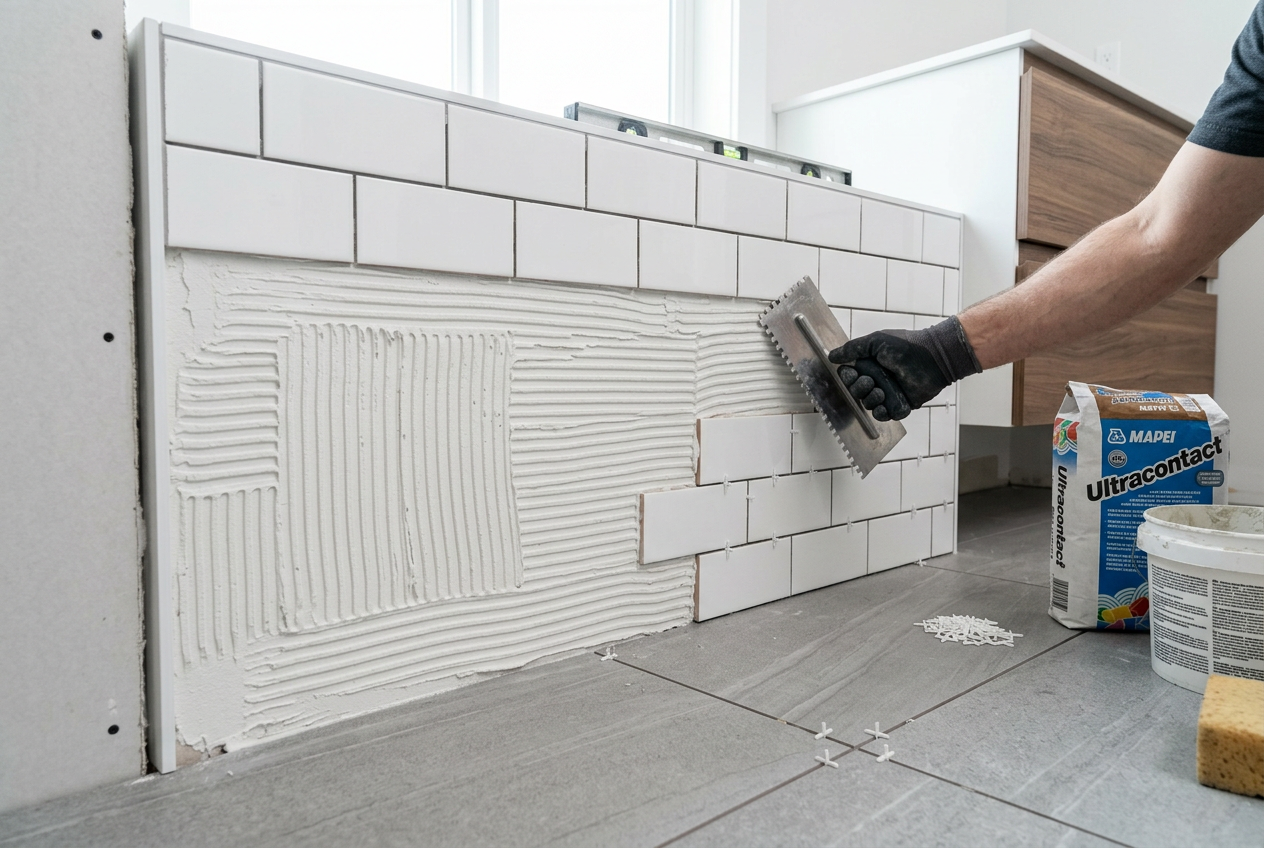
Choosing the right tile size can make or break the look and practicality of a room. Whether you're renovating a bathroom, laying a new kitchen floor, or updating an outdoor entertaining area, the decision between large-format and standard tiles is one worth getting right before you head to the tile shop. This guide breaks down the real differences so you can buy with confidence.
What are standard tiles?
Standard tiles are generally considered to be anything up to around 400 mm × 400 mm, though the industry most commonly uses sizes like 300 × 300 mm, 200 × 200 mm, and 300 × 600 mm. These have been the go-to choice for NZ homes for decades and are widely available at stores like Mitre 10 and Bunnings. They're familiar to most tilers, easier to handle, and suit a huge range of applications from small bathrooms to laundry floors.
What are large-format tiles?
Large-format tiles are typically 600 × 600 mm and above, with popular sizes including 600 × 1200 mm, 800 × 800 mm, and the increasingly fashionable 1000 × 3000 mm slabs (sometimes called porcelain panels or slabs). These create a sleek, contemporary look with fewer grout lines, making spaces feel larger and easier to clean. However, they come with specific installation requirements that not every tiler is experienced with.
Head-to-head comparison
| Criteria | Standard Tiles (up to 400×400 mm) | Large-Format Tiles (600×600 mm+) |
|---|---|---|
| Visual impact | Traditional, versatile, suits most styles | Modern, seamless look, makes rooms feel larger |
| Grout lines | More grout lines, more visible joins | Fewer joins, cleaner appearance |
| Installation difficulty | Suitable for experienced DIYers | Generally requires a professional tiler |
| Substrate prep | Standard prep acceptable | Requires very flat, rigid substrate (max 3 mm deviation per 3 m) |
| Weight | Lighter, easier to handle | Significantly heavier; structural loading must be considered |
| Waste/cutting | Easier to cut, less waste in small rooms | More waste in rooms with lots of cuts; cutting needs specialist tools |
| Suitability for wet areas | Well-proven in NZ bathrooms and showers | Suitable if correctly installed to NZ Building Code E3 |
| Outdoor use | Many options rated for outdoor use | Check slip rating (R-rating) carefully; large slabs can be tricky to lay level outdoors |
| Rough cost guide | Generally more affordable per m² | Often higher material cost; higher labour cost |
| DIY-friendly? | Yes, for competent DIYers on floors | Not recommended — best left to a qualified tiler |
| Maintenance | More grout to clean | Less grout; easier to wipe down |
Installation: the big difference
This is where large-format tiles really separate themselves. Because of their size, even a slight bow or hollow in the substrate causes lippage — where tile edges sit at different heights, creating a trip hazard and an unprofessional finish. BRANZ guidance and industry standards require substrates to be flat to within 3 mm over a 3-metre straightedge for large-format work.
Large tiles also require back-buttering (applying adhesive to both the tile and the substrate) and often a medium-bed or large-format tile adhesive such as products from Ardex or Mapei to achieve full coverage. Inadequate coverage beneath a large tile leads to cracking — especially on floors.
For standard tiles, an experienced DIYer can often achieve good results on a well-prepared floor. For large-format tiles, we strongly recommend hiring a qualified tiler. You can find experienced local tilers on tradedirectory.co.nz.
NZ-specific considerations
Wet areas: Under the NZ Building Code clause E3 (Internal Moisture), all tiled wet areas must be properly waterproofed before tiling. This applies regardless of tile size. Products like those from Sika are commonly used for membrane waterproofing. If you're tiling a shower or bathroom floor, waterproofing is non-negotiable.
Seismic movement: New Zealand's earthquake-prone environment means tile installations — particularly large-format — benefit from flexible adhesives and movement joints at perimeters and internal corners. A rigid installation in a seismic zone is more likely to crack or delaminate over time.
Outdoor and coastal areas: NZ's UV exposure and coastal salt air can affect some tile finishes. For outdoor use, always check the tile's slip resistance rating (P3 or R11 minimum is generally recommended for wet outdoor areas) and confirm the adhesive and grout are rated for exterior use.
Underfloor heating: Large-format tiles work beautifully over in-slab or electric underfloor heating, but the system must be compatible with the adhesive and the tile's thermal expansion characteristics. Check with your supplier and refer to MBIE Building Performance guidance if you're unsure.
Cost considerations
As a rough guide only, standard tiles are generally the more budget-friendly option across both materials and labour. Large-format tiles typically cost more per square metre to purchase, and because installation takes longer and requires more skill, labour costs are higher too. Factor in additional costs for substrate levelling compounds (often needed for large-format work), specialist cutting equipment, and potentially more adhesive due to back-buttering requirements.
That said, the reduced grout lines mean lower ongoing maintenance costs, and the visual payoff in the right space can add real value to your home.
Our recommendation
Choose standard tiles if: you have a smaller or awkwardly shaped room, you're working to a tighter budget, you want a DIY-friendly project, or you prefer a classic or traditional aesthetic. They're also the safer bet for older homes where the substrate or floor structure may not be perfectly flat or rigid.
Choose large-format tiles if: you have a larger open-plan space (living areas, open bathrooms, alfresco areas), you want a contemporary low-maintenance finish, and you're prepared to invest in professional installation and proper substrate preparation. They're particularly striking in main bathrooms, ensuite wet rooms, and modern kitchen floors.
Whatever you choose, don't cut corners on substrate preparation, waterproofing, or adhesive quality. A tile job done properly will last decades; one done poorly can fail within a few years. If you're unsure, get a qualified tiler to assess your space before you buy a single tile.

 Site Safe
 SiteWise


 BCITO Qualified





