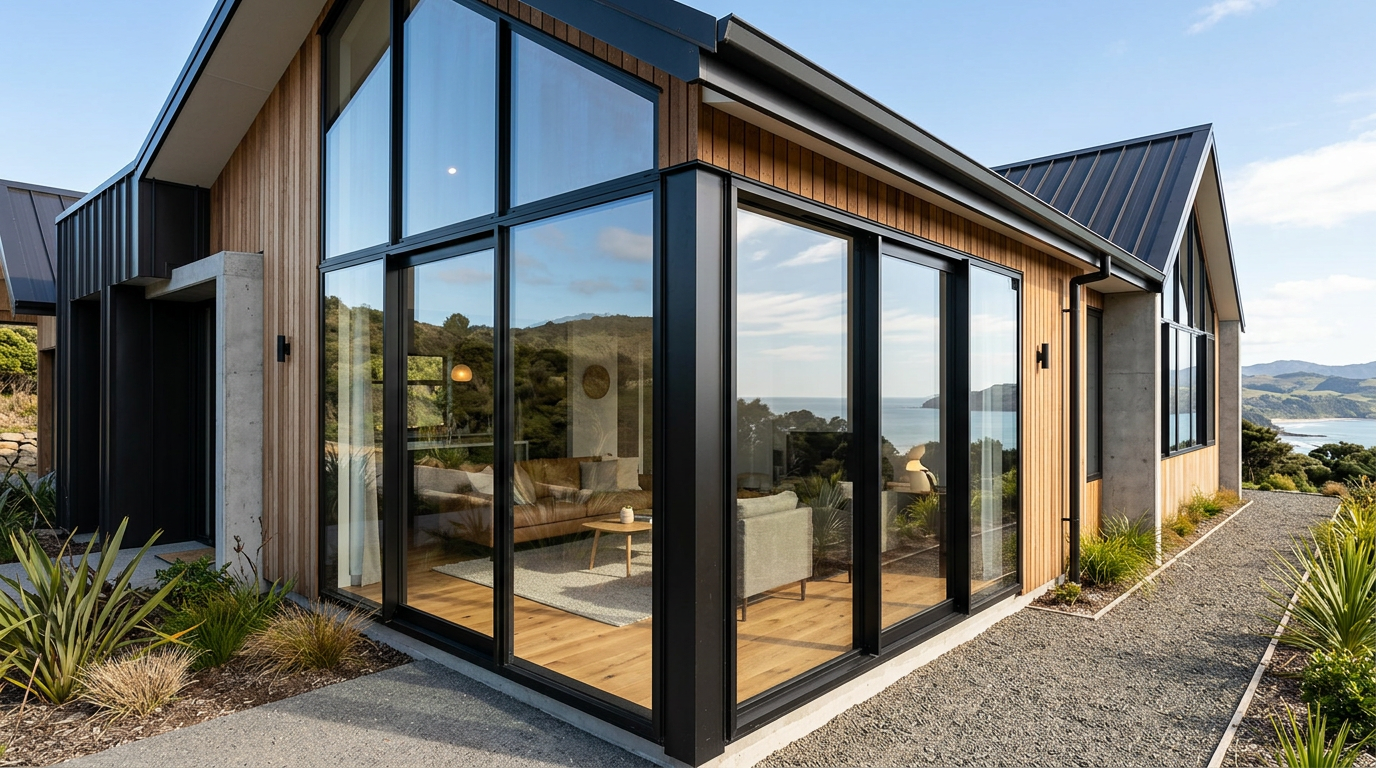
When it comes to glazing in your home, not all glass is created equal — and in New Zealand, the law is quite specific about where safety glass must be used. Whether you're replacing a shower screen, installing a new balustrade, or fitting a large sliding door, understanding the difference between laminated and toughened (tempered) safety glass could save you from a costly mistake — or a serious injury.
What Is Toughened (Tempered) Safety Glass?
Toughened glass, also called tempered glass, is standard float glass that has been heat-treated to make it significantly stronger than ordinary glass. When it does break, it shatters into small, relatively blunt pebbles rather than sharp shards — dramatically reducing the risk of serious cuts.
The toughening process involves heating the glass to around 620°C and then rapidly cooling it, creating internal stresses that give it its strength. Once toughened, the glass cannot be cut or drilled — all sizing and hole-cutting must be done beforehand.
Key characteristics:
- Roughly four to five times stronger than standard glass of the same thickness
- Breaks into small, granular pieces ("dicing")
- Cannot be cut after manufacture
- Generally more affordable than laminated glass
- Does not hold together when broken — the entire pane can fall away
What Is Laminated Safety Glass?
Laminated glass consists of two or more panes of glass bonded together with one or more interlayers — typically a polyvinyl butyral (PVB) film. When broken, the interlayer holds the glass fragments in place, keeping the pane largely intact. Think of it like a car windscreen: it cracks but stays in one piece.
Laminated glass can be made using standard float glass, toughened glass, or a combination of both, depending on the performance required.
Key characteristics:
- Holds together when broken — fragments stay bonded to the interlayer
- Provides a significant barrier even after breakage
- Offers acoustic (sound) dampening benefits
- Provides UV filtering (the interlayer blocks most UV radiation)
- Generally more expensive than toughened glass
- Can be cut on site (if using non-toughened laminates), though this is specialist work
Head-to-Head Comparison
| Criteria | Toughened Glass | Laminated Glass |
|---|---|---|
| Breakage pattern | Shatters into small pebbles | Cracks but stays in one piece |
| Post-break barrier | None — pane falls away | Yes — interlayer holds fragments |
| Strength | Very high impact resistance | Moderate to high (varies by build) |
| Acoustic performance | Minimal improvement | Good sound dampening |
| UV protection | None | Yes (PVB interlayer blocks ~99% UV) |
| Approximate cost (guide only) | Lower cost | Higher cost |
| DIY-friendly | No — must be factory-made | No — specialist glazier required |
| Typical NZ use | Shower screens, doors, balustrades | Skylights, overhead glazing, rooflights, security |
| NZ Building Code suitability | Critical locations at floor level | Overhead and sloped glazing |
Where NZ Law Requires Safety Glass
The NZ Building Code — specifically Clause F4 (Safety from Falling) and Clause F2 (Hazardous Building Materials) — sets out where safety glazing is mandatory. BRANZ guidance and NZS 4223: Glazing in Buildings (the key New Zealand Standard) provide the technical detail on which type of safety glass is required and where.
Where Toughened Glass Is Typically Required
- Shower screens and wet area enclosures — any glass in a shower or bath enclosure must be safety glass; toughened is the most common choice
- Sliding and bi-fold doors — large glazed panels in doors that reach near floor level
- Sidelights beside doors — glass panels within 500mm of a door opening and within 1500mm of the floor
- Low-level glazing — any glazing with its lower edge within 500mm of the floor in a critical location
- Balustrades and pool fencing — frameless or semi-frameless glass balustrades commonly use toughened glass (often 12mm or thicker)
Where Laminated Glass Is Typically Required
- Overhead and sloped glazing — skylights, rooflights, and any glazing installed at an angle above head height must use laminated glass (or laminated toughened). This is critical: if toughened glass breaks overhead, the entire pane falls. Laminated glass stays in place.
- Glass roofs and canopies — same principle applies
- High-security applications — where a post-break barrier is needed (e.g., shop fronts, schools)
- Acoustic glazing — where noise reduction is the primary goal
- Some balustrade applications — particularly where a fall from height is possible and the glass must remain as a barrier even after impact
Important: For overhead glazing, using toughened-only glass is not compliant with the NZ Building Code. Always use laminated (or laminated toughened) glass in any sloped or horizontal application above head height.
Cost Considerations
As a rough guide only, toughened glass is generally the more budget-friendly option for standard applications like shower screens and doors. Laminated glass carries a price premium due to the additional manufacturing process and materials involved.
However, cost should never be the deciding factor where safety and compliance are concerned. Installing the wrong type of glass can result in a failed building consent inspection, insurance complications, or — most importantly — serious injury. Always get quotes from a qualified glazier who can confirm compliance for your specific situation.
You can find licensed glaziers in your area through tradedirectory.co.nz.
NZ-Specific Considerations
- Pool fencing: Under the Building Act, pool barriers are restricted building work. Glass pool fencing must meet specific height and strength requirements — your glazier must be an Licensed Building Practitioner (LBP) or work under one.
- Coastal and high-wind zones: In exposed NZ locations, thicker or laminated glass may be specified by your engineer for wind load compliance.
- Earthquake considerations: Laminated glass is increasingly specified in commercial buildings for seismic resilience, as it stays in place after breakage.
- Healthy Homes and rentals: While glazing type isn't directly covered by Healthy Homes standards, double-glazed laminated units can contribute to thermal performance requirements.
Our Recommendation
For shower screens, internal doors, and low-level glazing: Toughened glass is the standard, compliant, and cost-effective choice. Ensure it's at least 6mm thick and carries the appropriate safety marking (look for the AS/NZS 2208 stamp).
For skylights, rooflights, glass canopies, or any overhead glazing: Always specify laminated glass — ideally laminated toughened for maximum performance. This is non-negotiable under the NZ Building Code.
For balustrades and pool fencing: Consult your glazier and, where required, an LBP. The application, height, and load requirements will determine whether toughened, laminated, or laminated toughened is appropriate.
When in doubt: Get a qualified glazier to assess your project. Glazing compliance is not an area to guess at — the consequences of getting it wrong range from a failed inspection to a life-threatening accident. A good glazier will specify the correct product, handle the installation, and provide the documentation you need for your building consent.



 Window & Glass Association