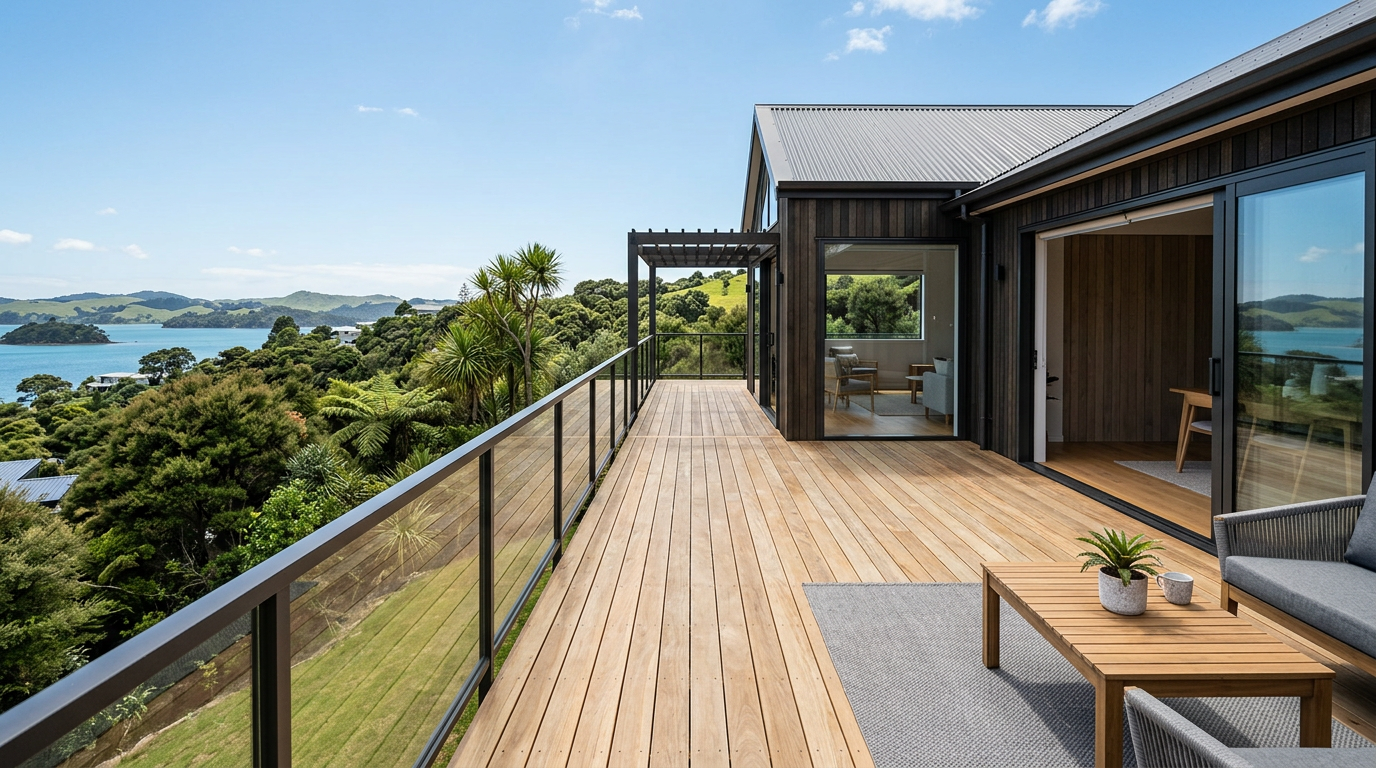
Choosing the right decking material is one of the most important decisions you'll make for your outdoor living space. Get it right and you'll have a deck that looks great and lasts for decades; get it wrong and you could be facing costly repairs or a full replacement within a few years. In New Zealand, the three most popular options are kwila (a hardwood timber), treated pine (a softwood), and composite decking (an engineered wood-plastic product). Each has genuine strengths and real trade-offs — here's an honest breakdown to help you decide.
Overview of Each Option
Kwila (Merbau)
Kwila is a dense, rich reddish-brown tropical hardwood imported primarily from Papua New Guinea and Southeast Asia. It's long been a prestige choice for NZ decks thanks to its natural beauty, hardness, and impressive durability. Kwila is naturally resistant to rot, insects, and weathering, making it well-suited to NZ's varied climate — from the humid north to the UV-intense Central Otago summers.
One thing to be aware of: kwila bleeds a reddish-brown tannin when first installed, which can stain surrounding concrete, pavers, and clothing. This washes away over time but needs managing in the early weeks. Kwila also requires regular oiling (typically once a year) to maintain its colour; left untreated it will silver off gracefully, though many homeowners prefer to keep the warm tones.
Sustainability is a genuine concern. Look for kwila certified by the Forest Stewardship Council (FSC) or ask your supplier for chain-of-custody documentation. Reputable NZ suppliers can provide this.
Treated Pine
Treated pine (typically radiata pine treated to H3 or H4 hazard class for outdoor use) is the most affordable and widely available decking timber in New Zealand. It's sold at Bunnings, Mitre 10, and PlaceMakers, and most deck builders are very familiar with working with it.
Pine is a softwood, so it's more prone to denting, splintering, and surface wear than hardwoods. However, when properly maintained — sealed, stained, or painted every couple of years — a pine deck can last 15–25 years. It's also easy to cut, nail, and work with, making it the most DIY-friendly option. Always confirm the treatment level: H3.2 is the minimum for above-ground exterior use; H4 is required for ground contact or areas with high moisture exposure, as specified under the NZ Building Code.
Composite Decking
Composite decking is made from a blend of recycled timber fibre and plastic (usually PVC or polyethylene), formed into boards that mimic the look of timber. Quality varies enormously between brands and price points, so it pays to research carefully.
The main appeal is low maintenance — composite boards don't need oiling, staining, or painting, and they won't rot or splinter. They're also consistent in appearance and increasingly realistic-looking. The downsides: quality composite is expensive upfront, cheaper products can fade, warp, or grow mould in shaded or damp NZ conditions, and composite can get noticeably hot underfoot in direct summer sun. Check that any product you consider meets BRANZ appraisal standards or carries credible third-party testing for NZ conditions.
Head-to-Head Comparison
| Criteria | Kwila | Treated Pine | Composite |
|---|---|---|---|
| Durability | Excellent (30–50+ yrs with care) | Moderate (15–25 yrs with maintenance) | Good–Excellent (varies by brand; 25+ yrs quality product) |
| Appearance | Rich, warm, premium timber look | Natural timber look, variable grain | Consistent, timber-like; can look artificial |
| Maintenance | Annual oiling recommended | Re-seal/stain every 1–3 years | Very low — occasional wash only |
| Splinter/slip risk | Low (dense grain) | Moderate (can splinter as it ages) | Low (most have textured surface) |
| NZ climate suitability | Excellent | Good (if correctly treated) | Good (check brand for UV/mould resistance) |
| Sustainability | Moderate (buy FSC-certified) | Good (NZ-grown radiata pine) | Good (often uses recycled content) |
| DIY friendliness | Moderate (hard to cut/nail) | High (easy to work with) | Moderate (hidden fastener systems) |
| Rough cost guide | $$$ (higher upfront) | $ (lowest upfront) | $$$–$$$$ (mid to high upfront, low ongoing) |
Cost guide is approximate only and varies by supplier, region, and board profile. Get quotes from local deck builders for accurate pricing.
Cost Considerations
Treated pine is the clear winner on upfront cost — boards are widely available and affordable, and labour costs are generally lower because it's easy to work with. However, factor in the ongoing cost of maintenance products and your time every year or two.
Kwila sits in the mid-to-upper price range for the boards themselves, but its longevity means the lifetime cost can be competitive. Quality decking oil from Resene or Wattyl is an ongoing expense.
Composite decking typically has the highest upfront cost, especially for reputable brands with solid warranties. The trade-off is minimal ongoing spend — no oils, stains, or sealers required. Over 20–30 years, composite can work out cost-competitive or even cheaper than pine when you account for maintenance.
Always get at least two or three quotes from qualified deck builders. You can find licensed local professionals on tradedirectory.co.nz.
NZ Building Code and Structural Notes
Regardless of which decking material you choose, the subframe and structure must comply with NZS 3604 (Timber-framed buildings) and the NZ Building Code. Decks over 1.5 metres above ground, or attached to the house in certain ways, typically require a building consent — check with your local council before starting. The MBIE Building Performance website has clear guidance on when consent is required.
If your deck involves any electrical work (lighting, outdoor power points), this is restricted electrical work and must be carried out by a registered electrician under the Electrical Workers Registration Board (EWRB). Don't attempt this yourself.
Our Recommendation
There's no single "best" option — it depends on your priorities:
- Choose kwila if you want a premium, long-lasting timber deck with a classic NZ look, you're happy to oil it annually, and you have the budget. Ideal for exposed, high-use decks where appearance matters.
- Choose treated pine if budget is your primary concern, you're comfortable with regular maintenance, or you want a DIY-friendly project. A well-maintained pine deck is perfectly respectable and practical.
- Choose composite if you want a low-maintenance deck for the long term, have young children (no splinters), or are building in a shaded or damp area where timber maintenance would be a constant battle. Spend up on a quality brand — cheap composite is a false economy.
For most NZ homeowners building a mid-range deck in a sunny, exposed location, kwila or quality composite offer the best long-term value. For a budget-conscious first deck or a rental property, treated pine is a solid, proven choice.
Whatever you choose, a skilled deck builder will ensure the structure is safe, compliant, and built to last. Find a qualified local deck builder on tradedirectory.co.nz.



 Licensed Building Practitioner (LBP)