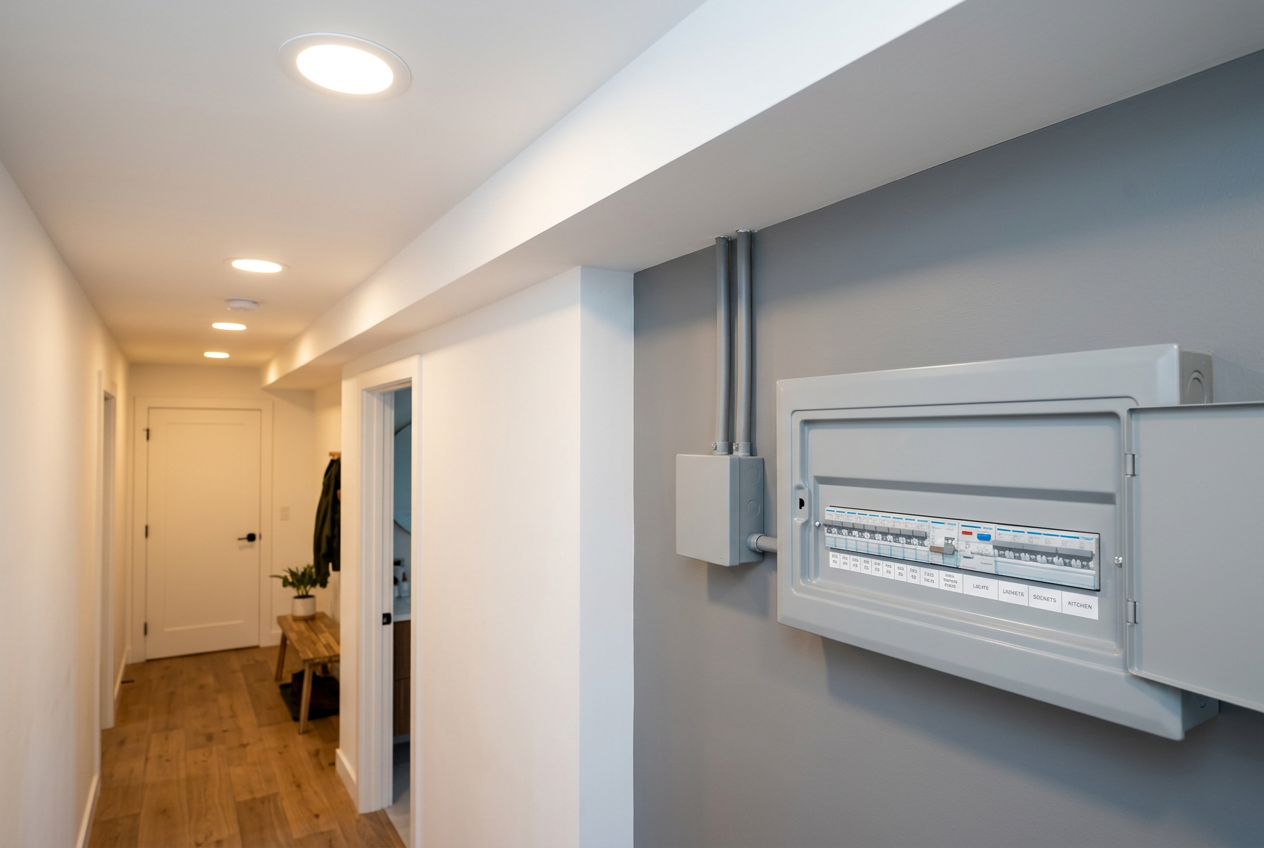
A Certificate of Compliance (CoC) must be issued by the licensed electrician or electrical inspector as soon as practicable after the electrical work is completed and confirmed safe — in practice, this usually means within a few days of finishing the job, and no later than required under the Electricity (Safety) Regulations 2010. Understanding this process helps you protect your home, your insurance, and your legal obligations as a property owner.
What Is a Certificate of Compliance?
A CoC is the official document that confirms electrical work has been carried out in accordance with the Electricity (Safety) Regulations 2010 and the relevant New Zealand wiring standard, AS/NZS 3000 (the "Wiring Rules"). It is issued by the person who did the work — either a Registered Electrician or a Licensed Electrical Inspector (LEI) — and it is your proof that the installation is safe and compliant.
The Electrical Workers Registration Board (EWRB) oversees the licensing of electricians and electrical inspectors in New Zealand. Only people registered with the EWRB are legally permitted to carry out and certify restricted electrical work.
When Must the CoC Be Issued?
Under the Electricity (Safety) Regulations 2010, a CoC must be issued as soon as practicable after the work is completed. In everyday terms, this generally means:
- Simple domestic jobs (e.g. adding a power point, installing a light fitting): the CoC should be issued within a few days of completion — often the same day or the next working day.
- Larger or more complex installations (e.g. a new switchboard, a full rewire, or a new build): it may take a little longer if testing and inspection are required, but it should still be issued promptly once the work passes inspection.
There is no fixed number of days written into the regulations — "as soon as practicable" is the legal standard — but if your electrician is taking weeks without a clear reason, that is worth querying directly.
Who Can Issue a CoC?
Only a Registered Electrician (for work they personally carried out) or a Licensed Electrical Inspector can issue a CoC. A trainee or apprentice cannot issue one independently. If your electrician is not registered, they cannot legally do restricted electrical work in the first place — you can verify registration on the EWRB website.
What Work Requires a CoC?
Restricted electrical work — which covers most wiring, switchboard work, and fixed appliance connections — always requires a CoC. This includes:
- Installing or altering wiring in walls, ceilings, or floors
- Switchboard upgrades or additions
- Installing fixed appliances (e.g. heat pumps, ovens, hot water cylinders)
- Any new circuits
Minor work that a homeowner may do themselves (such as replacing a light bulb or a plug on a cord) does not require a CoC, but the line between minor and restricted work is strict. When in doubt, check with the EWRB or a qualified electrician.
Does a CoC Mean a Building Consent Inspection Is Done?
Not necessarily — these are two separate processes. Some electrical work also requires a building consent and a code compliance certificate (CCC) from your local council. The CoC covers electrical safety compliance, while the CCC covers the broader building work under the Building Act 2004. Always check with your local council whether your project needs a building consent. MBIE Building Performance has useful guidance on when consents are required.
What Should You Do When You Receive Your CoC?
- Check the details are correct: your address, the scope of work, the electrician's licence number, and the date.
- Keep it in a safe place: you will need it if you sell your home, make an insurance claim, or if the work is ever queried.
- Check it matches the work done: the CoC should accurately describe what was installed or altered.
| Document | Issued by | Purpose |
|---|---|---|
| Certificate of Compliance (CoC) | Registered Electrician / LEI | Confirms electrical work is safe and compliant |
| Code Compliance Certificate (CCC) | Local council | Confirms building work meets the NZ Building Code |
| Producer Statement | Engineer or specialist | Supports a building consent application |
What If Your Electrician Hasn't Issued a CoC?
If your job is finished and you haven't received a CoC after a reasonable time, follow these steps:
- Ask your electrician directly — sometimes it's simply an admin delay.
- Put your request in writing (email is fine) so there is a record.
- Contact the EWRB if the electrician refuses or is uncontactable — failing to issue a CoC is a serious breach of their obligations.
Safety Note
Never attempt restricted electrical work yourself. Unlicensed electrical work is illegal in New Zealand, can void your home insurance, and — most importantly — can cause fires or electrocution. Always use a registered electrician and always ask for your CoC. WorkSafe NZ has further information on electrical safety obligations.
When to Call a Professional
For any wiring, switchboard, or fixed appliance work, you must use a Registered Electrician. You can find qualified, local electricians on tradedirectory.co.nz. A good electrician will issue your CoC promptly and without you having to chase them — it's part of the job.
Sources & Further Reading
- Electrical Workers Registration Board (EWRB) — verify electrician registration and understand licensing requirements
- MBIE Building Performance — building consents, code compliance, and the NZ Building Code
- WorkSafe NZ — electrical safety and workplace hazards
- Consumer NZ — homeowner rights when hiring tradespeople

 Site Safe
 Licensed Electrical Inspector







