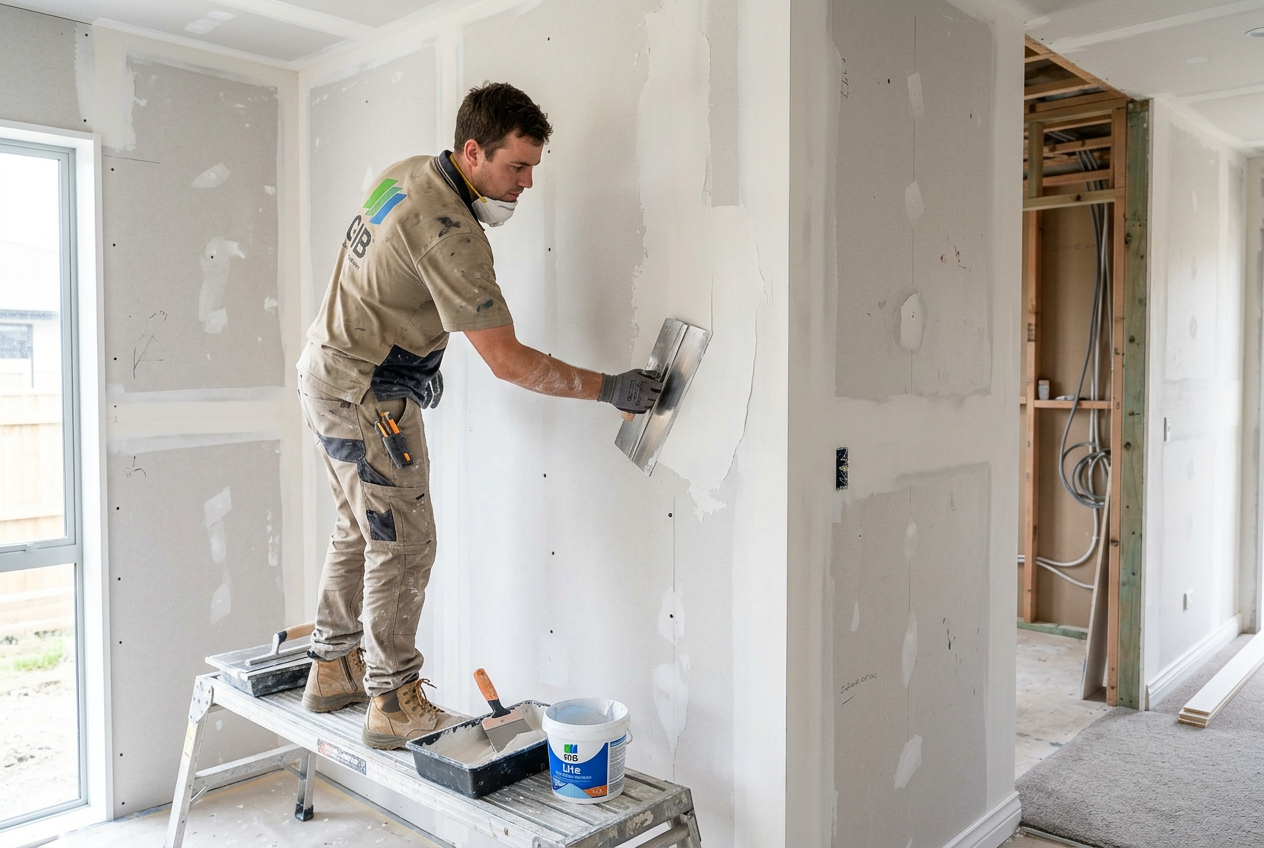
A quality exterior render job in New Zealand typically involves two to three coats, depending on the substrate, the render system being used, and the finish you're after. Each coat plays a distinct role in building up a durable, weathertight wall surface that can handle our varied Kiwi climate — from coastal salt air to the freeze-thaw cycles of the South Island.
The Standard Three-Coat System
The traditional and most robust approach is a three-coat render system, which has been used on masonry and concrete block walls for generations. Here's how it breaks down:
1. Scratch Coat (First Coat)
The scratch coat is the foundation of the render system. It's applied directly to the substrate — whether that's concrete block, brick, or a fibre cement sheet like James Hardie products — and is typically 6–10 mm thick. Once applied, the surface is scratched or scored with a comb-like tool to create a mechanical key for the next coat to bond to. This coat must cure properly before the next is applied.
2. Float Coat (Second Coat)
The float coat (sometimes called the brown coat) is applied once the scratch coat has cured sufficiently — usually after at least 24–48 hours, though this depends on conditions. This coat is typically 6–10 mm thick as well, and its job is to level and straighten the wall surface. A good renderer will use a straight edge and float to achieve a flat, even plane. This is where the skill really shows.
3. Finish Coat (Third Coat)
The finish coat is the thinnest layer — often just 3–6 mm — and provides the final texture and appearance. Common NZ finishes include:
- Smooth trowel finish – sleek and contemporary
- Sand finish – lightly textured, very popular in NZ
- Roughcast or pebbledash – more textured, good for hiding imperfections
- Tyrolean finish – a spattered, rustic look
The finish coat is also where colour can be introduced, though most renderers recommend painting over a plain render finish for better long-term colour control. Brands like Resene and Dulux offer exterior masonry paints well suited to rendered surfaces.
Two-Coat Systems
Modern proprietary render systems — particularly those used over lightweight substrates like fibre cement sheet or polystyrene (EPS) cladding systems — often use a two-coat approach. These systems typically involve:
- A base coat embedded with fibreglass reinforcing mesh (especially important on EPS systems)
- A texture or finish coat
Products from manufacturers like Sika and Ardex include proprietary two-coat systems designed to meet specific performance requirements. These systems are engineered to work together, so it's critical to follow the manufacturer's specifications — mixing products from different systems can compromise weathertightness and void warranties.
Why Coat Thickness and Curing Matter
In New Zealand, weathertightness is a serious concern. The NZ Building Code — particularly Clause E2 (External Moisture) — requires that cladding systems prevent moisture from entering the building envelope. MBIE Building Performance provides guidance on compliant cladding systems, and BRANZ has extensive research on render performance in NZ conditions.
Applying coats too thickly, or not allowing adequate curing time between coats, can lead to:
- Cracking as the render shrinks during drying
- Delamination where coats separate
- Moisture trapping behind the render
Total render thickness for a three-coat system is typically 15–25 mm on masonry. On lightweight substrates, proprietary systems are usually thinner — always check the manufacturer's data sheet.
Substrate Makes a Difference
The number of coats and the products used will vary depending on what you're rendering over:
| Substrate | Typical System | Notes |
|---|---|---|
| Concrete block / brick | 2–3 coat traditional | May need bonding agent |
| Fibre cement sheet | 2–3 coat proprietary | Mesh reinforcement recommended |
| EPS (polystyrene) | 2-coat proprietary | Specialist system required |
| Hebel (AAC block) | 2-coat proprietary | Manufacturer system preferred |
Do You Need a Building Consent?
Re-rendering an existing wall as like-for-like maintenance generally falls under Schedule 1 exemptions to the Building Act and won't require a consent. However, if you're changing the cladding system, adding insulation, or the work is part of a larger project, a consent may be needed. Always check with your local council before starting work — requirements vary by region and project scope.
When to Call a Professional
Rendering is a skilled trade. Achieving flat, crack-free, weathertight render across a whole house exterior is not a DIY-friendly job for most homeowners. A professional renderer will:
- Assess the substrate and recommend the right system
- Ensure correct coat thicknesses and curing times
- Apply control joints to manage cracking
- Deliver a consistent finish
Poor rendering can lead to costly moisture damage and remediation work. If you're looking for a qualified local renderer, you can find one on tradedirectory.co.nz. For licensed building work and to verify a tradesperson's credentials, check the Licensed Building Practitioners register.
Sources & Further Reading
- MBIE Building Performance – Cladding and weathertightness guidance
- BRANZ – Research and technical guidance for NZ construction
- James Hardie – Fibre cement substrate and render system information
- Sika NZ – Render and facade system products
- Ardex NZ – Render and coating systems
- Licensed Building Practitioners register

 Licensed Building Practitioner (LBP)