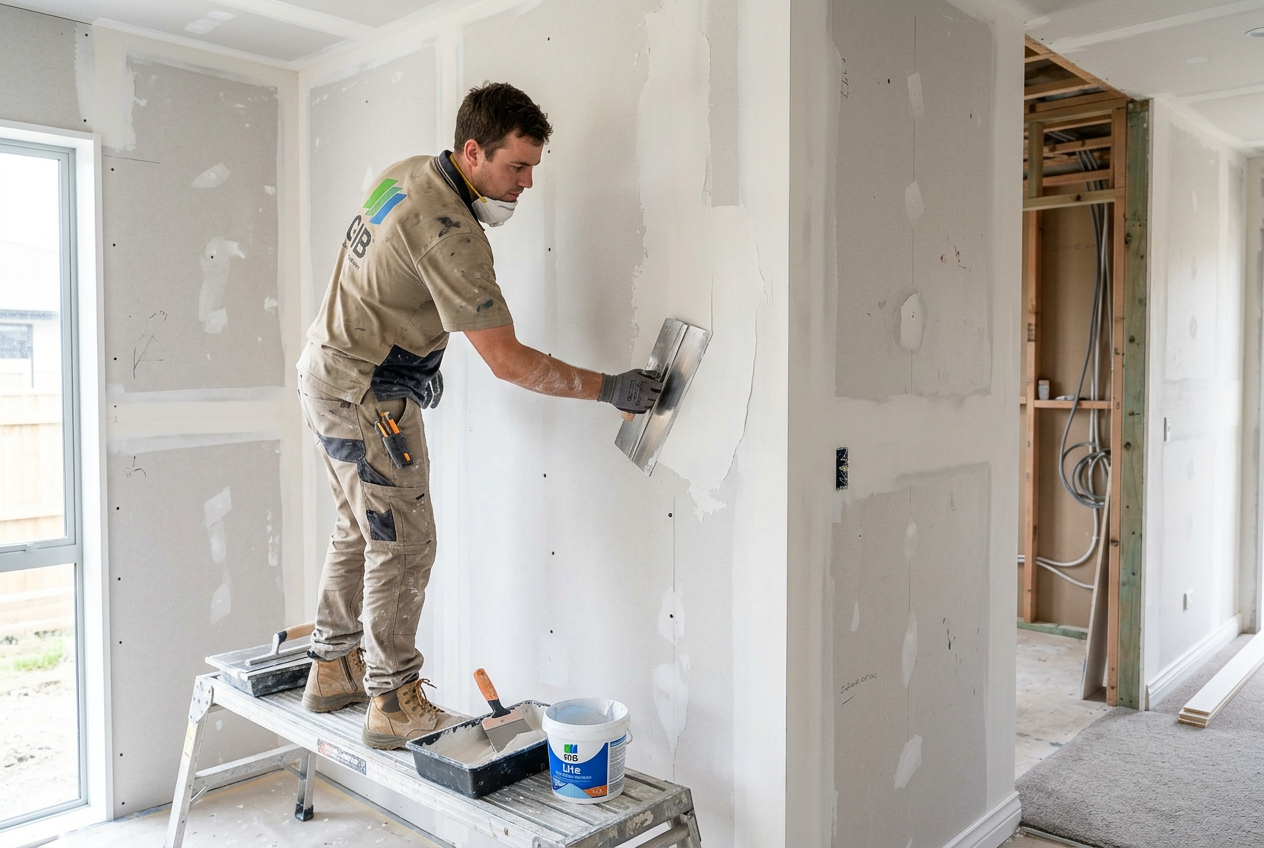
A professional plasterer in New Zealand typically applies three coats of stopping compound to GIB plasterboard joins. Each coat has a specific purpose, and skipping any one of them is a common cause of visible cracking, ridging, or shadowing once the walls are painted.
Why Three Coats?
Plasterboard stopping is a process of building up thin layers rather than applying one thick coat. Each layer needs to dry fully and be lightly sanded before the next is applied. Rushing the process — or trying to do it in fewer coats — almost always leads to shrinkage cracks or a finish that shows up badly under raking light. The three-coat system is the standard recommended by GIB, New Zealand's leading plasterboard manufacturer, and is widely followed across the trade.
The Three Coats Explained
1. Base Coat (Embedding Coat)
The first coat is applied over the paper or fibreglass mesh tape that reinforces the join. The stopping compound is pressed firmly into the tape to embed it fully and bond it to the board. This coat is relatively thin — just enough to bed the tape flat and fill the recess between boards. It must dry completely (usually overnight, depending on humidity and temperature) before you move on.
Key tip: If the tape bubbles or lifts at this stage, it needs to be fixed before continuing. Bubbles under tape will always telegraph through to the finished surface.
2. Fill Coat (Second Coat)
Once the base coat is dry and lightly sanded, the fill coat is applied wider than the first — typically 200–250 mm across the join. This coat fills in the slight depression left by the tape and base coat, bringing the surface closer to flush with the surrounding board. It also covers the edges of the tape. Again, this coat must dry fully before sanding.
3. Finish Coat (Top Coat)
The final coat is feathered out even wider — often 300 mm or more — to blend the join seamlessly into the flat face of the board. A good plasterer uses a wide blade (250–300 mm) and very light pressure to achieve a smooth, flat surface. Once dry, this coat is sanded back carefully, usually with 120-grit paper, to leave a surface ready for primer and paint.
What About Corners and Fasteners?
- Internal corners are typically taped and stopped in the same three-coat process, though some plasterers use a pre-formed paper bead for internal angles.
- External corners use a metal or plastic angle bead, which is fixed first and then stopped over in two to three coats.
- Screw fasteners (the dimples where screws are driven just below the surface) are filled separately — usually two coats of stopping compound, sanded flush.
Types of Stopping Compound Used in NZ
Most NZ plasterers use a premixed vinyl-based stopping compound for the fill and finish coats. Some use a setting-type compound (which cures chemically rather than drying) for the base coat, as it shrinks less and dries faster. Products from brands like Ardex and Sika are used in the trade alongside GIB's own recommended stopping systems. Always follow the manufacturer's instructions for drying times — in a cold, damp NZ winter, drying times can be significantly longer than on the packet.
How Long Does the Process Take?
For a standard room, a professional plasterer will typically spend two to three days on the stopping process — one day per coat, allowing for drying time between coats. In humid conditions (common in many parts of New Zealand), this can stretch out further. Trying to rush by applying coats before the previous one is fully dry is one of the most common causes of callbacks.
DIY vs Professional Stopping
Stopping GIB joins is not restricted work under the NZ Building Code — a homeowner can legally have a go. However, achieving a truly flat, invisible join is a skilled task that takes years of practice. Poor stopping will show up dramatically once walls are painted, especially in rooms with strong natural light or a gloss/semi-gloss finish. For new builds, renovations, or any wall that will be painted in a sheen finish, it is well worth hiring a qualified plasterer.
You can find experienced local plasterers on tradedirectory.co.nz.
When to Call a Professional
Call a qualified plasterer if:
- You are stopping joins in a new build or major renovation (especially where a building consent is involved)
- The walls will be painted in a mid-sheen or gloss finish, which shows imperfections clearly
- You have cracking or ridging at existing joins that keeps coming back
- You are working with GIB Aqualine or other specialist boards in wet areas, where correct stopping and sealing is critical
- The area is large or the timeline is tight
For advice on what finish level is appropriate for your project, BRANZ publishes guidance on plasterboard finishing standards that both homeowners and tradespeople can reference.

 Master Painters NZ member








