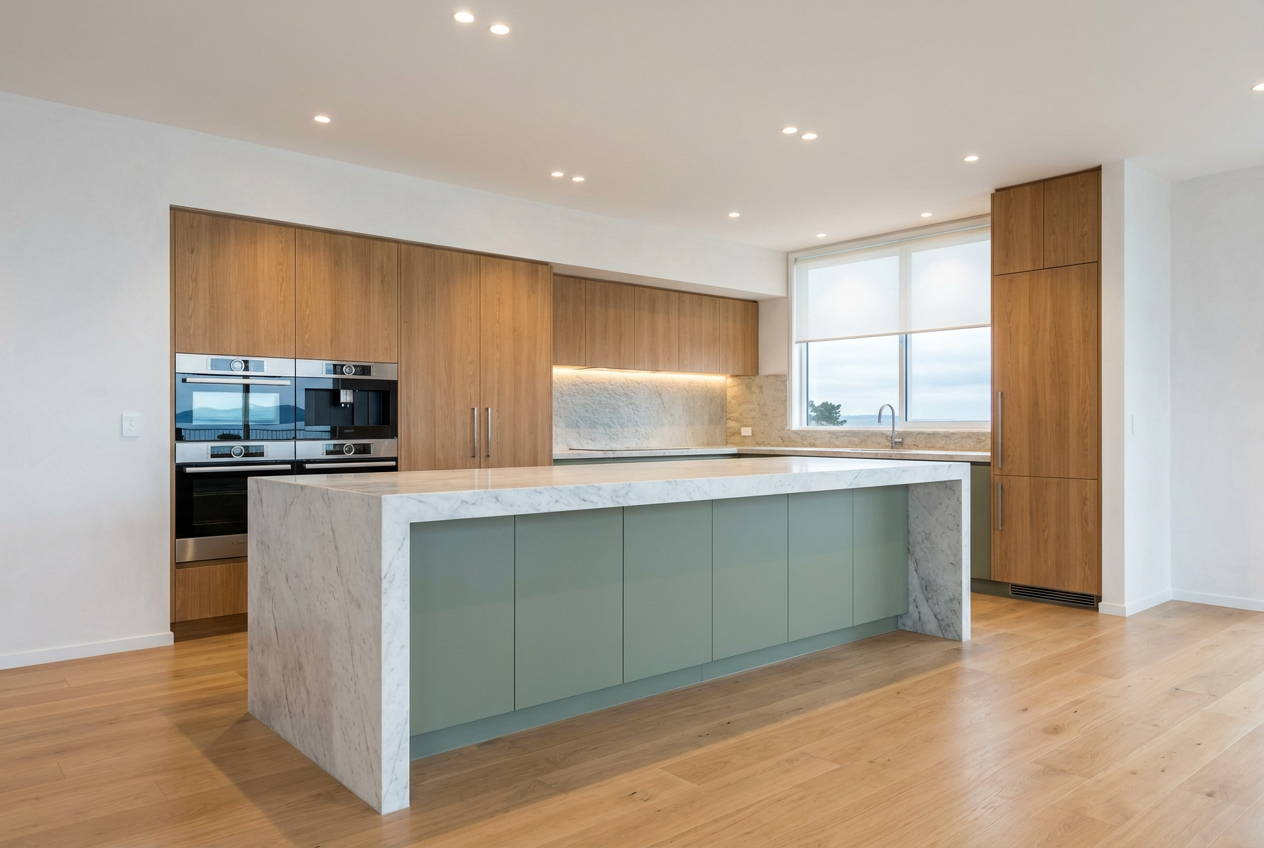
Well-made kitchen cabinets installed in a New Zealand home should reasonably last anywhere from 15 to 30 years or more, depending on the materials used, the quality of construction, and how well they're maintained. Budget flat-pack options typically sit at the lower end of that range, while custom-built or semi-custom cabinetry from a qualified cabinet maker can comfortably exceed 30 years with proper care.
What Affects How Long Kitchen Cabinets Last?
Several factors influence cabinet longevity in NZ homes:
- Material quality – Solid timber, moisture-resistant MDF, and high-grade plywood carcasses outlast standard particleboard, especially in humid kitchens.
- Board type and finish – Moisture-resistant (MR) board is strongly recommended for NZ kitchens. Standard particleboard can swell and delaminate if exposed to steam or splashes.
- Door and drawer hardware – Quality soft-close hinges and drawer runners (such as those from Blum or Hettich) can outlast the cabinets themselves if maintained. Cheap hardware often fails within 5–10 years.
- Bench and sink surrounds – Areas around the sink and dishwasher are most vulnerable to moisture damage. Good sealing and quality joinery here makes a significant difference.
- Ventilation and humidity – NZ homes, particularly older ones, can be damp. Poor kitchen ventilation accelerates wear on cabinet interiors and finishes. Energywise has useful guidance on improving home ventilation.
- Installation quality – Even great cabinets will fail prematurely if not properly installed and levelled. A qualified cabinet maker or Licensed Building Practitioner ensures the job is done right.
Typical Lifespan by Cabinet Type
| Cabinet Type | Typical Lifespan | Notes |
|---|---|---|
| Budget flat-pack (particleboard) | 10–15 years | Vulnerable to moisture; limited finish options |
| Mid-range semi-custom | 15–25 years | MR board carcass, better hardware |
| Custom-built solid timber or plywood | 25–40+ years | Best durability; repairable and refinishable |
These are general guides only — actual lifespan varies with use, maintenance, and environment.
Signs Your Cabinets Are Nearing the End of Their Life
Watch out for these warning signs:
- Swelling, warping, or delaminating carcass panels, especially under the sink
- Doors and drawers that no longer close properly and can't be adjusted back into alignment
- Visible mould or mildew inside cabinets, which may indicate a moisture or ventilation problem
- Damaged or peeling laminate or veneer that can't be repaired
- Structural sagging in shelves or carcasses
Some of these issues — like hinge adjustment or shelf replacement — are simple fixes. Others signal it's time for a full kitchen renovation.
How to Make Your Kitchen Cabinets Last Longer
Choose the Right Materials from the Start
When commissioning new cabinetry, ask your cabinet maker specifically about moisture-resistant board for carcasses and whether the finish is suitable for a kitchen environment. BRANZ provides research on building materials performance in NZ conditions that can inform these decisions.
Keep Moisture Under Control
Fit a rangehood that vents to outside (not recirculating) to reduce steam build-up. Wipe up spills and splashes promptly, and check under the sink regularly for any slow leaks from plumbing — even minor drips cause significant damage over time.
Clean Gently and Regularly
Avoid abrasive cleaners or excessive water on cabinet surfaces. A damp cloth with mild detergent is usually all that's needed. For painted or lacquered finishes, check with your cabinet maker or a paint supplier like Resene or Dulux for recommended cleaning products.
Service the Hardware
Hinges and drawer runners can be adjusted and lubricated to extend their life. Most quality European hardware is adjustable with a screwdriver. Replace worn runners or hinges before they cause damage to the cabinet itself.
Address Leaks Immediately
If your kitchen sink or dishwasher develops a leak, get it fixed straight away. Plumbing repairs in NZ are restricted work and must be carried out by a licensed plumber registered with the Plumbers Gasfitters & Drainlayers Board. Don't delay — water damage to cabinetry can be extensive and expensive.
Building Consent and Kitchen Renovations
Replacing like-for-like kitchen cabinets generally doesn't require a building consent, but if you're moving walls, changing the layout significantly, or altering plumbing or electrical connections, consent may be required. Always check with your local council before starting work. The MBIE Building Performance website has helpful guidance on what work requires consent under Schedule 1 exemptions.
When to Call a Professional
For anything beyond basic cleaning and minor hardware adjustments, it's worth getting a qualified tradesperson involved:
- Cabinet makers can assess whether cabinets are worth repairing or need replacing, and can build custom solutions to suit your space.
- Licensed plumbers must handle any work on sink connections or dishwasher plumbing.
- Licensed electricians (registered with the Electrical Workers Registration Board) must carry out any changes to kitchen wiring or appliance connections.
- Licensed Building Practitioners (LBP) are required for any restricted building work as part of a larger renovation.
You can find qualified, local cabinet makers and other tradespeople on tradedirectory.co.nz.