Rewiring an entire house in New Zealand typically takes anywhere from 3 to 10 working days, though larger or more complex homes can take longer. The exact timeframe depends on the size of the house, its age, the condition of existing wiring, and how accessible the walls and ceiling cavities are. Understanding what's involved helps you plan realistically and avoid surprises.
What Affects the Rewiring Timeline?
Several factors influence how long your electrician will need on site:
- House size – A small two-bedroom home may be rewired in 3–4 days, while a large five-bedroom home could take 8–10 days or more.
- Age and construction type – Older homes (pre-1980s) often have outdated wiring such as rubber-insulated or aluminium wiring that requires more careful removal. Solid timber framing with limited ceiling access also slows the job.
- Number of circuits – Modern homes require separate circuits for lighting, power points, the kitchen, bathrooms, the oven, heat pumps, and more. More circuits mean more time.
- Accessibility – Open ceiling cavities and suspended floors make cable runs much faster. Concrete slabs or fully lined walls with no roof access significantly increase labour time.
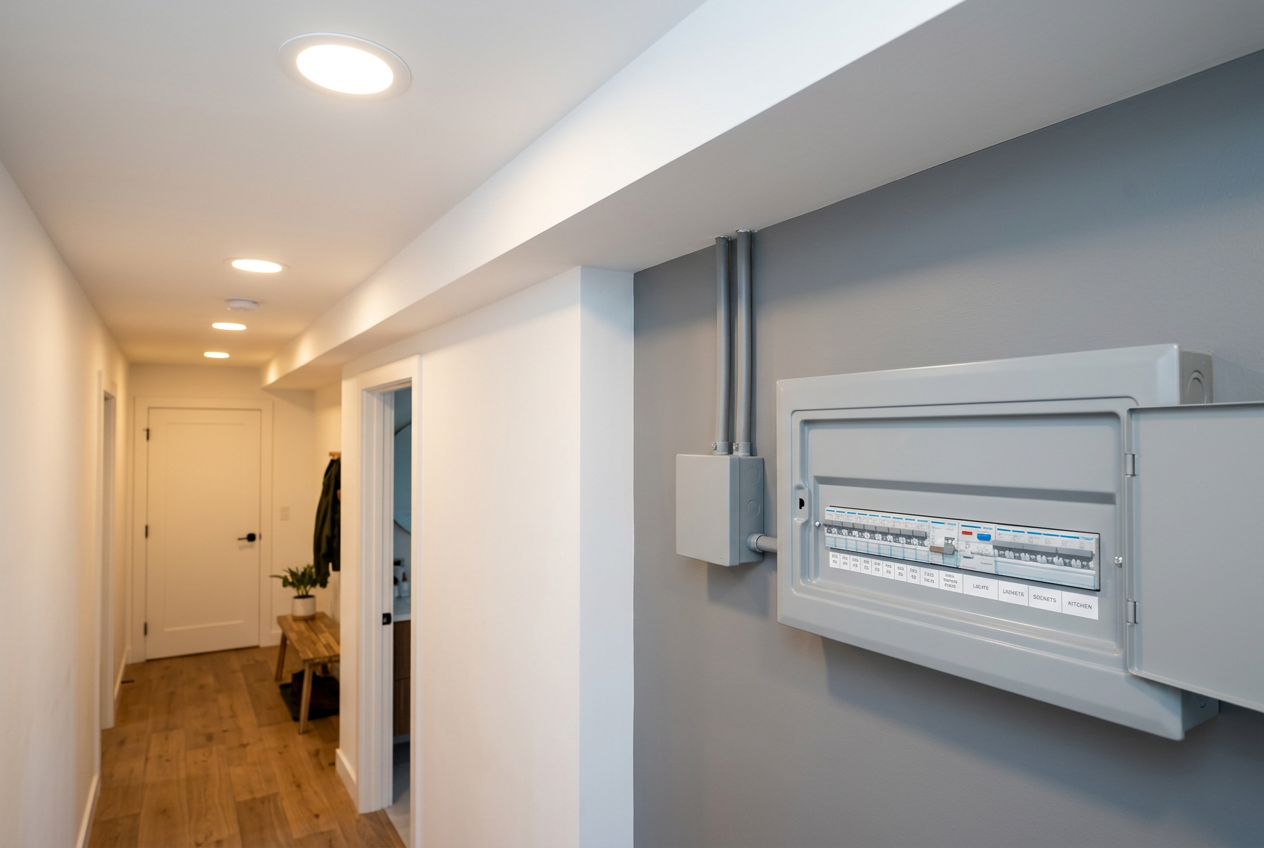
- Switchboard upgrade – Most rewires include a new consumer switchboard with modern RCDs (residual current devices) and circuit breakers. This is standard practice and adds time but is essential for safety.
- Council inspections – Electrical work in NZ requires a Certificate of Compliance (CoC) issued by the licensed electrician, and in some cases a building consent may be required. Inspection scheduling can add days to the overall project timeline.
Typical Rewiring Timeline at a Glance
| House Size | Estimated Duration |
|---|---|
| 2–3 bedrooms (small) | 3–5 working days |
| 3–4 bedrooms (medium) | 5–7 working days |
| 4–5 bedrooms (large) | 7–10+ working days |
| Heritage or complex homes | 10+ working days |
These are broad guides only — your electrician will assess your specific home and give you a more accurate estimate.
What Happens During a Rewire?
A full rewire is a staged process:
- First fix – The electrician runs new cables through walls, floors, and ceilings, and installs back boxes for switches and power points. This is the most disruptive phase.
- Switchboard installation – The old switchboard is replaced with a modern unit meeting current NZ standards.
- Second fix – Switches, sockets, light fittings, and other accessories are fitted and connected.
- Testing and certification – All circuits are tested, and the electrician issues a Certificate of Compliance, which is a legal requirement under the Electricity Act 1992.
You may need to be out of the house during parts of the first fix, particularly when power is isolated.
Do You Need a Building Consent?
In many cases, rewiring work falls under Schedule 1 of the Building Act as exempt building work, meaning a building consent is not required. However, this depends on the scope of work — for example, if structural elements are altered to run cables, consent may be needed. Always check with your local council before work begins to confirm what's required for your specific situation. You can find general guidance at MBIE Building Performance.
Is Rewiring Restricted Work in NZ?
Yes — almost all electrical wiring work in New Zealand is restricted electrical work and must be carried out by, or supervised by, a registered electrician licensed with the Electrical Workers Registration Board (EWRB). This includes installing cables, connecting to the switchboard, and any work on fixed wiring.
As a homeowner, you are legally permitted to do very limited electrical work on your own home (such as replacing a light fitting like-for-like in some circumstances), but a full rewire is absolutely not DIY territory. Unlicensed electrical work is illegal, dangerous, and can void your home insurance.
Safety Note
Faulty or aging wiring is one of the leading causes of house fires in New Zealand. If your home has rubber-insulated wiring, aluminium wiring, or a fuse-wire switchboard, getting a professional assessment is strongly recommended. WorkSafe NZ provides guidance on electrical safety in the home.
How to Minimise Disruption During a Rewire
- Discuss a room-by-room schedule with your electrician so you can keep parts of the house functional.
- Clear access to walls, ceiling hatches, and the switchboard before work starts.
- Arrange alternative accommodation if needed during the most intensive phase.
- Ask your electrician about temporary power supplies to keep essentials running.
When to Call a Professional
If your home is more than 30–40 years old, shows signs of flickering lights, tripping breakers, discoloured power points, or has never been rewired, it's time to get a licensed electrician to assess the situation. A full rewire is a significant investment but dramatically improves safety, reliability, and the value of your home. You can find qualified, local electricians on tradedirectory.co.nz.

 Site Safe
 Licensed Electrical Inspector







