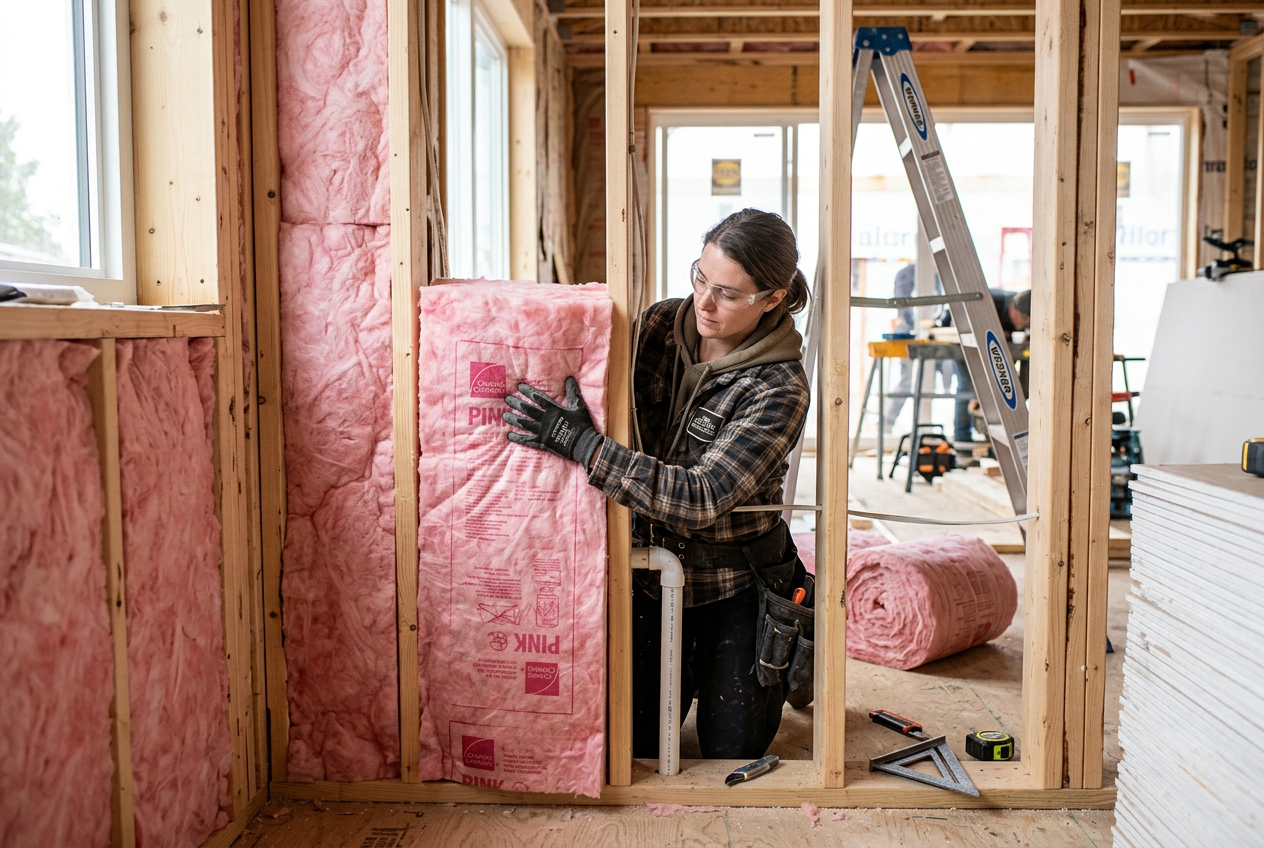
For most New Zealand homes, a whole-home insulation installation takes one to three days from start to finish. Smaller homes with straightforward access can sometimes be completed in a single day, while larger or more complex properties may take longer. The exact timeframe depends on several factors, including the size of your home, the type of insulation being installed, and how easy it is to access the areas being insulated.
What's Included in a 'Whole-Home' Insulation Job?
A full insulation package typically covers three main areas:
- Ceiling/roof space – batts or blown-in loose fill laid between joists or rafters
- Underfloor – batts stapled or clipped between floor joists (where there is a suspended timber floor with crawl space access)
- Walls – less common in retrofits, but possible with blown-in insulation through small drilled holes
Not every home will need all three. Concrete slab homes, for example, don't have an underfloor cavity. Your installer will assess your home and quote accordingly.
Typical Timeframes by Area
| Area | Typical Time (Average NZ Home) |
|---|---|
| Ceiling only | Half a day to one full day |
| Underfloor only | Half a day to one full day |
| Ceiling + underfloor | One to two days |
| Full home (ceiling, underfloor, walls) | Two to three days |
These are general guides only — your installer will give you a more accurate estimate after assessing your property.
Factors That Affect the Timeline
Home Size and Layout
A compact two-bedroom unit will obviously take less time than a sprawling four-bedroom home on a large section. Multi-storey homes or those with complex rooflines can also add time.
Type of Insulation
Batt insulation (glasswool or polyester) is cut and fitted by hand, which is straightforward but methodical. Blown-in loose-fill insulation (often used in ceilings) can be faster to install once the equipment is set up, but setup itself takes time. Wall insulation via blown-in methods requires drilling and patching, which adds to the job duration.
Access and Conditions
Underfloor access is one of the biggest variables. If your crawl space is tight, wet, or has obstacles like pipes and cross-bracing, installers will work more slowly and carefully. Similarly, a roof space cluttered with stored items or with limited headroom takes longer to work through.
Number of Installers
A two- or three-person crew will complete the job significantly faster than a sole operator. Ask your installer how many people will be on site.
Existing Insulation
If old, damaged, or contaminated insulation needs to be removed first, this adds time (and cost) to the job. Removal of old insulation is a separate task that may take half a day or more on its own.
The Installation Process Step by Step
- Site assessment – The installer checks access points, measures areas, and confirms the product and R-value required.
- Preparation – Protective gear is put on, access hatches are opened, and materials are staged.
- Installation – Batts are cut and fitted, or loose fill is blown in. Underfloor installers typically work on their backs in the crawl space.
- Quality check – The installer checks for gaps, compression, or missed areas.
- Clean-up – Off-cuts and packaging are removed. Access hatches are closed and secured.
NZ Building Code and R-Value Requirements
New Zealand's Building Code clause H1 sets minimum thermal performance requirements for insulation. The required R-value (a measure of thermal resistance) varies by climate zone — homes in Southland or Central Otago need higher R-values than those in Northland. MBIE Building Performance publishes the current H1 requirements, and it's worth checking these before your installation to make sure you're getting the right product for your region.
For rental properties, the Healthy Homes Standards set specific insulation requirements that landlords must meet. A qualified installer will be familiar with these rules.
Does Insulation Require a Building Consent?
In most cases, installing insulation in an existing home is exempt from building consent under Schedule 1 of the Building Act. However, exemptions have conditions, and rules can vary. Always confirm with your local council before starting work, particularly if your home is a heritage building or the work involves structural changes.
When to Call a Professional
While some homeowners choose to install ceiling batts themselves, hiring a professional insulation installer is strongly recommended for:
- Underfloor work – Confined spaces can be hazardous, and incorrect installation reduces effectiveness significantly.
- Blown-in insulation – Requires specialist equipment and training.
- Homes built before the 1990s – Older homes may contain asbestos in existing insulation or building materials. If in doubt, have the material tested before disturbing it. WorkSafe NZ has guidance on working safely around asbestos.
- Rental properties – Landlords need to meet Healthy Homes Standards and may need documentation of compliance.
A qualified insulation installer will work efficiently, use the correct products, and leave you with a result that performs as intended. You can find experienced local insulation installers on tradedirectory.co.nz.