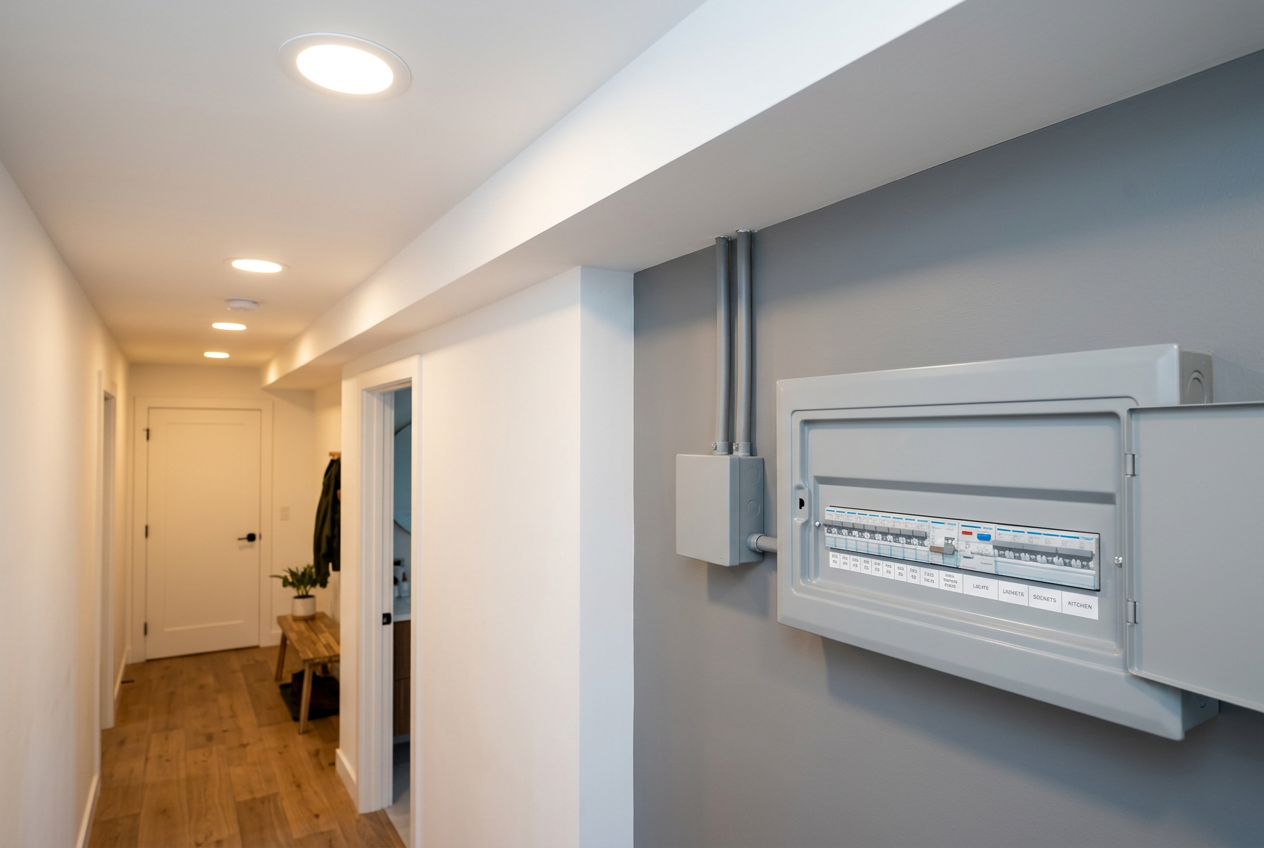
Most residential switchboard upgrades in New Zealand take anywhere from half a day to two full days to complete. The exact timeframe depends on the age of your existing wiring, the size of your home, and what's being installed. A straightforward swap on a modern house might be done in four to six hours, while an older home with outdated wiring or a larger panel could take considerably longer.
What Is a Switchboard Upgrade?
A switchboard upgrade (sometimes called a consumer unit replacement) involves replacing your home's main electrical panel with a modern unit that includes residual current devices (RCDs) and miniature circuit breakers (MCBs). Older switchboards often use ceramic fuses or early-style circuit breakers that don't meet current safety standards. Upgrading brings your home in line with the NZ Building Code and significantly improves electrical safety.
Factors That Affect How Long the Job Takes
Several things can extend or shorten the time your electrician needs on site:
- Age and condition of existing wiring — Homes built before the 1980s may have older wiring types (such as aluminium or early PVC cable) that need assessment or partial replacement before a new board can be connected safely.
- Number of circuits — A small two-bedroom home might have six to eight circuits; a larger modern home could have fifteen or more. More circuits mean more time to label, test, and connect.
- Meter board location and access — If the switchboard is in a tight or awkward spot (inside a wall cavity, for example), it takes longer to work safely.
- Whether a new meter is needed — Coordinating with your lines company (such as Vector, Orion, or Wellington Electricity) to disconnect and reconnect the supply can add time, and sometimes requires a separate visit.
- Additional work — If you're adding circuits for a heat pump, EV charger, or new kitchen appliances at the same time, factor in extra hours.
- Inspection and certification — Your electrician must issue an Electrical Certificate of Compliance (CoC) once the work is complete. This is included in the job but requires thorough testing.
Typical Timeline at a Glance
| Scenario | Estimated Time |
|---|---|
| Small home, modern wiring, simple swap | 4–6 hours |
| Average home, some older wiring | 6–10 hours (1–1.5 days) |
| Large or older home, complex circuits | 1.5–2+ days |
| Upgrade plus new circuits added | Add 1–3 hours per circuit |
These are broad guides only — your electrician will give you a specific estimate after inspecting your existing setup.
What Happens During the Upgrade?
- Isolation — The supply is disconnected (your power will be off for most of the job).
- Removal — The old switchboard and any outdated components are taken out.
- Installation — The new board is mounted and all circuits are connected, labelled, and fitted with RCDs and MCBs.
- Testing — Every circuit is tested for correct operation, earth continuity, and insulation resistance.
- Certification — A Certificate of Compliance is issued, which you should keep with your property records.
Will My Power Be Off All Day?
Yes — expect your power to be off for most of the working time. Plan ahead by charging devices, arranging alternative cooking, and letting anyone who works from home know in advance. In most cases, power is restored by the end of the same day.
Is a Building Consent Required?
Switchboard upgrades are generally not subject to building consent under Schedule 1 of the Building Act, but you should confirm this with your local council. The work does, however, require an Electrical Certificate of Compliance under the Electricity Act. Always check requirements with your council and electrician before work begins.
When to Call a Professional
Switchboard work is restricted electrical work under New Zealand law. It must be carried out by a registered electrician — either a licensed craftsperson or someone working under supervision — and certified upon completion. Attempting this work yourself is illegal and extremely dangerous, and could void your home insurance.
You can verify your electrician's registration through the Electrical Workers Registration Board (EWRB). For safety guidance around electrical hazards, refer to WorkSafe NZ.
If you're not sure whether your switchboard needs upgrading, signs to look out for include frequently tripping fuses, a lack of RCD protection, a ceramic fuse board, or a board that's more than 25–30 years old.
A qualified local electrician can assess your switchboard and give you an accurate quote and timeline. You can find registered electricians in your area on tradedirectory.co.nz.

 Site Safe
 Licensed Electrical Inspector







