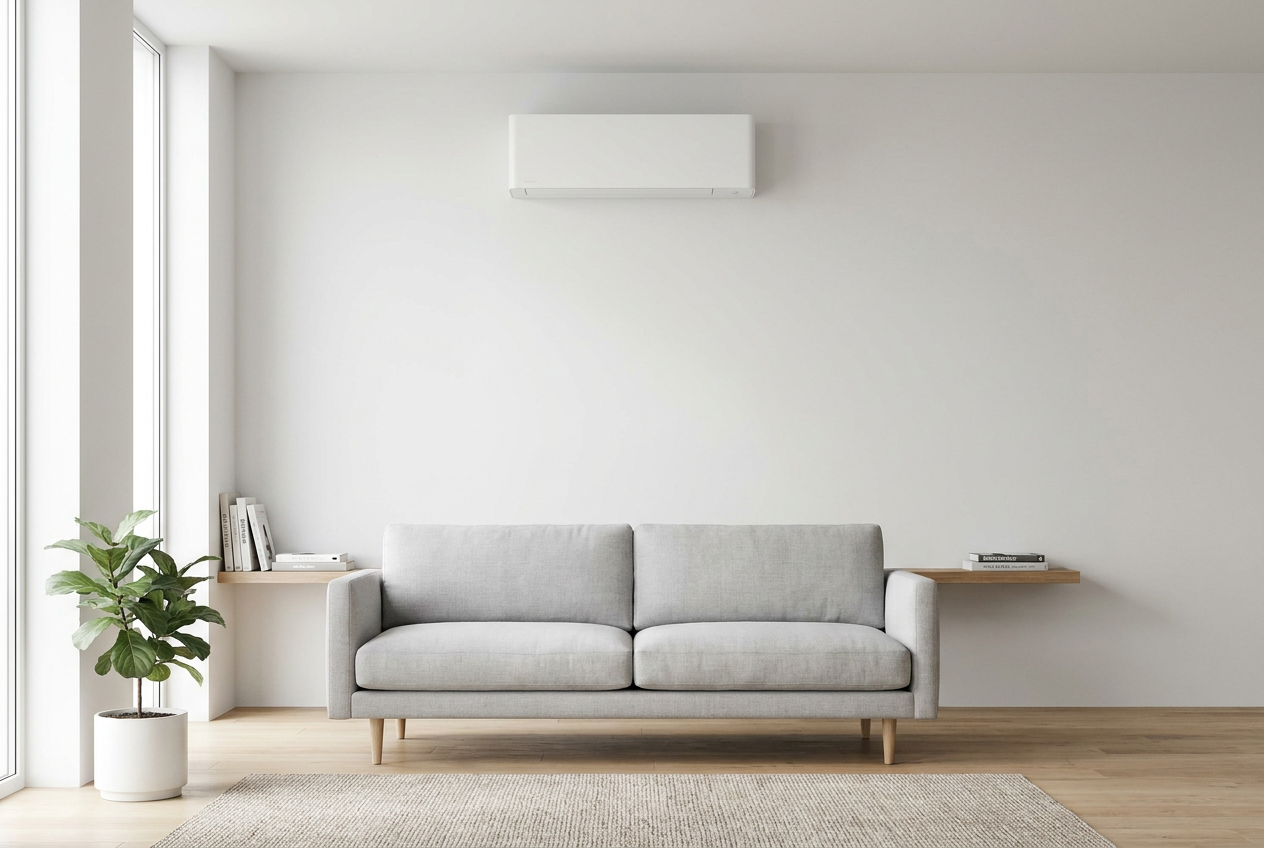
For most New Zealand homes, a single split-system heat pump installation takes 3 to 6 hours from start to finish. That covers mounting the indoor and outdoor units, running the refrigerant lines and electrical connections, pressure-testing the system, and commissioning it so it's ready to use. Some straightforward jobs wrap up in under three hours; others on tricky sites can stretch to a full day.
What Happens During a Heat Pump Installation?
Understanding the steps helps you see why timing can vary. A typical installation involves:
- Site assessment – the installer checks wall thickness, ceiling height, drainage options, and the best outdoor unit position.
- Mounting the indoor (head) unit – usually wall-mounted in a living area or bedroom.
- Drilling the wall penetration – a core hole (typically 65–75 mm) is drilled through the wall for the refrigerant lines, drain hose, and electrical cable.
- Installing the outdoor unit – placed on a purpose-made bracket or concrete pad, ideally in a sheltered, well-ventilated spot.
- Running and connecting the line set – copper refrigerant pipes, drain hose, and wiring are bundled and run between units.
- Pressure testing and vacuuming – the system is tested for leaks and moisture is removed before refrigerant is released.
- Commissioning and testing – the installer runs the unit through heating and cooling modes, checks temperatures, and walks you through the remote control.
Factors That Can Slow Things Down
Not every installation is straightforward. Here are the main things that add time:
Wall and building type
Drilling through a standard timber-framed wall (common in NZ homes built to NZS 3604) is quick. Concrete, brick veneer, or double-brick walls take considerably longer and may need specialist drill bits.
Distance between indoor and outdoor units
A short run of 2–3 metres through an adjacent wall is fast. If the outdoor unit needs to go on a roof, around a corner, or down two storeys, the line-set run can add an hour or more.
Electrical supply
Most modern heat pumps may be able to run off an existing household circuit if one is nearby and suitably rated — check with your installer and electrician for your specific unit's requirements. If a dedicated circuit or new switchboard connection is needed, a licensed electrician must do that work — which may be scheduled separately and add time or a second visit.
Access and site conditions
Tight ceiling cavities, cramped outdoor spaces, or difficult scaffolding situations all slow things down. Multi-storey homes or installations above garages typically take longer.
Brand and model complexity
Some premium units have more complex wiring or Wi-Fi modules that take extra time to configure.
Typical Time Estimates at a Glance
| Scenario | Approximate Time |
|---|---|
| Simple single-storey, timber frame, short line run | 2.5 – 3.5 hours |
| Standard installation, average NZ home | 3 – 5 hours |
| Concrete or brick wall, longer line run | 5 – 7 hours |
| Multi-storey or complex access | 6 – 8+ hours |
These are general guides only. Your installer will give you a more accurate estimate after a site visit.
Does the Electrical Work Add Time?
Yes — and it's important to understand what's legally required. Connecting a heat pump to your home's electrical supply is restricted electrical work under New Zealand law. It must be carried out by a registered electrician or an installer who holds the appropriate electrical registration. You can verify a tradesperson's registration with the Electrical Workers Registration Board (EWRB).
Many heat pump installation companies employ or subcontract a registered electrician as part of the job, so the whole thing is done in one visit. Always confirm this before booking.
Do You Need a Building Consent?
In most cases, installing a standard residential heat pump is exempt from building consent under Schedule 1 of the Building Act — but this depends on your specific situation, including whether any structural work is involved or if you're in a heritage area. Always check with your local council before work begins. The MBIE Building Performance website has useful guidance on consent exemptions.
Getting the Most Out of Your Installation Day
To help things go smoothly:
- Clear the area around where the indoor unit will go — move furniture, artwork, and curtains.
- Ensure outdoor access is unobstructed so the installer can work freely.
- Be home for the full duration so you can answer questions about preferred unit placement.
- Ask about drainage — the installer needs to route the condensate drain to a suitable outlet.
When to Call a Professional
Heat pump installation always requires a qualified professional. Handling refrigerants is restricted work under the Refrigeration and Air-Conditioning industry rules — only certified technicians may legally purchase, handle, and charge refrigerants in New Zealand. Attempting DIY refrigerant work is illegal and dangerous. The electrical connections are also restricted work as noted above.
For best results, look for an installer who is experienced with the brand you've chosen, carries the appropriate refrigerant handling certification, and works alongside a registered electrician. You can find qualified local heat pump installers on tradedirectory.co.nz.
For guidance on choosing an energy-efficient model suited to your climate zone, Energywise has independent advice on heat pumps for NZ homes.
Sources & Further Reading
- MBIE Building Performance – Building consent exemptions
- Electrical Workers Registration Board – Check a registration
- Energywise – Heat pump guidance for NZ homes
- BRANZ – Building research and best practice
- Standards NZ – NZS 3604 and other building standards
- WorkSafe NZ – Health and safety on the job



 ISO 9001






