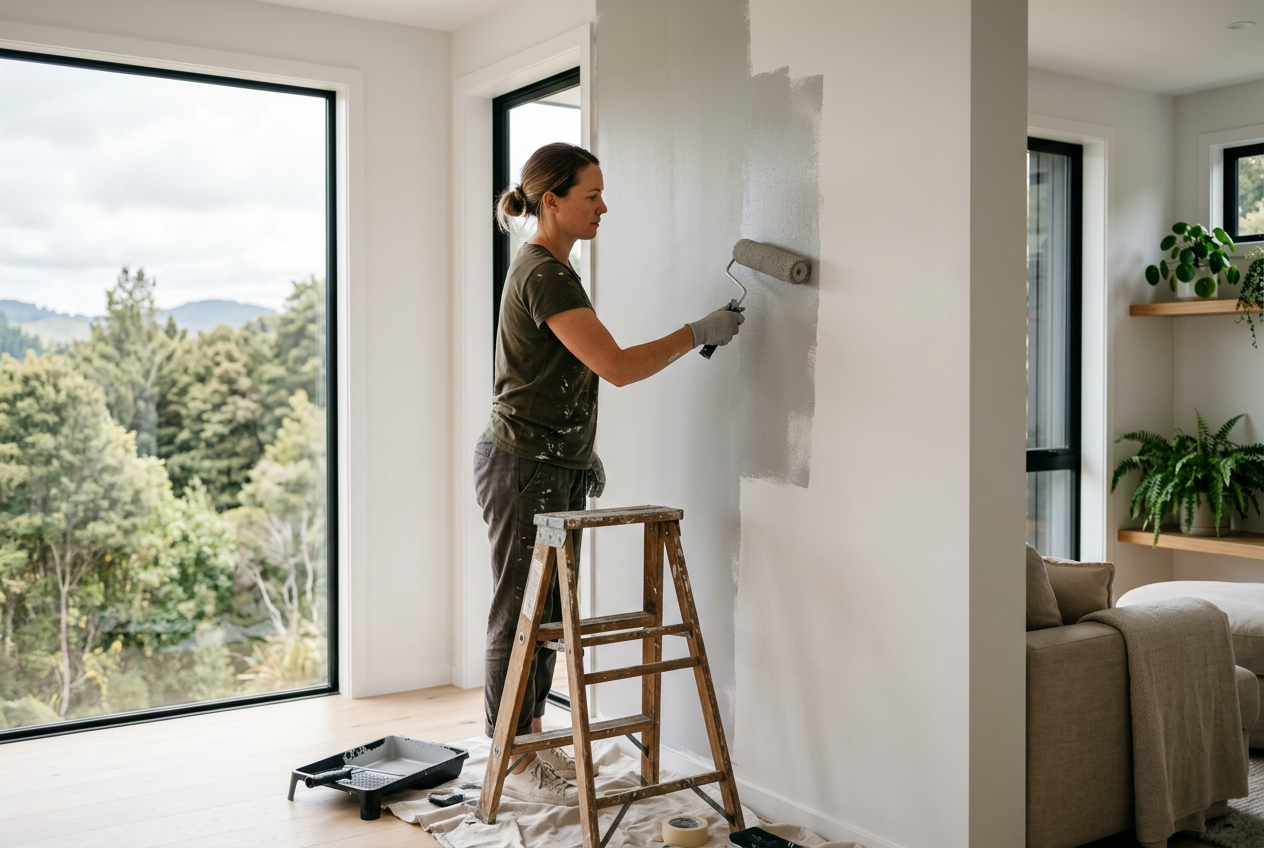
For most average New Zealand homes, a full interior repaint takes anywhere from 2 to 5 working days, though larger homes or those needing significant preparation work can stretch to a week or more. The timeline depends on a handful of key factors — understanding them helps you plan around the work and set realistic expectations with your painter.
What Affects How Long an Interior Repaint Takes?
No two repaints are identical. Here are the main variables that will shape your project's timeline:
1. Size of the Home
The number of rooms, ceilings, and metres of trim all add up. As a rough guide:
| Home Size | Estimated Duration |
|---|---|
| 1–2 bedroom unit or flat | 1–2 days |
| 3 bedroom home | 2–4 days |
| 4–5 bedroom home | 4–7 days |
| Large or multi-storey home | 1–2 weeks |
These are approximate guides only — always get a quote from a qualified painter for your specific home.
2. Preparation Work
Prep is the most time-consuming part of any repaint. A professional painter will fill cracks and holes, sand surfaces smooth, clean walls, mask off edges, and protect floors and furniture before a drop of paint goes on. If your walls have significant damage, old wallpaper to remove, or multiple layers of flaking paint, prep alone could take a full day or more.
Skimping on prep is the number one reason repaints look poor — so don't rush this stage.
3. Number of Coats Required
Most interior repaints require two coats of paint, plus a primer coat if you're making a significant colour change (say, going from a dark feature wall to a light neutral). Each coat needs adequate drying time before the next is applied. In cooler, more humid parts of New Zealand — think Southland winters or damp Wellington days — drying times can be longer than the can suggests.
Always follow the manufacturer's recoat times. Resene and Dulux both publish technical data sheets for their products that specify minimum recoat windows under different conditions.
4. Paint Finish and Colour Changes
Drastic colour changes — especially going lighter over a dark colour — often need an extra coat or a tinted primer to achieve full coverage. Switching between finish types (e.g., flat to semi-gloss) can also require additional preparation.
5. Number of Painters on the Job
A sole trader working alone will naturally take longer than a two- or three-person crew. Larger painting companies often send a team to complete the job more quickly, which can be worth considering if you need the home back in use fast.
6. Ventilation and Drying Conditions
New Zealand's climate varies enormously. High humidity (common in Auckland and coastal areas) slows drying times significantly. Good ventilation — opening windows and using fans — helps, but in winter or wet weather, painters may need to allow extra time between coats. BRANZ provides useful guidance on how environmental conditions affect paint performance.
A Typical Day-by-Day Breakdown
For a standard 3-bedroom NZ home, a professional painter might work through the job roughly like this:
- Day 1: Move furniture, protect floors, wash walls, fill and sand all defects, mask edges and trim
- Day 2: Apply primer where needed; first coat of ceiling paint and walls
- Day 3: Second coat of walls and ceilings; first coat of trim and doors
- Day 4: Second coat of trim; touch-ups; remove masking; clean up
This is a general guide — your painter will give you a schedule based on your actual home.
What You Can Do to Speed Things Up
- Clear rooms before the painter arrives. Moving furniture, artwork, and curtains yourself saves the painter time (and you money).
- Choose your colours in advance. Last-minute colour changes can add days to a job. Visit a Resene or Dulux colour centre, or use online tools, well before the start date.
- Ensure good access. Clear hallways and make sure the painter can move freely between rooms.
- Discuss the schedule upfront. Ask your painter which rooms will be done on which days so you can plan where to sleep, cook, and live during the work.
DIY vs. Hiring a Professional
Interior painting is one of the few home improvement tasks a capable homeowner can tackle themselves — it doesn't require a licence in New Zealand. However, professional painters work significantly faster, have the right tools and equipment, and produce a higher-quality finish. For a full house repaint, most homeowners find the time savings and results well worth the cost of hiring a pro.
If you do go DIY, quality prep tools and paints are available from Bunnings and Mitre 10.
When to Call a Professional
Consider hiring a qualified painter when:
- You're repainting the whole house and can't afford weeks of disruption
- Walls have significant damage, mould, or moisture issues that need expert assessment
- You want a high-quality, long-lasting finish
- The home is a rental and needs to meet Healthy Homes standards — a professional finish helps protect your investment
- You suspect old paint may contain lead (common in homes built before 1980) — this requires safe handling practices in line with WorkSafe NZ guidelines
You can find qualified, local painters on tradedirectory.co.nz — always ask for references and a written quote before work begins.

 BCITO Qualified

 Master Painters NZ
 Site Safe