See the latest posts from tradesmen around the country
Knowledge BaseDriveway Layer

How Long Does a Professionally Laid Concrete Driveway Last in NZ?

A professionally laid concrete driveway in NZ typically lasts 30–50 years with proper installation and maintenance.

How Long Does a Professionally Laid Concrete Driveway Last in NZ?

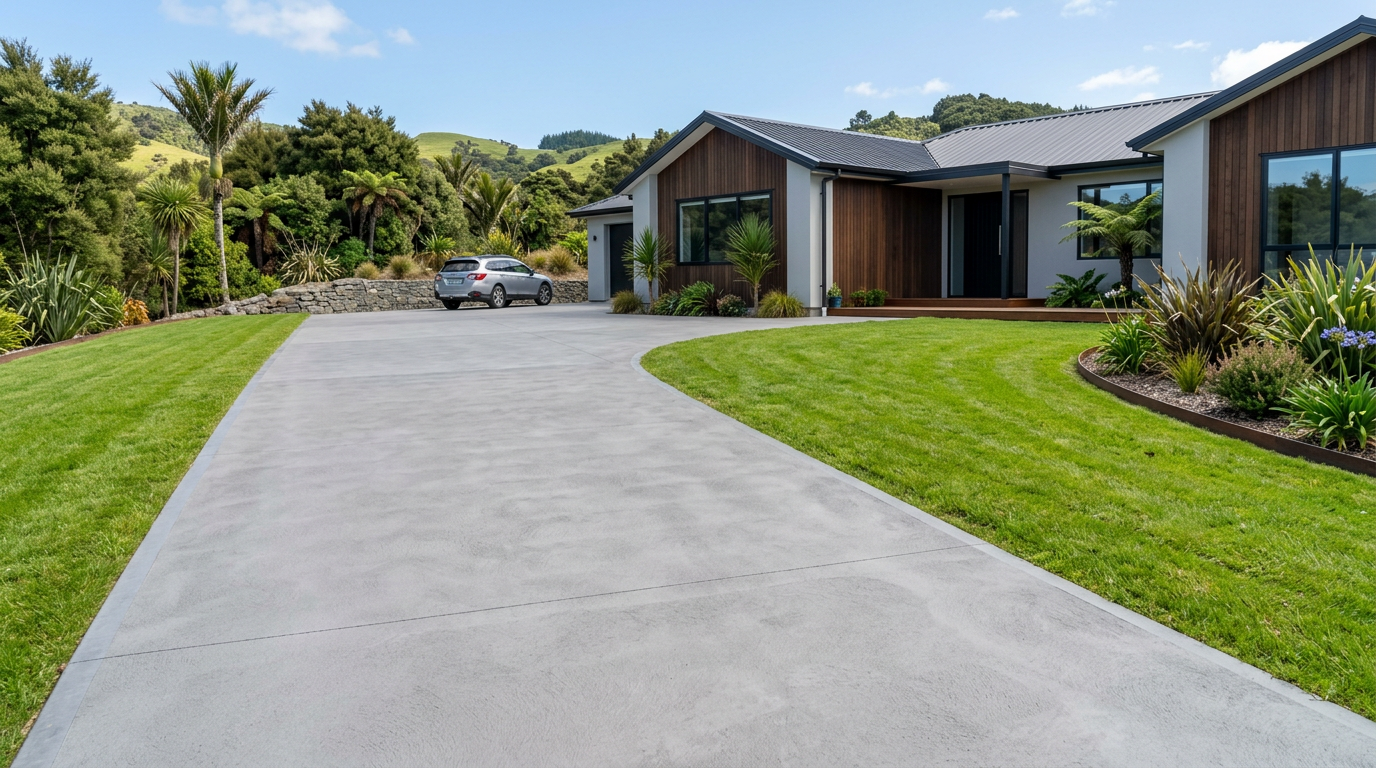
A professionally laid concrete driveway in New Zealand can last anywhere from 30 to 50 years — and sometimes longer — when it's correctly designed, mixed, poured, and maintained. That's a significant investment in your property, so understanding what influences longevity is well worth your time before you commit to a new driveway or assess an existing one.

What Affects How Long a Concrete Driveway Lasts?

Several factors determine whether your driveway reaches the upper end of that lifespan or starts showing problems within a decade:

  • Mix design and strength – Residential driveways typically require concrete with a minimum compressive strength of around 17.5 MPa, though many professionals recommend 25 MPa or higher for driveways that carry heavier vehicles. Using the right mix for your conditions is critical.
  • Subbase preparation – A well-compacted, stable subbase (usually compacted hardfill or AP40 aggregate) prevents settling and cracking. Poor subbase preparation is one of the most common causes of early failure.
  • Thickness – Standard residential driveways are generally poured at 100 mm thick, increasing to 125–150 mm for areas that will carry trucks or heavy loads.
  • Reinforcement – Steel mesh (such as standard reinforcing mesh grades used in NZ) or steel bar reinforcement helps control cracking and holds the slab together if the ground moves.
  • Control joints – Properly spaced control joints (typically every 3–4 metres) allow the concrete to expand and contract with NZ's temperature swings without random cracking.
  • Curing – Concrete must be kept moist and protected for at least 7 days after pouring. Rushing this step significantly weakens the final product.
  • Finishing and sealing – A quality sealer applied after curing protects the surface from water ingress, UV damage, oil stains, and freeze-thaw cycles common in higher-altitude NZ regions.

NZ Climate Considerations

New Zealand's varied climate plays a real role in driveway durability. In colder South Island regions and higher-altitude North Island areas, freeze-thaw cycles can cause surface spalling if water penetrates unsealed or poorly finished concrete. Coastal areas face salt air exposure, which can accelerate corrosion of reinforcing steel if concrete cover is insufficient. In wetter regions, good drainage design is essential — water pooling on or under a driveway is a leading cause of premature deterioration.

For guidance on building in NZ conditions, BRANZ is an excellent resource for research and best-practice guidance relevant to our local environment.

Signs Your Concrete Driveway Is Ageing

Even a well-laid driveway will show wear over time. Watch out for:

  • Surface scaling or spalling – The top layer flaking away, often from freeze-thaw damage or deicing salts
  • Cracking – Hairline cracks are common and often cosmetic, but wide or heaving cracks may indicate subbase movement
  • Sinking or uneven sections – Usually a subbase or drainage issue
  • Staining and discolouration – Oil, rust, or algae growth, particularly in shaded, damp areas
  • Exposed aggregate or reinforcing – A sign of significant surface loss that needs attention

Maintenance Tips to Maximise Lifespan

With a little regular care, you can push your driveway toward the 50-year mark:

TaskFrequency
Clean surface (water blast or sweep)Every 6–12 months
Inspect and clean control jointsAnnually
Re-seal the surfaceEvery 3–5 years
Fill minor cracks with flexible sealantAs needed
Check drainage channels are clearEvery 6 months

Avoid using harsh chemical deicers or strong acids on the surface, as these break down the cement paste. For sealing products, your local Mitre 10 or Bunnings store will stock a range of concrete sealers suitable for driveways.

Does a Concrete Driveway Need a Building Consent?

In many cases, a residential driveway is exempt from building consent under Schedule 1 of the Building Act 2004, but this depends on your specific site, local council rules, and whether any earthworks or retaining walls are involved. Always check with your local council before starting work — requirements vary between territorial authorities, and some councils have specific rules around impermeable surfaces and stormwater management under their district plans.

For general guidance on consents and exemptions, MBIE Building Performance is the authoritative source.

Concrete vs. Other Driveway Options

Compared to asphalt (which typically lasts 20–30 years) or exposed aggregate (similar lifespan to standard concrete), a well-laid concrete driveway generally offers the best long-term value. Pavers can last just as long but require more maintenance to keep level. The upfront cost of concrete is higher than asphalt, but the longer lifespan and lower maintenance often make it the more economical choice over time.

When to Call a Professional

Laying a concrete driveway is not a straightforward DIY job. Getting the mix, subbase, formwork, reinforcement, pour, and finish right requires experience and the right equipment. Mistakes are expensive to fix and can dramatically shorten the driveway's life. A qualified driveway layer or concreter will:

  • Assess your site, soil conditions, and drainage
  • Specify the correct concrete strength and reinforcement
  • Ensure proper subbase preparation and compaction
  • Manage the pour and finishing to suit weather conditions
  • Apply control joints in the right locations

If your existing driveway has significant cracking, heaving, or drainage problems, get a professional assessment before spending money on surface repairs that won't address the underlying cause. You can find qualified local driveway layers and concreters on tradedirectory.co.nz.

Frequently Asked Questions

How thick should a concrete driveway be in NZ?+

For standard residential use, 100 mm is the typical minimum thickness. If you regularly park heavy vehicles like trucks or campervans on the driveway, a professional may recommend 125–150 mm. Your concreter will advise based on your specific site and expected loads.

How soon can I drive on a new concrete driveway?+

As a general guide, you should wait at least 7 days before allowing light vehicle traffic on a new concrete driveway, and up to 28 days before it reaches full design strength. Your driveway layer will give you specific advice based on the mix used and weather conditions during curing.

Do I need a building consent for a new concrete driveway in NZ?+

Many residential driveways are exempt from building consent under Schedule 1 of the Building Act 2004, but this isn't universal. Factors like earthworks, retaining walls, and local council rules can change the picture. Always check with your local council before starting work.

Why is my concrete driveway cracking?+

Cracking can result from several causes including poor subbase preparation, insufficient control joints, shrinkage during curing, tree root movement, or ground settlement. Hairline cracks are often cosmetic, but wider or heaving cracks may indicate a structural issue. Have a professional assess significant cracking before attempting repairs.

How often should I seal my concrete driveway?+

As a general guide, resealing every 3–5 years helps protect the surface from water, UV damage, and staining. The frequency depends on the sealer type, traffic levels, and your local climate. Products are available from hardware stores, and your driveway layer can recommend a suitable sealer for your conditions.

Need a Driveway Layer?

Find qualified driveway layers near you in our directory.

Find a Driveway Layer →

Driveway Layers Near You

Asphalt Driveways Auckland logo

Driveway Layer

Auckland, Auckland

Asphalt Driveways Auckland delivers trusted asphalt services for driveways, car parks, and footpaths—built for quality and lasting performance.

  • Site Safe
  • SiteWise
SouthRoads logo

Driveway Layer

Gore, Southland

Part of the HWR Group, we are a Southland based construction company specialising in roading and civil engineering. SouthRoads has been a part of Southland since 1989 and now has over 250 experienced staff throughout Southland and Otago. With one of the most modern and reliable construction fleets

  • ISO 9001 / 45001 / 14001
CM Concrete Driveways Auckland logo

Driveway Layer

Auckland, Auckland

Concrete Driveways Auckland | Free Instant Concrete Estimate

DD Concrete logo

Driveway Layer

Dunedin, Otago

Top concrete specialists Dunedin. Expert concrete placers for driveways, retaining walls, slabs & concrete for outdoor areas. Serving Dunedin, Mosgiel & Otago. Free concrete quote — domestic & commercial concrete Dunedin.

  • Site Safe
Howe Civil Manawatu logo

Driveway Layer

Feilding, Manawatū-Whanganui

Howe Civil Manawatu delivers tough, reliable concrete solutions across Palmerston North, Tararua, and the wider Manawatū region. From farm driveways and shed

  • SARNZ (Scaffolding Association)
Foley Crete logo

Driveway Layer

Hamilton, Waikato

Hamilton’s concrete driveway specialists for 40+ years. Concrete driveways, vehicle crossings, paths, patios and rural concrete slabs. Family-run and proud of it.

Concrete & Masonry Stores Near You

Stock up for this job — concrete & masonry suppliers and stores, with address, phone and email.

THE Block Shop NZ Ltd logo

THE Block Shop NZ Ltd

Drury, Drury, Auckland

Concrete & Masonry

The Block Shop (TBS) is an independently owned manufacturer of masonry products in New Zealand. Our range includes kerbstone blocks and grass pavers, known for their insulating benefits, strength, and light weight due to premium local pumice. We supply distributors, builders, and block layers directly. Contact us for quality masonry solutions.

Concrete Pumping Equipment NZ Ltd logo

Concrete Pumping Equipment NZ Ltd

Wellington, Wellington

Concrete & Masonry

Supplying high-quality concrete pumping equipment, spare parts, and technical support across New Zealand. Trusted by contractors nationwide.

Concretec New Zealand Ltd logo

Concretec New Zealand Ltd

Rd 2, Pokeno, Waikato

Concrete & Masonry
Concrete Cowboy Ltd logo

Concrete Cowboy Ltd

Mount Roskill, Auckland, Auckland

Concrete & Masonry
Cemix Products Ltd logo

Cemix Products Ltd

Onehunga, Auckland, Auckland

Concrete & Masonry

We are a leading, independently owned manufacturer of drymix concrete and cement products for the building industry and DIY market in New Zealand

East Coast Concrete Ltd logo

East Coast Concrete Ltd

Awapuni, Gisborne, Gisborne

Concrete & Masonry

East Coast Concrete: Your Concrete Solutions Provider in Gisborne, New Zealand. Providing reliable and innovative concrete solutions for your projects.

Browse all concrete & masonry suppliers →
Last updated: Last reviewed:

The information on this page is provided as a general guide only. Kiwi Trade Directory makes no representations or warranties regarding the accuracy, completeness, or suitability of this information for your specific situation. Costs, timeframes, and recommendations vary significantly depending on your location, property, and individual circumstances. Always obtain multiple quotes from qualified tradespeople and seek independent professional advice before undertaking any home improvement or building work. Kiwi Trade Directory accepts no liability for any loss or damage arising from reliance on the information provided on this site.