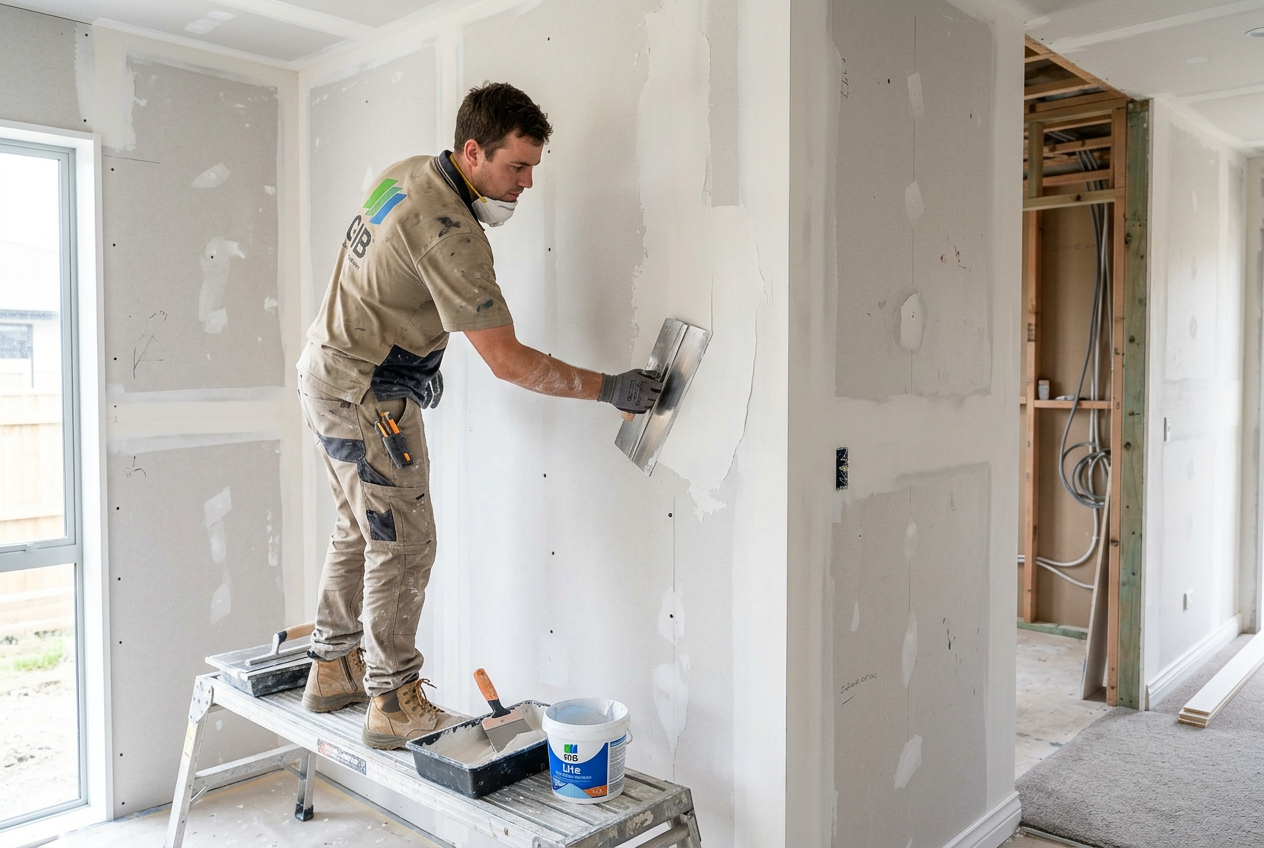
Stopping and finishing a new room in New Zealand typically takes 2 to 5 working days from first coat to final sand-down, though this varies quite a bit depending on room size, the number of plasterboard sheets, the finish level required, and — critically — drying conditions. Here's what to expect at each stage and what can speed things up or slow things down.
What Does "Stop and Finish" Actually Mean?
In NZ trade language, stopping refers to filling and taping the joints between GIB plasterboard sheets, covering screw heads, and building up corners. Finishing is the final fine coat and sand that leaves the wall ready for paint. Most residential work follows the GIB Stopping and Finishing system, which specifies different levels of finish (Level 3, 4, or 5) depending on how critical the lighting conditions will be.
- Level 3 – standard finish, suitable for most rooms with normal lighting
- Level 4 – smoother, recommended where semi-gloss or gloss paints will be used
- Level 5 – skim coat over the entire surface, used in high-glare or critical lighting situations
The higher the level, the more coats and drying time are involved.
Typical Timeline for a Standard Bedroom or Living Room
As a rough guide for a standard room of around 12–20 m² with normal ceiling height:
| Stage | What Happens | Typical Time |
|---|---|---|
| First coat (tape & fill) | Tape applied, joints and screws filled | Day 1 |
| Drying | Compound must dry fully | 12–24 hours |
| Second coat | Wider, flatter coat over joints | Day 2 |
| Drying | Another full dry | 12–24 hours |
| Third coat / finish coat | Fine finishing compound, corners refined | Day 3 |
| Final dry & sand | Light sand, dust clean | Day 4–5 |
So in good drying conditions, a single standard room can realistically be ready for the painter in 3 to 4 working days. Larger rooms, vaulted ceilings, or complex layouts with lots of internal corners and archways will take longer.
Key Factors That Affect How Long It Takes
Room Size and Complexity
More square metres of board means more joints, more screws, and more time. A large open-plan living area might take twice as long as a small bedroom. Bulkheads, curved walls, and lots of windows or door reveals all add time.
Number of Coats Required
Most quality stopping work involves three coats of compound. Rushing this process by applying thick coats or not allowing proper drying between coats leads to cracking and shrinkage — a false economy.
Drying Conditions
This is the big variable in New Zealand. In a warm, well-ventilated room in summer, coats can dry overnight. In a cold, damp Southland winter or a poorly ventilated house, drying can take 24–48 hours per coat, stretching the job to a week or more. Plasterers often use dehumidifiers and fans to speed drying, especially in new builds where the structure is still drying out.
Type of Compound Used
Some plasterers use setting-type compounds (which harden chemically rather than by drying) for base coats, which can significantly reduce waiting time. Others use standard air-dry compounds throughout. Ask your plasterer what system they use.
Plasterer's Schedule
Most plasterers work across multiple jobs simultaneously, returning to each room as coats dry. This is normal practice — don't be alarmed if your plasterer isn't on site every hour of every day.
What About a Whole House?
For a full new build, stopping and finishing all rooms is typically scheduled over 1 to 3 weeks, depending on the size of the house and the size of the plastering crew. Plasterers often work in teams, with one person taping while another finishes previously coated areas.
Preparing for the Plasterer
To avoid delays, make sure:
- All GIB plasterboard is correctly fixed and inspected before the plasterer starts
- Electrical rough-in and any other in-wall work is complete (this is restricted work — only a registered electrician can do in-wall wiring; check EWRB for licensing requirements)
- The room is reasonably sheltered from wind and rain
- Heating or ventilation is available if weather is cold or damp
When to Call a Professional
Stopping and finishing is a skilled trade. Poor stopping is one of the most common causes of paint jobs looking patchy or showing joint lines, especially in raking light. For any new room or new build, it's well worth hiring a qualified plasterer rather than attempting it yourself — the results will be noticeably better and the painter will thank you.
You can find experienced local plasterers on tradedirectory.co.nz. If your project involves structural work or alterations, check whether a building consent is required with your local council, and refer to MBIE Building Performance for guidance on Schedule 1 exemptions.
For technical standards on plasterboard installation and finishing, BRANZ is an excellent NZ-specific resource.

 Master Painters NZ member








