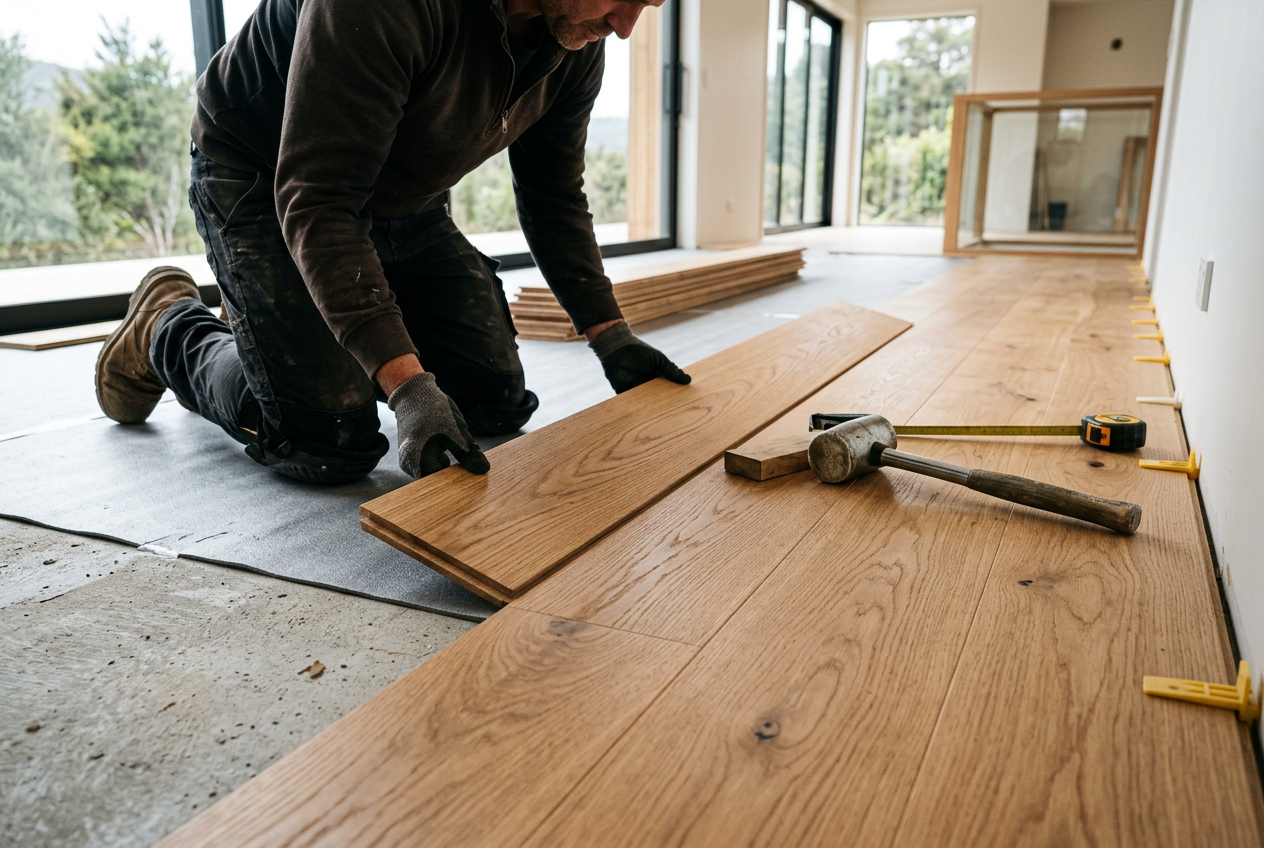
For most New Zealand homeowners, booking a flooring installer 4 to 8 weeks in advance is a reasonable rule of thumb. However, lead times can stretch to 3–6 months during busy periods or when specialty materials are involved, so the earlier you start planning, the better your chances of locking in your preferred tradesperson and product.
Why Lead Times Vary So Much
Flooring installation timelines in NZ are influenced by a mix of factors — from the tradesperson's schedule to the supply chain for your chosen product. Understanding these helps you plan realistically.
- Tradesperson availability: Experienced, well-reviewed flooring installers are often booked out weeks or months ahead, especially in high-demand cities like Auckland, Wellington, and Christchurch.
- Material lead times: Imported flooring products — engineered timber, luxury vinyl plank (LVP), or custom tiles — can take 4–12 weeks to arrive once ordered. Your installer can't start until the product is on-site.
- Acclimatisation requirements: Timber and some engineered floors need to acclimatise to your home's temperature and humidity before laying — typically 48–72 hours minimum, sometimes longer in humid or coastal NZ climates. This is built into the schedule.
- Subfloor preparation: If your subfloor needs levelling, moisture treatment, or repairs, that work must be completed and cured before flooring goes down, adding days or weeks.
- Seasonal demand: Spring and summer (October–February) are peak renovation seasons in NZ. Installers' books fill up fast during these months.
Typical Booking Windows by Project Type
| Project Type | Suggested Booking Lead Time |
|---|---|
| Small room, in-stock product | 2–4 weeks |
| Whole-house carpet replacement | 4–8 weeks |
| Engineered or solid timber floors | 6–12 weeks |
| Imported tiles or custom flooring | 8–16 weeks |
| New build or major renovation | 3–6 months |
These are general guides only — always confirm timelines directly with your chosen installer and supplier.
How to Avoid Delays
Get quotes early
Contact at least two or three flooring installers as soon as you know your project scope. Even if you're not ready to commit, understanding availability helps you plan. You can find qualified local flooring installers on tradedirectory.co.nz.
Confirm product availability before booking
Ask your installer or flooring retailer whether your chosen product is in stock locally or needs to be ordered. Retailers at Bunnings or Mitre 10 stock a range of in-stock options, while specialist flooring suppliers may carry a wider range but with longer lead times.
Sort your subfloor first
Have your subfloor assessed early. Moisture issues are common in NZ homes — particularly in older villas or homes in damp regions — and fixing them takes time. BRANZ provides good guidance on moisture management in residential construction.
Factor in building consent if needed
Most flooring work doesn't require a building consent, but if your project involves structural changes (like raising floor levels or altering a wet area), check with your local council. MBIE Building Performance has clear information on what work is exempt under Schedule 1 of the Building Act — but always confirm with your council, as requirements can vary.
Busy Periods to Watch Out For
- Pre-Christmas (October–December): Many homeowners want renovations finished before the holidays. This is the busiest period for most NZ tradespeople.
- Post-winter (August–September): Homeowners often tackle projects after winter, creating a surge in demand.
- New build completions: When the construction sector is busy, flooring installers who work with builders are often fully committed, reducing availability for private homeowners.
What to Have Ready When You Book
To help your installer give you an accurate quote and timeline, have the following information on hand:
- Room dimensions (length × width in metres)
- Existing floor type (concrete slab, timber subfloor, existing tiles)
- Flooring product you're considering, or a shortlist
- Any known moisture or levelling issues
- Your preferred start date and any hard deadlines (e.g., tenants moving in)
If you're a landlord, remember that Tenancy Services Healthy Homes standards set requirements around insulation and draught stopping that may affect your flooring choices.
When to Call a Professional
Flooring installation is not legally restricted work in the same way as electrical or plumbing — homeowners can lay their own flooring in many cases. However, hiring a qualified installer is strongly recommended for:
- Timber and engineered wood floors (incorrect installation voids most manufacturer warranties)
- Large or complex areas where mistakes are costly
- Wet areas such as bathrooms, where waterproofing must comply with NZ Building Code clause E3 — waterproofing in wet areas is restricted building work and must be carried out or supervised by a Licensed Building Practitioner (LBP) with the relevant licence class
- Any work involving adhesives, levelling compounds, or moisture barriers where product selection matters
A professional installer will also know which products suit NZ's variable climate — from the humidity of Northland to the cold winters of the South Island.







