Fire safety in apartments and multi-unit buildings in New Zealand is more involved than in a standalone home. These buildings have shared escape routes, communal fire systems, and legal obligations that apply to both building owners and individual residents. Understanding how it all fits together helps keep everyone safer.
Why Multi-Unit Buildings Have Special Requirements
When many people share a building, a fire in one unit can quickly threaten others. The NZ Building Code — particularly Clause C (Protection from Fire) — sets out requirements for fire resistance, means of escape, and fire-fighting provisions in multi-unit residential buildings. These requirements are designed to give occupants enough time to evacuate safely and to limit the spread of fire and smoke between units.
The specific requirements that apply to any given building depend on its height, size, use, and when it was built. If you have questions about what applies to your building, check with your local council or a licensed fire protection specialist.
Smoke Alarms: What the Law Requires
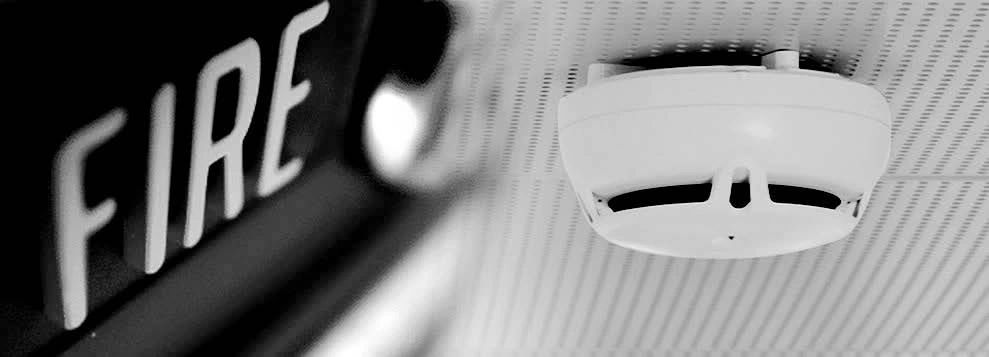
For rental properties — including apartments — landlords must comply with the Healthy Homes Standards under the Residential Tenancies Act. This means providing working smoke alarms that are:
- Long-life photoelectric or hard-wired
- Positioned within 3 metres of each bedroom door
- Present on each level of the home
Photoelectric alarms are recommended for all homes because they detect slow, smouldering fires more effectively than ionisation-type alarms. Even if you own your apartment, fitting photoelectric alarms is strongly advisable. Check Tenancy Services for the current legal requirements for rental properties, and Fire and Emergency New Zealand (FENZ) for general smoke alarm guidance.
Shared Fire Systems in Apartment Buildings
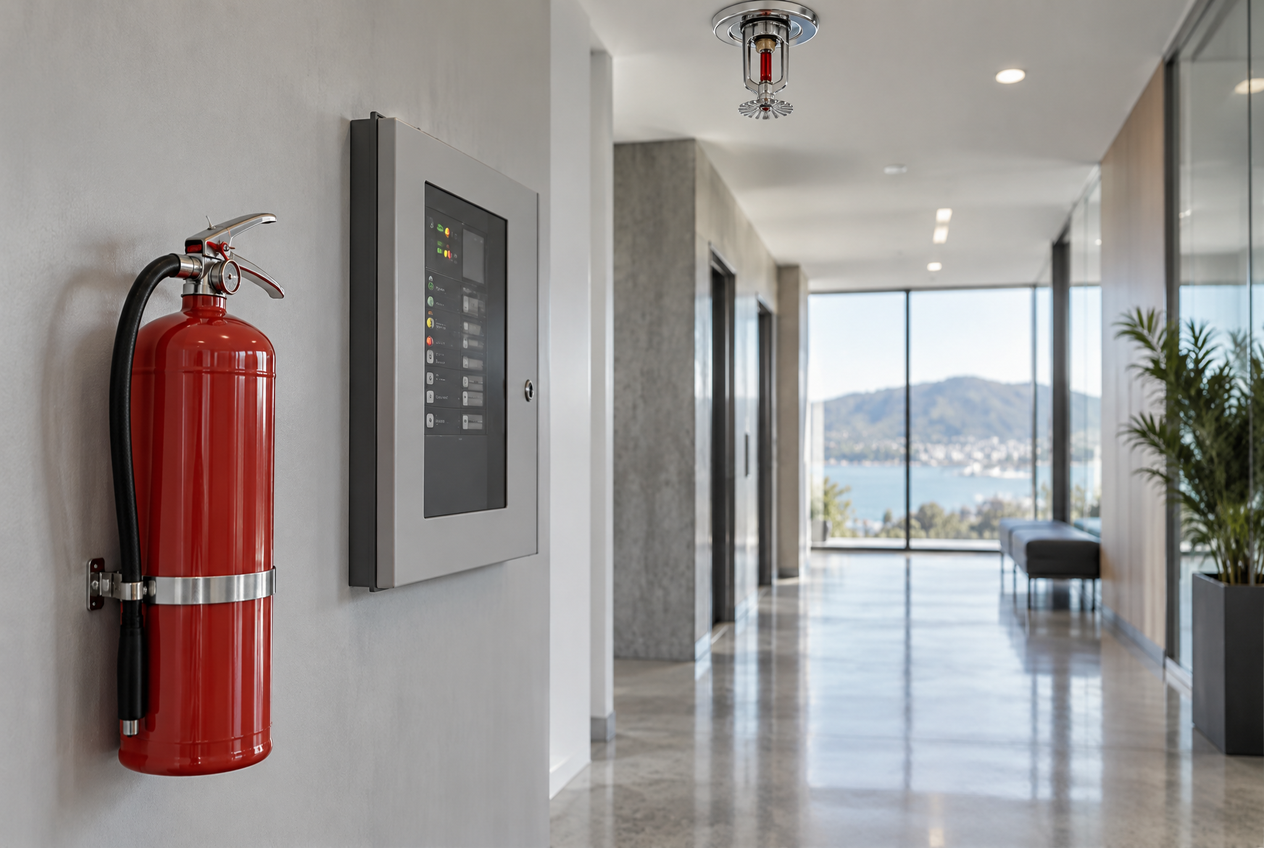
Larger or taller apartment buildings typically have specified systems — fire safety systems that must be maintained and regularly inspected. These can include:
- Automatic fire alarm systems (linked to a monitoring centre or FENZ)
- Automatic fire sprinkler systems
- Emergency lighting in corridors and stairwells
- Fire doors and smoke-stop doors
- Means of escape (exit signs, evacuation routes)
These systems are governed by relevant NZ Standards — for example, automatic fire sprinkler systems are covered by NZS 4541, and fire detection and alarm systems by NZS 4512 (confirm the current applicable standard with a qualified fire protection specialist, as standards are periodically updated). Always confirm which standards apply to your building with a qualified fire protection specialist or Standards NZ.
Building Warrants of Fitness and Compliance Schedules
If your apartment building has specified systems, the building owner is required to hold a compliance schedule issued by the local council. Each year, the owner must supply the council with a Building Warrant of Fitness (BWOF), confirming that all specified systems have been inspected, maintained, and are performing as required.
The inspections that support the BWOF must be carried out by an Independent Qualified Person (IQP) — a specialist registered with the local council for each type of system. The IQP signs off the relevant certificates (Form 12A) confirming the systems are compliant. Building owners cannot sign off their own specified systems. For more detail on how this works, visit MBIE Building Performance.
As a resident or unit owner, you can ask your building manager or body corporate to confirm the BWOF is current. It should be displayed in the building.
Fire Doors: A Critical Safety Feature
Fire doors are one of the most important — and most misused — fire safety features in multi-unit buildings. They are designed to slow the spread of fire and smoke, buying time for evacuation. Key rules:
- Never prop or wedge a fire door open — this is both dangerous and illegal
- Keep fire doors clear of obstructions at all times
- Report damaged or faulty fire door closers to your building manager immediately
- Fire doors must be inspected as part of the building's compliance schedule
Evacuation Schemes
Many multi-unit residential buildings are required to have an evacuation scheme approved by FENZ. This sets out how occupants will be safely evacuated in an emergency. Building owners or managers are responsible for developing and maintaining the scheme. Residents should familiarise themselves with:
- The location of all exits and escape routes
- The sound of the building's fire alarm
- The assembly point outside the building
Visit FENZ to find out whether your building needs an approved evacuation scheme.
Body Corporates and Unit Owners
In a body corporate building, fire safety responsibilities are typically shared. The body corporate is usually responsible for maintaining shared systems, common areas, and the BWOF. Individual unit owners are responsible for smoke alarms within their own units and must not interfere with shared fire safety systems. If you are unsure of your obligations, check your body corporate rules and seek advice from your council or a fire protection specialist.
When to Call a Professional
Fire protection work in commercial and multi-unit residential buildings is specialist work. You should engage a licensed fire protection specialist for:
- Inspection, testing, and maintenance of sprinkler systems, fire alarms, and emergency lighting
- IQP services and BWOF compliance
- Evacuation scheme design and review
- Assessment of fire door condition and compliance
- Any new fire system installation or modification
For smoke alarm installation in your own unit, a competent homeowner can fit a battery-operated alarm, but hard-wired alarms must be connected by a registered electrician — see the Electrical Workers Registration Board (EWRB) for licensing information.
You can find qualified fire protection specialists and other licensed tradespeople in your area on tradedirectory.co.nz.
Sources & Further Reading
- Fire and Emergency New Zealand (FENZ) — fire safety guidance
- MBIE Building Performance — Building Code and BWOF information
- Tenancy Services — smoke alarm and Healthy Homes requirements
- Standards NZ — NZ fire safety standards
- WorkSafe NZ — workplace fire safety
- BRANZ — building research and guidance