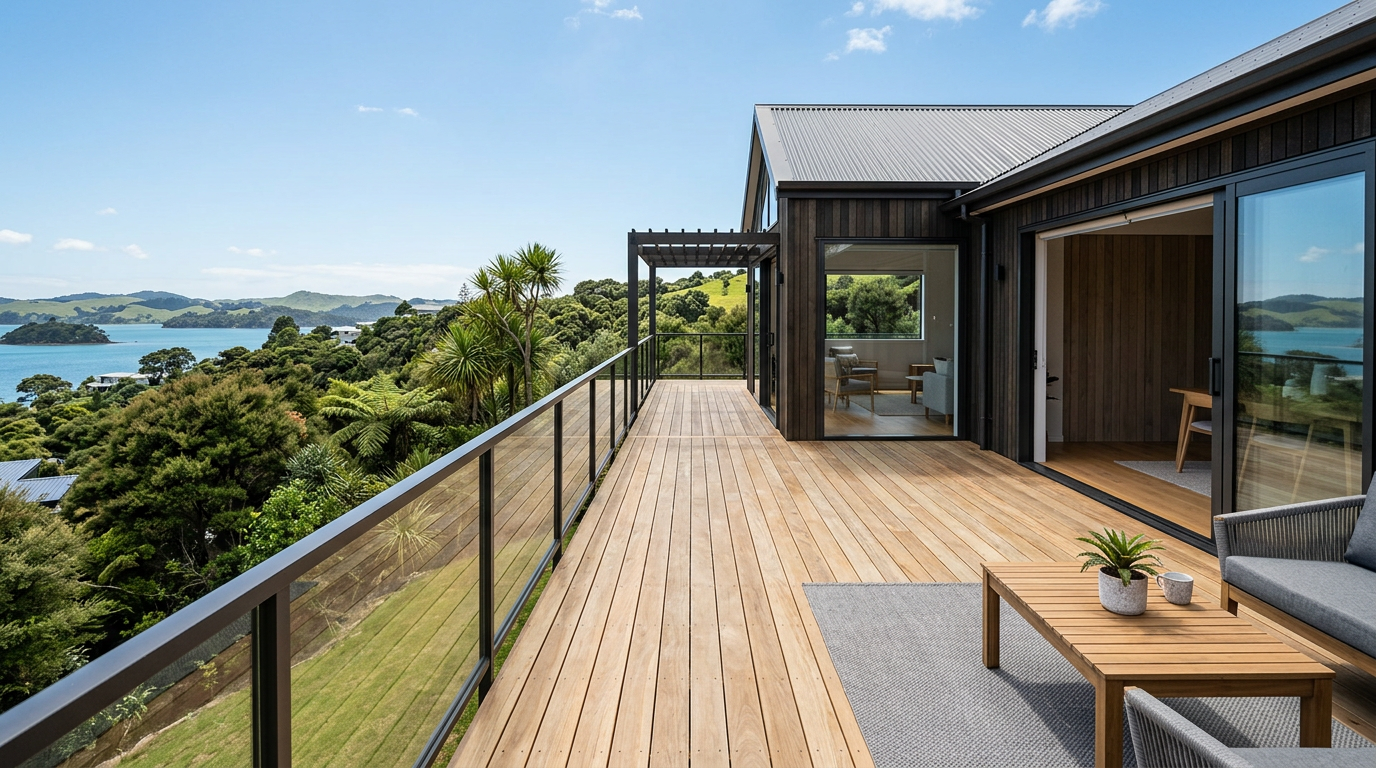
Water pooling on a flat deck is one of the most common complaints from NZ homeowners — and left unchecked, it leads to membrane failure, timber rot, slip hazards, and costly repairs. The good news is that most pooling problems come down to inadequate fall (slope), blocked drainage, or a failing waterproof surface, all of which can be addressed with the right approach.
Why Water Pools on Flat Decks
Despite the name, a flat deck should never be truly flat. The NZ Building Code (specifically Clause E2 — External Moisture) requires that horizontal surfaces shed water away from the building. In practice, this means a minimum fall of 1:100 (1 mm drop per 100 mm of run) is generally accepted as a minimum, though many waterproofing manufacturers and BRANZ recommend 1:60 or steeper for reliable drainage.
Common causes of pooling include:
- Insufficient fall built into the original deck framing or substrate
- Deflection or sagging of the deck structure over time, creating low spots
- Blocked or undersized drains and scuppers
- Membrane bubbling or delamination that creates hollows
- Debris build-up (leaves, dirt) blocking outlets
Check Your Drainage First — It's the Easy Win
Before assuming you need major work, start with the simplest fix:
- Clear all outlets — remove leaves, grit, and debris from drains, scuppers, and downpipes.
- Pour a bucket of water on the deck and watch where it flows. This reveals low spots and confirms whether outlets are actually draining.
- Check downpipes are not blocked or crushed underground.
If water drains freely once outlets are clear, your problem may simply be maintenance rather than a structural issue.
Improving the Fall (Slope)
If your deck genuinely lacks adequate fall, you have a few options depending on the deck type:
Tapered Insulation or Screed Overlay
On concrete or solid substrate decks, a tapered screed or tapered insulation board system can be installed over the existing surface to create the correct fall before re-waterproofing. Products from Ardex or Mapei include suitable levelling and screed compounds — always follow the manufacturer's technical data sheet for minimum thickness and fall requirements.
Re-framing Timber Decks
On a timber-framed deck, correcting the fall may require re-packing or replacing joists and noggings to lift low areas. This is more involved work and may require a building consent depending on the extent of structural changes. Always check with your local council — MBIE Building Performance has guidance on what work requires consent versus what falls under Schedule 1 exemptions.
Decking Board Orientation
For open-slatted timber or composite decks (not waterproofed membrane decks), ensure boards run parallel to the fall direction so water drains between the gaps rather than across them.
Waterproofing: Repair or Replace?
If your deck has a membrane waterproofing system (common on decks over habitable space), pooling water will accelerate membrane failure. Look for:
- Blistering or bubbling — indicates moisture trapped beneath
- Cracking or crazing — especially at corners and penetrations
- Delamination at edges or flashings
Minor repairs to membranes can sometimes be done with compatible patch products, but if the membrane is aged or extensively damaged, full replacement is usually more cost-effective in the long run. Waterproofing over habitable space is critical work — a failure here can cause serious damage to ceilings, walls, and structure below.
Popular NZ waterproofing systems include products from Sika, which offers liquid-applied membrane systems suitable for deck refurbishment. Always confirm compatibility with your existing substrate and membrane before applying any product.
Adding or Relocating Drains and Scuppers
Sometimes the drain is simply in the wrong place — not at the lowest point of the deck. Options include:
- Adding a secondary drain or scupper at the true low point
- Installing a channel drain along one edge for linear drainage
- Raising the deck perimeter slightly with a rebated edge detail to direct water to a specific outlet
Note: any work connecting new drains to the stormwater system involves drainlaying, which is restricted work under NZ law. This must be carried out by a licensed drainlayer registered with the Plumbers Gasfitters & Drainlayers Board.
Anti-Slip Surfaces
While you're addressing pooling, it's worth reviewing your deck surface for slip risk — wet flat decks are a serious hazard. Anti-slip coatings, textured paint systems, or grip strips can be applied to most surfaces. Resene and Dulux both offer deck and concrete coatings with anti-slip additives suitable for NZ conditions.
When to Call a Professional
Some pooling fixes are straightforward DIY jobs (clearing drains, applying a patch). But you should engage a qualified deck builder or waterproofing specialist if:
- The deck sits over a habitable room or garage
- You suspect structural sagging or joist damage
- The existing membrane needs full replacement
- You need to add or relocate drainage connections
- A building consent may be required
A licensed building practitioner can assess the root cause properly and ensure work meets the NZ Building Code. You can find experienced local deck builders and waterproofing specialists on tradedirectory.co.nz.




 Licensed Building Practitioner (LBP)





