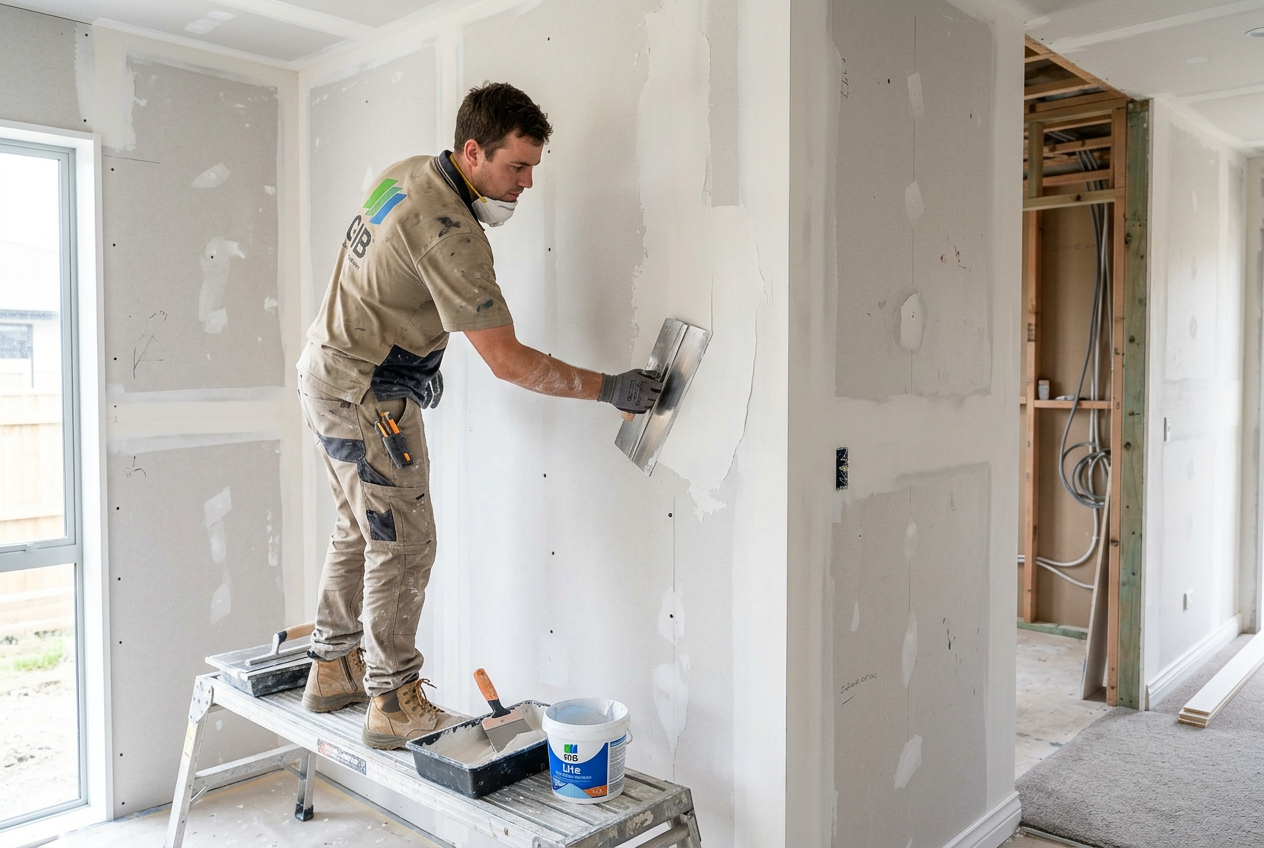
Hot NZ summers — especially in regions like Hawke's Bay, Canterbury, or Central Otago — can cause stopping compound (also called joint compound or plaster filler) to skin over and dry far too quickly. This leads to cracking, poor adhesion, and a finish that's hard to sand smoothly. The good news is that with a few simple adjustments to your environment, materials, and technique, you can keep compound workable for long enough to get a professional result.
Why Fast Drying Is a Problem
Stopping compound relies on a controlled drying process. When it dries too fast — particularly on the surface before the body has cured — you get differential shrinkage. The outer skin tightens while the inside is still wet, causing hairline cracks and poor bonding to the substrate. In summer, three main culprits speed up drying:
- High air temperature (above 25–30°C)
- Low relative humidity (common in inland and eastern NZ regions)
- Air movement from open windows, fans, or air conditioning
Prepare the Room Before You Start
Controlling your environment is the single most effective step.
- Close windows and doors to reduce airflow and keep the room temperature stable.
- Work in the cooler parts of the day — early morning is ideal before the day heats up.
- Avoid direct sunlight on the wall surface. Draw curtains or blinds if needed.
- If you have a portable evaporative cooler or humidifier, running it in the room can raise humidity and slow evaporation. Avoid air conditioning if possible, as it dries the air significantly.
- Aim to work in conditions between 10°C and 25°C with moderate humidity — this is the sweet spot most manufacturers recommend.
Condition Your Compound Correctly
Pre-mixed stopping compound (the ready-to-use tub variety) is water-based and particularly sensitive to heat. Here's how to manage it:
- Store tubs in a cool, shaded location — never in a hot vehicle or direct sun. Compound that has been heat-stressed before opening will already have a shorter working time.
- Add a small amount of clean water and remix thoroughly before use. This restores moisture lost during storage and extends working time slightly. Don't overdo it — too much water weakens the compound and increases shrinkage.
- Keep the lid on the tub between applications. Even a few minutes of exposure in a hot room will start to skin the surface of the compound in the tub.
- Work in small batches on your hawk or mud pan. Only load what you can apply in 5–10 minutes.
Use the Right Product for the Conditions
Not all stopping compounds are equal. Check the product data sheet for working time and temperature ratings.
| Product Type | Working Time | Best For |
|---|---|---|
| Pre-mixed all-purpose compound | Moderate | General stopping, cooler conditions |
| Lightweight finishing compound | Shorter | Final coats, easier sanding |
| Setting-type compound (powder) | Adjustable | Hot/dry conditions — choose a longer set time |
Setting-type (chemical-set) compounds — sold as powder that you mix with water — are often a better choice in summer. Unlike pre-mixed compounds that dry by evaporation, setting compounds cure by a chemical reaction. You can choose products with longer set times (e.g., 45-minute or 90-minute formulas) to give yourself more working time regardless of temperature. Brands such as Ardex and Mapei offer setting-type products suitable for plasterboard finishing — always check the product data sheet for the right application.
For standard pre-mixed compounds, GIB provides detailed guidance on their stopping systems, including recommended conditions for application.
Application Technique in Hot Weather
- Dampen the substrate lightly with a misting spray bottle before applying compound to porous surfaces. This slows suction and gives you more open time. Don't soak it — just a light mist.
- Apply thinner coats. Thick coats trap moisture and are more prone to cracking as the outer surface dries faster than the core. Multiple thin coats are always better practice anyway.
- Feather edges quickly — the edges of your application will dry first. Work them out as soon as you've laid the compound.
- Don't overwork compound that is starting to set. Once it begins to stiffen, leave it alone. Reworking compound that is going off will tear the surface and ruin the finish.
Protect Fresh Compound While It Dries
Once applied, slow the drying process down:
- Mist the surface lightly with water if you notice it drying unevenly or too fast — but only in the first few minutes before it starts to set.
- Avoid turning on fans or heat pumps in the room until the compound has fully hardened.
- In very hot conditions, hang a damp cloth or plastic sheeting loosely in front of the work area to reduce airflow and raise local humidity.
When to Call a Professional
If you're stopping large areas of GIB plasterboard — such as after a renovation or new build — getting a consistent, crack-free finish in summer conditions takes real skill and experience. A qualified plasterer will have the tools, products, and technique to manage the conditions efficiently. Poorly applied stopping is very difficult to fix once painted.
For work associated with a building consent (check with your local council whether consent is required), finishing work must meet the NZ Building Code requirements. If you're unsure whether your project needs consent, contact your council or visit MBIE Building Performance.
You can find qualified, local plasterers on tradedirectory.co.nz to get the job done right.

 Master Painters NZ member








