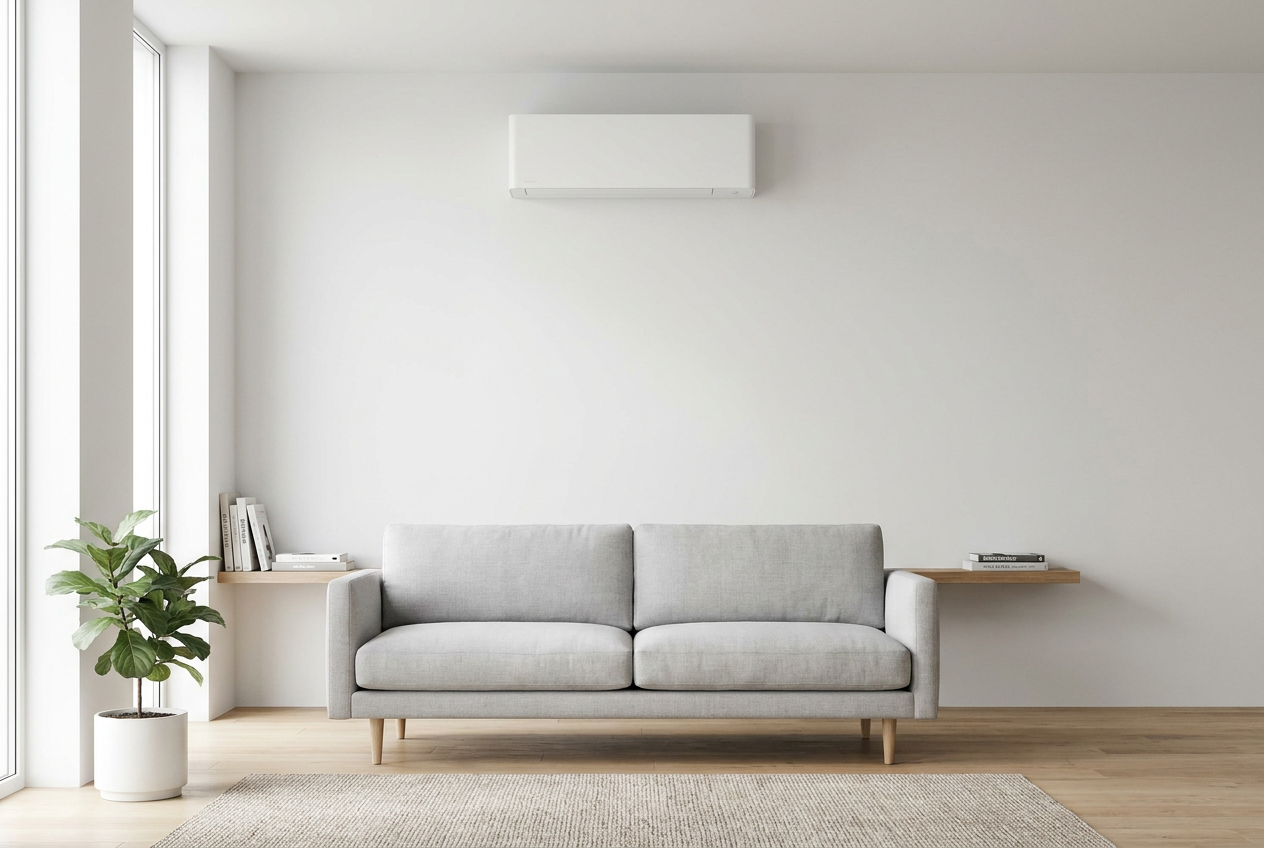
A heat pump indoor unit (the wall-mounted evaporator unit) dripping water down your wall is one of the most common heat pump complaints in New Zealand homes. The good news is that the most frequent cause — a blocked condensate drain — is something you can often sort yourself. However, some causes do require a licensed technician, so it pays to know the difference.
Why Does a Heat Pump Indoor Unit Produce Water?
When your heat pump runs in cooling mode (or in heating mode on a humid day), the indoor coil gets cold and moisture from the air condenses on it — just like a cold drink glass on a warm day. This condensate water normally drips into a collection tray inside the unit and flows away through a small drain pipe (the condensate drain line) to the outside or to a drain point. When something interrupts that flow, water overflows the tray and runs down your wall.
Common Causes of Leaking
1. Blocked Condensate Drain Line
This is the number-one culprit. Over time, algae, mould, dust, and debris build up inside the drain pipe and block the flow. Signs include:
- Water dripping or streaming from the bottom of the indoor unit
- A musty smell from the unit
- The unit shutting itself off (many modern units have a float switch that triggers this)
2. Dirty Air Filters
A clogged filter restricts airflow over the coil. The coil gets too cold, ice forms on it, and when it melts, the tray is overwhelmed with water. Clean your filters every 4–6 weeks during heavy use — most NZ manufacturers recommend this as a minimum.
3. Incorrectly Pitched Drain Line
The condensate pipe needs a continuous downward slope to drain by gravity. If the pipe has sagged, been kinked, or was installed without enough fall, water pools and backs up. This is usually an installation issue.
4. Low Refrigerant (Gas Leak)
If the system is low on refrigerant, the indoor coil runs much colder than it should, causing excessive ice build-up. When the ice melts, it overwhelms the drain tray. Low refrigerant is a restricted-work issue — only a certified refrigeration/heat pump technician can legally handle refrigerants in New Zealand — check with the relevant authority for the current regulatory requirements.
5. Cracked or Misaligned Drain Tray
The plastic condensate tray can crack with age or warp if the unit has been knocked. Water then bypasses the drain outlet entirely.
What You Can Do Yourself
Step 1 — Turn the unit off at the controller and at the wall isolator before doing anything.
Step 2 — Clean the air filters. Remove the front panel, slide out the mesh filters, rinse them under warm water, let them dry fully, and refit. Check your owner's manual for the correct procedure for your brand.
Step 3 — Locate the condensate drain outlet outside the house (usually a small pipe exiting through the wall near the indoor unit). Check it isn't blocked by dirt, spiderwebs, or vegetation.
Step 4 — Flush the drain line. Many installers fit a small access port on the drain line. If yours has one, you can carefully pour a small amount of diluted white vinegar or a purpose-made condensate cleaner through it to clear algae build-up. Do not use high-pressure water — you risk forcing water back into the unit.
Step 5 — Check the drain pipe run for obvious kinks or sags and straighten where possible.
Step 6 — Dry the wall and check for damage. If water has been running for a while, check the wall lining for moisture damage. Prolonged leaks onto GIB plasterboard can cause mould — see GIB for guidance on assessing plasterboard moisture damage.
| Cause | DIY Fix? | Notes |
|---|---|---|
| Blocked drain line | Yes (basic flush) | Call a tech if flushing doesn't clear it |
| Dirty filters | Yes | Clean every 4–6 weeks |
| Sagging drain pipe | Possibly | May need a technician to re-pitch |
| Low refrigerant | No — restricted work | Licensed technician required |
| Cracked drain tray | No | Part replacement needed |
Preventing Future Leaks
- Service your heat pump annually. A qualified technician will clean the coil, check refrigerant levels, inspect the drain tray, and flush the condensate line.
- Clean filters regularly — this single habit prevents the majority of icing and overflow problems.
- Keep the outdoor unit clear of leaves and debris so the system runs efficiently.
- In high-humidity areas of NZ (Northland, West Coast, Bay of Plenty), consider asking your installer to fit a condensate pump if gravity drainage is marginal.
For rental properties, note that Tenancy Services Healthy Homes standards require heating devices to be in good working order — a leaking heat pump that damages walls could be a landlord compliance issue.
When to Call a Professional
Call a licensed heat pump technician if:
- Flushing the drain and cleaning the filters doesn't stop the leak within one or two cooling cycles
- You suspect ice is forming on the indoor coil (visible frost, or the unit keeps shutting off)
- The drain tray appears cracked or misaligned
- You notice the unit isn't cooling or heating as effectively as it used to (possible refrigerant loss)
- Water has damaged wall linings and you need a builder or plasterer
Handling refrigerants is restricted work under NZ law and must only be carried out by a certified technician. Attempting it yourself is illegal and dangerous. You can find qualified local heat pump installers and service technicians on tradedirectory.co.nz.
For broader guidance on building performance and moisture management, BRANZ and MBIE Building Performance are excellent NZ-specific resources.



 ISO 9001






