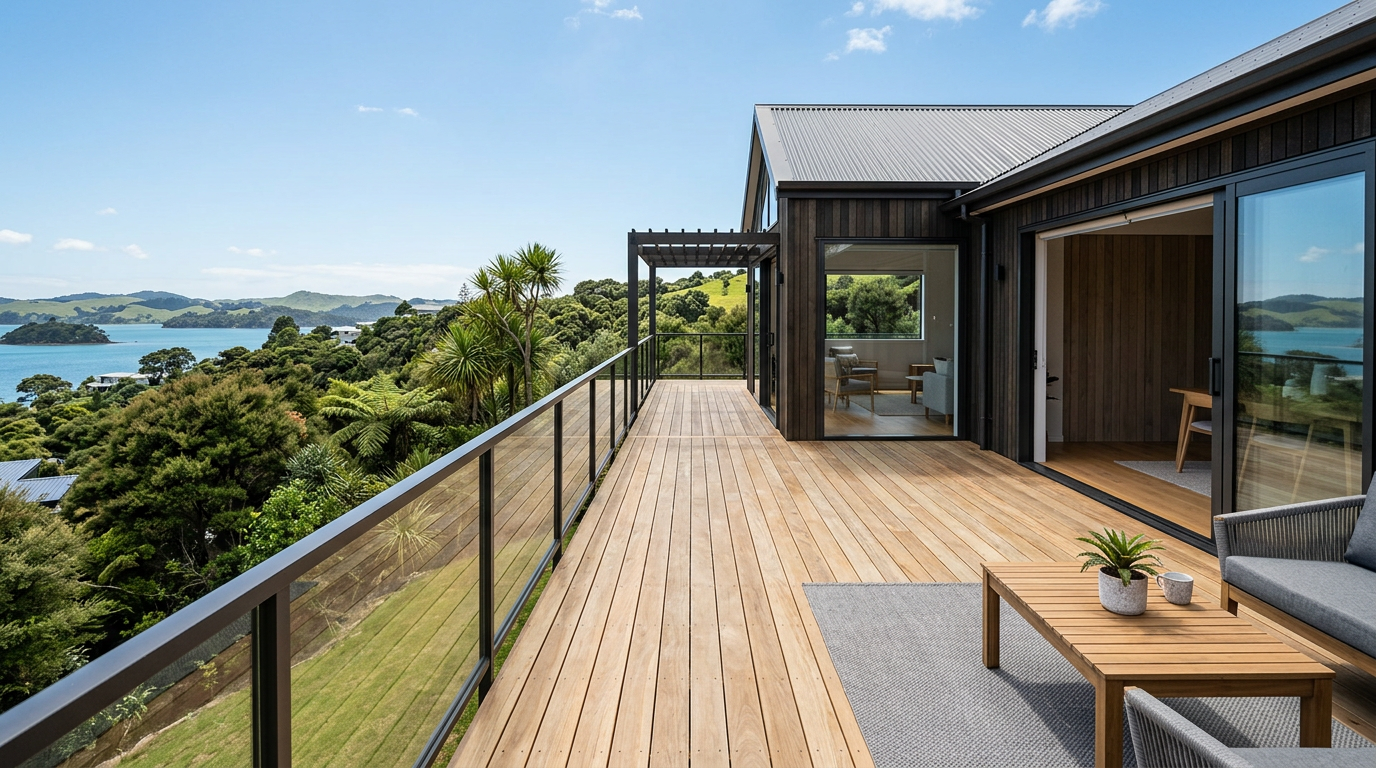
Deck posts sinking into soft ground is one of the most common — and most avoidable — problems with DIY decks in New Zealand. The fix comes down to spreading the load over a large enough area so the soil can support the weight of the deck, its occupants, and any furniture or BBQ gear on top. Getting the foundation right from the start saves you from a tilting, unsafe deck down the track.
Why Posts Sink in the First Place
When a post sits directly on or in soft ground, the concentrated load from the deck above exceeds what that small patch of soil can bear. Over time — especially after rain softens the ground further — the post gradually punches downward. This is called bearing failure, and it's more likely in:
- Clay-heavy soils (very common across much of NZ)
- Filled or disturbed ground
- Low-lying or poorly drained sites
- Areas with high groundwater
The solution is always to spread the load across a wider area, transfer it to more stable soil deeper down, or both.
Know Your Site Before You Start
Before choosing a footing type, you need to understand your soil. Dig a test hole at least 600 mm deep and look at what you find. Soft, dark, or wet soil near the surface usually means you need to go deeper or use a wider footing. If you hit solid clay, compacted gravel, or rock, that's a good bearing layer.
For anything other than a simple, low deck on stable ground, it's worth getting a geotechnical assessment or at least a chat with your local council about soil conditions in your area. BRANZ has useful guidance on foundation design for light timber structures.
Footing Options for Soft Ground
1. Concrete Pad Footings
The most common solution for residential decks in NZ. A concrete pad (also called a spread footing) distributes the post load over a much larger area of soil. As a general guide:
- Pads are typically 400–600 mm square and 200–300 mm deep, but size depends on the load and soil type
- The pad must sit on undisturbed, stable soil — not topsoil or fill
- A post anchor (galvanised or stainless steel) is cast into the wet concrete so the post sits above ground level, keeping it dry and reducing rot risk
2. Bored Piles
For very soft or unstable ground, bored concrete piles go deeper — sometimes 600 mm to 1.2 m or more — to reach a stable bearing layer. This is common on clay sites or sloped sections. A licensed builder or engineer can advise on the right depth and diameter.
3. Screw Piles
Helical screw piles are increasingly popular in NZ. A steel shaft with a helical plate is screwed into the ground by machine, reaching stable soil without excavation. They work well in soft or wet ground and can be installed quickly. They do require specialist equipment and are usually installed by a contractor.
4. Timber Piles (Traditional)
Older NZ homes often used treated timber piles driven or bored into the ground. These can still be appropriate but must use H5-treated timber (for ground contact) and comply with current standards. Check with your supplier — PlaceMakers and Mitre 10 stock treated timber and can advise on treatment levels.
Post Anchors: Keep Posts Off the Ground
Whatever footing you use, never embed a timber post directly into concrete or soil. This traps moisture and causes rot, which weakens the post and can lead to collapse. Instead, use a galvanised or stainless steel post base anchor that holds the post 50–75 mm above the concrete surface, allowing air circulation underneath.
For coastal or high-humidity areas, use 316 stainless steel fixings rather than standard galvanised, as salt air accelerates corrosion.
NZ Building Code and Consent Requirements
Deck construction in NZ is governed by the NZ Building Code, particularly NZS 3604:2011 (Timber-framed buildings), which covers standard residential deck construction. Footing sizes and depths in NZS 3604 are based on specific soil classes and load assumptions.
Many decks require a building consent. As a general rule:
- Decks more than 1.5 m above ground almost always need consent — but confirm the exact threshold with your local council, as consent triggers depend on multiple factors
- Even lower decks may need consent depending on size and complexity
- Some low-level decks may qualify as Schedule 1 exempt work, but you must confirm this with your local council before starting — rules vary by council and site
Visit MBIE Building Performance for guidance on when consent is required, and always check with your council first.
A Simple Comparison
| Footing Type | Best For | Relative Cost | DIY Friendly? |
|---|---|---|---|
| Concrete pad | Stable to moderately soft soil | Low–Medium | Yes, with care |
| Bored pile | Soft or deep unstable soil | Medium | Possible for shallow |
| Screw pile | Very soft, wet, or difficult ground | Medium–High | No — specialist needed |
| Driven timber pile | Traditional builds, rural sites | Medium | Generally no |
When to Call a Professional
If your ground is soft, filled, or poorly drained, or if your deck is elevated, large, or attached to the house, get a qualified deck builder or structural engineer involved. Footing design that doesn't suit the soil is a safety issue — a deck collapse can cause serious injury.
A Licensed Building Practitioner (LBP) is required to carry out or supervise restricted building work, which includes most structural deck work. You can find one at LBP or search for local deck builders on tradedirectory.co.nz.
If your deck involves any electrical work (outdoor lighting, power points) or plumbing, those elements must be done by licensed tradespeople registered with the EWRB or PGDB respectively.
Safety note: Always call Dial Before You Dig (0800 248 344) before any excavation to check for underground services.




 Licensed Building Practitioner (LBP)





