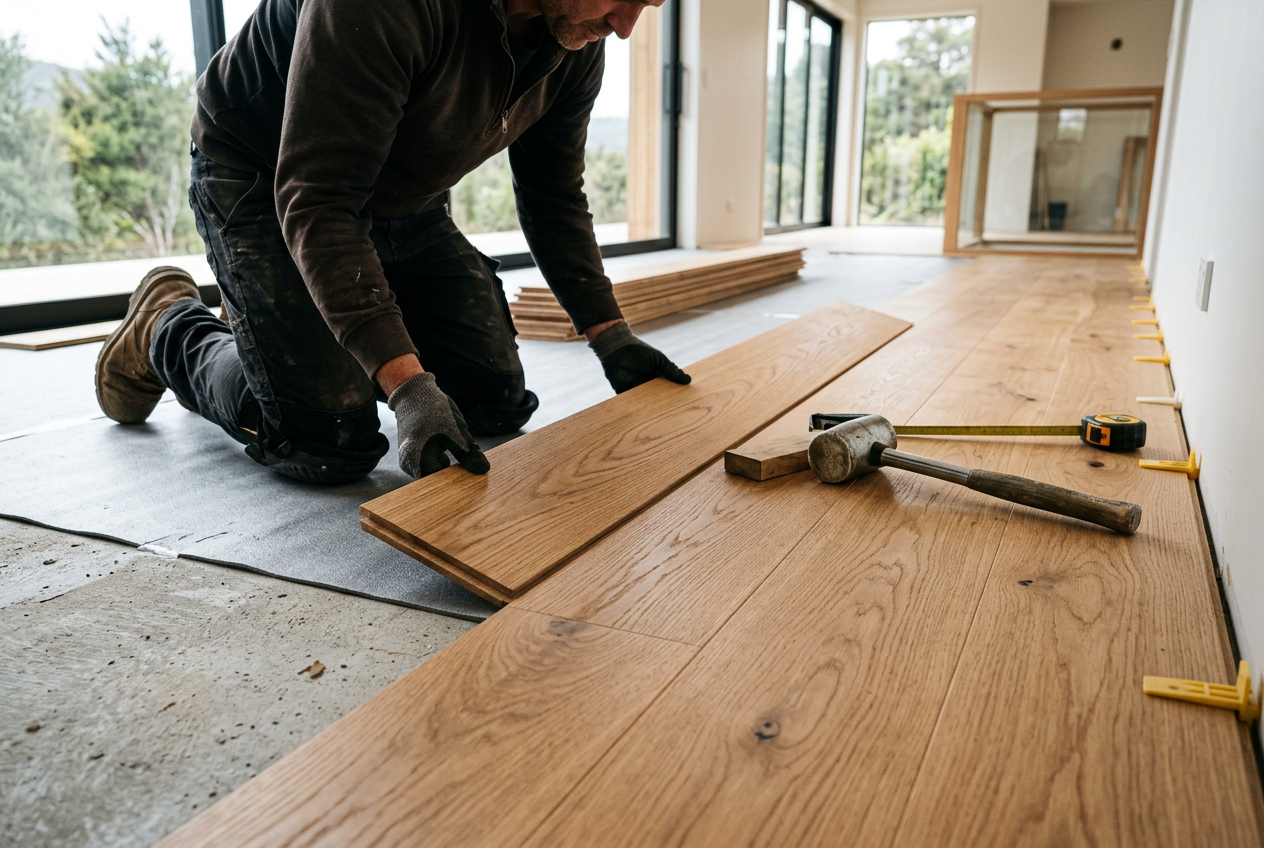
Laminate flooring sliding or shifting on a smooth concrete slab is a common frustration in New Zealand homes, especially in newer builds with polished or power-floated slabs. The good news is that the fix is usually straightforward — it comes down to choosing the right underlay, managing moisture, and ensuring the floor is properly installed with adequate perimeter restraint.
Why Laminate Slides on Concrete
Laminate is a floating floor, meaning it isn't glued or nailed down — it relies on its own weight, the friction of the underlay beneath it, and perimeter restraint (skirting boards or beading) to stay in place. On a smooth concrete slab, there's very little natural grip, so if the underlay is thin, slippery, or missing altogether, the whole floor can creep and shift underfoot.
Common causes include:
- No underlay or the wrong type — a thin foam underlay with a smooth top and bottom surface offers minimal grip
- Insufficient perimeter restraint — gaps under skirting boards or missing scotia/beading allow the floor to migrate
- Moisture causing the underlay to compress or degrade — wet slabs are a major issue in NZ
- Large open-plan areas — the bigger the floor, the more it can move if not properly restrained
Choose the Right Underlay
The single most effective fix is using a quality underlay with a textured or rubberised backing that grips the concrete. Look for underlays specifically rated for concrete subfloors. In New Zealand, you'll find suitable options at Bunnings, Mitre 10, and PlaceMakers.
Underlay types to consider:
| Underlay Type | Grip on Concrete | Moisture Resistance | Notes |
|---|---|---|---|
| Basic foam (PE) | Low | Poor | Not recommended for concrete slabs |
| Foam with foil face | Low–Medium | Moderate | Better for moisture, still can slip |
| Rubber-crumb or cork | High | Good | Excellent grip and acoustic performance |
| Combination (foam + rubber backing) | High | Good | Purpose-made for floating floors on concrete |
Always check the laminate manufacturer's specifications — using the wrong underlay can void your warranty.
Address Moisture First
Concrete slabs in New Zealand — particularly in older homes or in wetter regions — can transmit significant ground moisture. This is a real concern for laminate longevity and is relevant to NZ Building Code moisture provisions.
Before laying any underlay:
- Test the slab for moisture using a calcium chloride test or a relative humidity probe (your flooring supplier or installer can advise on acceptable levels)
- If moisture is present, use a combined underlay and DPM (damp-proof membrane) product, or lay a separate 200-micron polyethylene DPM sheet first
- Never lay laminate directly on a damp slab — it will swell, buckle, and the underlay will break down
BRANZ has good guidance on moisture management in concrete subfloors if you want to dig deeper.
Ensure Proper Perimeter Restraint
A floating floor needs to be contained at all edges. This is what stops it migrating across the room over time. Make sure:
- Skirting boards or scotia beading are fitted snugly to the floor surface (not floating above it)
- Expansion gaps (typically 8–12 mm around the perimeter) are maintained as per the manufacturer's instructions — but these gaps must be covered by skirting or beading, not left open
- Transition strips at doorways and room joins are properly installed to prevent the floor pushing through into adjacent areas
- Heavy furniture is placed on the floor — this helps weigh it down, though it's not a substitute for correct installation
Preparing the Concrete Slab
A smooth, level slab is actually ideal for laminate — the problem is grip, not texture. However, you should still:
- Check for flatness — most laminate manufacturers require the subfloor to be within 3 mm over a 1.8 m straightedge (confirm the exact tolerance in your product's installation instructions). High spots can be ground down; low spots filled with a floor-levelling compound such as those from Ardex or Mapei
- Clean thoroughly — remove dust, paint, adhesive residue, and any contamination that could prevent the underlay from sitting flat
- Allow new slabs to cure — freshly poured concrete should cure for at least 60 days before laying laminate
Can You Glue the Underlay Down?
Some installers lightly tape or spot-glue the underlay to the concrete to prevent it shifting during and after installation. This is acceptable practice as long as you use a pressure-sensitive adhesive designed for the purpose — not a permanent construction adhesive, which would make future removal very difficult. Check with your underlay manufacturer before doing this.
When to Call a Professional
While laying laminate is generally a DIY-friendly job, there are situations where you should bring in a qualified flooring installer:
- Persistent moisture issues — if the slab is consistently damp, you may need a waterproofing solution that goes beyond a simple DPM. This could involve Sika or similar products applied by a professional
- Large or complex areas — open-plan living areas over 8–10 m in any direction may need additional mid-floor restraint or specialist advice
- Existing floor is badly buckled or damaged — this suggests an underlying moisture or subfloor problem that needs diagnosing first
- You're unsure about moisture levels — getting it wrong is an expensive mistake
A qualified flooring installer will have the tools and experience to get it right first time. You can find trusted local flooring professionals on tradedirectory.co.nz.







