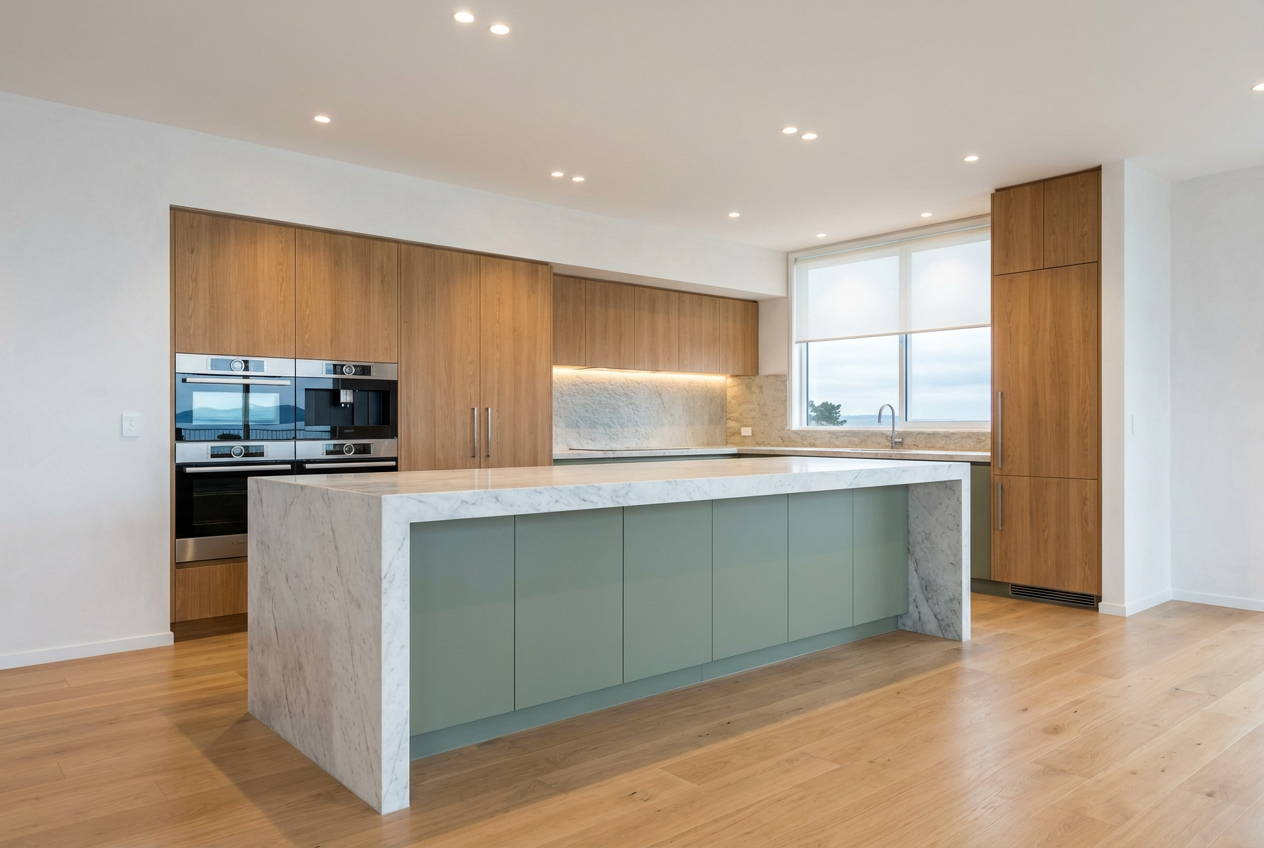
Sticky cabinet drawers are one of the most common complaints from NZ homeowners, especially in humid regions like Auckland, Northland, and the West Coast. The good news is that the cause is almost always moisture-related timber swelling, and there are several straightforward fixes you can try yourself before calling in a professional.
Why Humidity Makes Drawers Stick
Timber is hygroscopic — it absorbs and releases moisture from the surrounding air. When indoor humidity rises (common in NZ summers, after rain, or in poorly ventilated kitchens and bathrooms), timber swells across the grain. A drawer that slides perfectly in winter can become a tight, frustrating battle in January. Engineered wood products like MDF and particleboard are also susceptible, often swelling even more than solid timber when exposed to moisture.
The problem is especially common in:
- Older homes with solid timber drawers and no metal runners
- Kitchens and bathrooms where steam and condensation are regular
- Homes without adequate ventilation, which is now addressed by the Healthy Homes Standards for rental properties
Step 1 — Diagnose the Problem
Before reaching for sandpaper, pull the drawer out completely and inspect it carefully.
- Check the sides and bottom edges for shiny, worn patches — these show exactly where it's rubbing.
- Check the drawer runners or slides. Metal undermount or side-mount slides can also bind if they're dirty, bent, or misaligned — this isn't a humidity issue and needs a different fix.
- Check the cabinet opening (the carcase) for squareness. If the cabinet itself has racked or moved, the drawer will bind regardless of its size.
Step 2 — Let It Dry Out First
If the drawer has swollen from a recent humid spell, give it a few days in a dry, well-ventilated space before doing anything permanent. A dehumidifier or even a sunny windowsill can help. You may find the drawer returns to normal on its own once conditions improve.
Step 3 — Apply a Lubricant
For minor sticking, lubrication is the quickest fix. Options include:
| Lubricant | Best for | Notes |
|---|---|---|
| Beeswax or a wax candle | Timber-on-timber drawers | Rub directly on the drawer sides and runners |
| Dry PTFE (Teflon) spray | Timber or metal runners | Leaves no oily residue |
| Paste wax | Finished timber | Buff lightly after applying |
| Silicone spray | Metal slides | Avoid on bare timber — can prevent future finishing |
Avoid petroleum-based oils (like WD-40) on bare timber as they can stain and attract dust over time.
Step 4 — Sand or Plane the Drawer
If lubrication isn't enough, you'll need to remove a small amount of material from the rubbing surfaces.
- Mark the tight spots with a pencil or chalk before removing the drawer.
- Use 80–120 grit sandpaper on a sanding block, or a hand plane if you're confident with one, to remove material gradually from the sides or top edges of the drawer.
- Remove only a little at a time — it's easy to take off too much and end up with a sloppy, rattling drawer in winter.
- Test the fit frequently as you go.
Seal the Bare Timber Afterwards
This step is critical and often skipped. Once you've sanded, seal the exposed timber with a coat of paint, varnish, or shellac. Bare timber absorbs moisture far more readily than finished surfaces, so sealing it will slow future swelling significantly. Resene and Dulux both offer suitable interior timber sealers and varnishes available from their NZ stores.
Step 5 — Improve Ventilation and Humidity Control
Fixing the drawer is only half the battle. Reducing indoor humidity will prevent the problem recurring.
- Use extractor fans in kitchens and bathrooms during and after cooking or showering.
- Open windows when weather permits to allow air circulation.
- Consider a dehumidifier for consistently damp rooms — Energywise has useful guidance on managing moisture in NZ homes.
- Check for leaks around sinks, dishwashers, or pipes that may be adding moisture to the cabinet environment.
BRANZ research consistently shows that moisture management is one of the most important factors in the longevity of timber joinery in NZ homes.
Upgrading to Metal Drawer Slides
If your drawers run on traditional timber-on-timber wooden runners, upgrading to metal undermount or side-mount slides is a long-term solution. Quality metal slides are largely unaffected by humidity and offer smooth, consistent operation year-round. This is a moderate DIY job if you're comfortable with a drill and measuring, but getting the alignment right takes patience. Soft-close undermount slides are available from Bunnings and Mitre 10.
When to Call a Professional
Consider calling a qualified cabinetmaker if:
- The drawer frame or cabinet carcase is racked, twisted, or damaged — this requires more than a simple sand.
- Multiple drawers throughout the home are sticking, suggesting a broader moisture or structural issue.
- The drawers are part of expensive or heritage cabinetry where incorrect sanding could cause irreparable damage.
- You're considering a full kitchen or bathroom renovation with new cabinetry.
A skilled cabinetmaker can also advise on the best timber species and board products for humid NZ environments. You can find qualified local cabinetmakers on tradedirectory.co.nz.
Safety note: This is a straightforward DIY task with no electrical, gas, or plumbing components. No building consent is required for drawer repairs or runner upgrades.