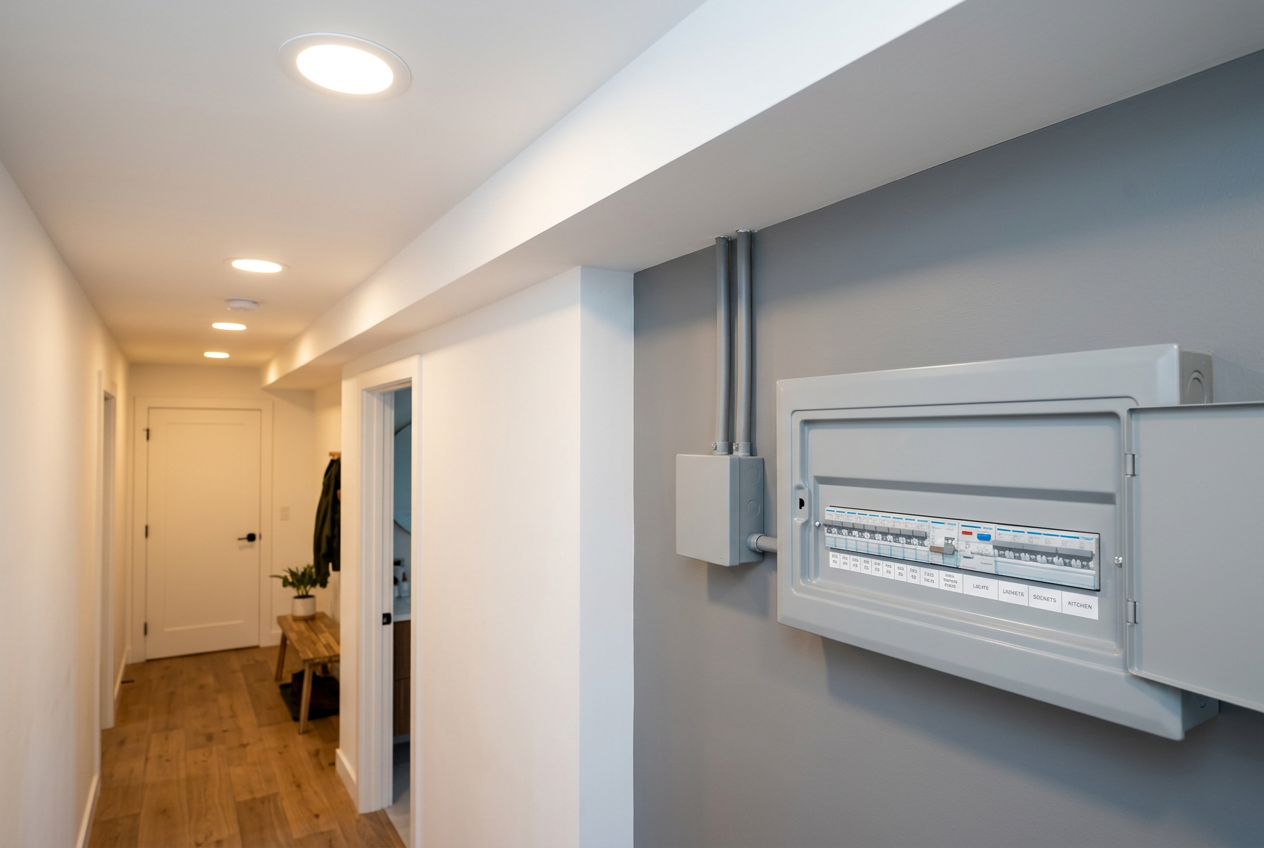
Replacing a faulty RCD (Residual Current Device) in your switchboard is restricted electrical work under New Zealand law — meaning it must be carried out by a registered electrician. While it can be tempting to tackle this yourself, working inside a switchboard carries serious risk of electrocution or fire, and doing the work unlicensed is illegal. Here's what you need to know to stay safe and get the job done right.
What Is an RCD and Why Does It Matter?
An RCD (sometimes called a safety switch) is a protective device in your switchboard that detects dangerous current leakage and cuts power within milliseconds — fast enough to prevent a fatal electric shock. Under general best practice and NZ wiring rules, RCDs are required on circuits such as lighting, power points, and outdoor or bathroom circuits in most modern NZ homes.
A faulty RCD might:
- Trip repeatedly for no apparent reason
- Fail to trip when tested using the test button
- Show visible signs of damage, burning, or discolouration
- Simply not reset after tripping
If your RCD is behaving in any of these ways, it needs to be inspected and replaced promptly.
Why You Cannot Legally Replace It Yourself
In New Zealand, any work that involves connecting or disconnecting wiring inside a switchboard is classified as restricted electrical work under the Electricity Act 1992 and its regulations. This includes replacing an RCD, even if it looks like a simple swap.
Only a person registered with the Electrical Workers Registration Board (EWRB) is legally permitted to carry out this work. Once complete, the electrician must issue you a Certificate of Compliance (CoC) — your proof that the work was done correctly and safely. Without a CoC, you may face issues with insurance claims or future property sales.
Safety note: Your switchboard contains live conductors that remain energised even when your main switch is off. The incoming supply cables from the street are always live. There is no safe way for an untrained homeowner to work inside a switchboard.
What a Registered Electrician Will Do
When you hire a qualified electrician to replace your RCD, they will typically:
- Test the existing RCD to confirm it is faulty (using a calibrated RCD tester, not just the test button)
- Identify the correct replacement — RCDs come in different current ratings (e.g. 10 A, 16 A, 20 A, 32 A), trip sensitivities (typically 30 mA for personal protection), and form factors (Type AC, Type A, etc.)
- Isolate the relevant circuits safely before working in the board
- Remove the faulty unit and install the new RCD, ensuring correct wiring and secure terminations
- Test the new RCD to verify correct operation
- Issue a Certificate of Compliance
The whole job typically takes less than an hour for a straightforward switchboard replacement.
What You Can Do as a Homeowner
While you cannot touch the wiring, there are a few things you are allowed and encouraged to do:
- Press the test button on your RCD monthly to confirm it trips correctly (this is routine maintenance, not electrical work)
- Reset a tripped RCD by switching it back to the ON position after identifying and unplugging the faulty appliance that caused the trip
- Document the fault — note when it trips, what was running, and whether it resets — to help your electrician diagnose the issue quickly
- Check your appliances for damage before plugging them back in
Choosing the Right Electrician
Always verify that your electrician is currently registered with the EWRB — you can search their register online. A Licensed Electrical Inspector (LEI) is not required for this work, but your electrician should be a Registered Electrician (RE) or Craftsman Electrician.
You can find qualified, local electricians on tradedirectory.co.nz — look for someone with switchboard experience and good reviews.
Questions to Ask Your Electrician
- Are you registered with the EWRB?
- Will you provide a Certificate of Compliance?
- Do you recommend replacing just the RCD, or is a full switchboard inspection worthwhile?
- Is my switchboard up to current NZ standards?
How Much Does It Cost? (As a Guide Only)
As a rough guide, a straightforward RCD replacement by a registered electrician in NZ will vary depending on your location, the type of RCD required, and the electrician's call-out fee, depending on your location, the type of RCD required, and the electrician's call-out fee. Always get a written quote before work begins.
When to Call a Professional
Call a registered electrician immediately if:
- Your RCD will not reset after tripping
- Your RCD trips constantly or randomly
- You notice burning smells, scorch marks, or buzzing from your switchboard
- Your switchboard is old (pre-1990s) and has no RCD protection at all
- Multiple circuits are losing power
For older switchboards with ceramic fuses or no RCD protection, your electrician may recommend a full switchboard upgrade to meet current NZ Building Code expectations and improve household safety.

 Site Safe
 Licensed Electrical Inspector







