Removing an old fluorescent tube fitting is a job many NZ homeowners want to tackle themselves — and parts of it are perfectly legal to do. However, because the wiring connection is restricted electrical work under New Zealand law, there's a clear line between what you can handle and what must be done by a licensed electrician. Read on to understand exactly where that line sits, and how to stay safe.
What You Can Legally Do Yourself
Under the Electricity Act 1992 and its regulations, homeowners are permitted to do some basic electrical tasks on their own property, but disconnecting fixed wiring is not one of them. What you can do yourself includes:
- Removing the fluorescent tubes from the fitting
- Removing the diffuser cover or shade
- Unscrewing the fitting body from the ceiling or wall (once the circuit is isolated and the wiring has been disconnected by a licensed electrician)
- Disposing of or recycling the old components
In short: the physical removal of the fixture body is fine, but touching the wiring terminals is not.
What Is Restricted Electrical Work
In New Zealand, restricted electrical work (REW) must be carried out by — or directly supervised by — a registered electrician. Disconnecting a fluorescent fitting from the fixed wiring in your ceiling absolutely falls into this category. This includes:
- Disconnecting the live, neutral, and earth wires from the fitting
- Capping off or making safe the wiring for a new fitting
- Installing any replacement light fitting
The Electrical Workers Registration Board (EWRB) oversees licensing in NZ. Doing restricted electrical work yourself (or hiring an unlicensed person) is illegal, can void your home insurance, and creates serious safety and fire risks.
Step-by-Step: Safe Removal Process
Step 1 — Turn Off the Circuit at the Switchboard
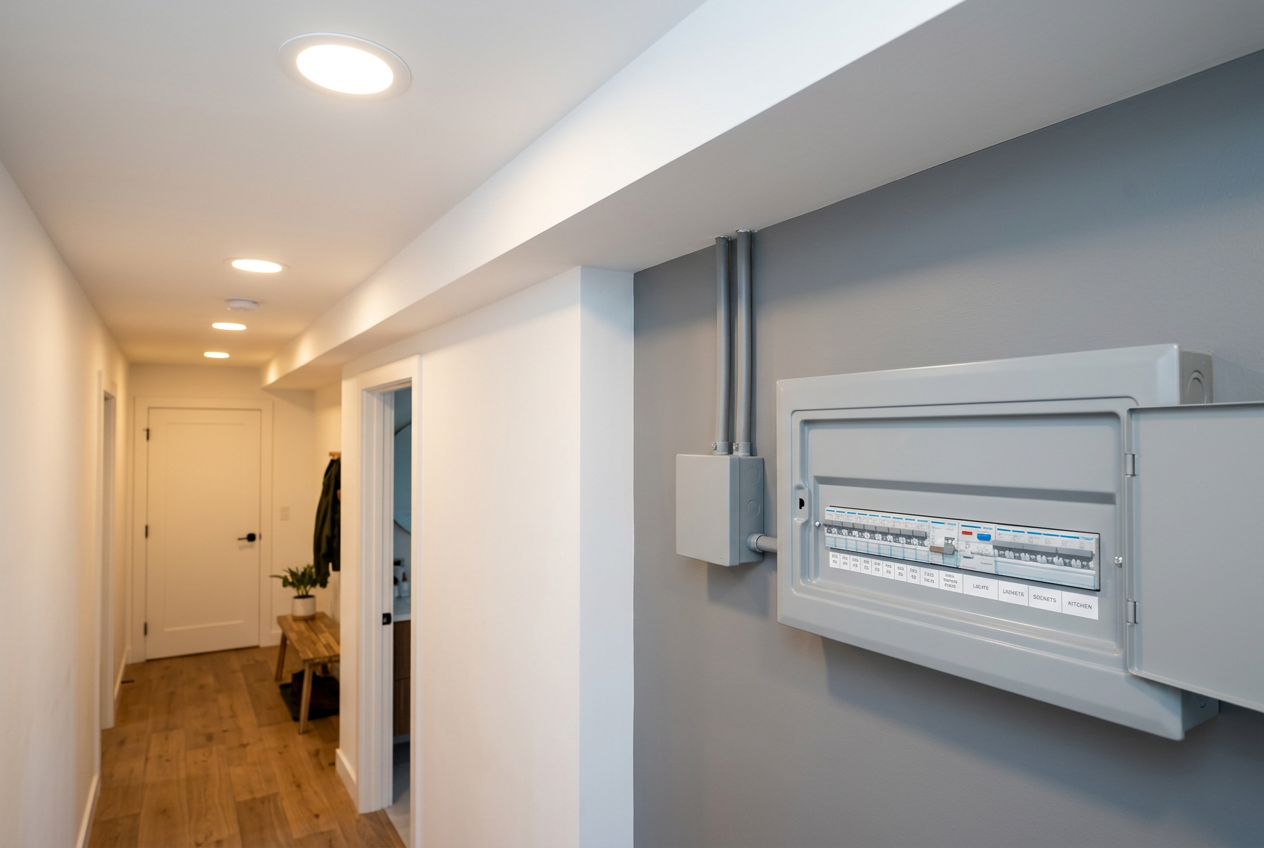
Before touching anything, go to your switchboard and switch off the circuit breaker for the relevant lighting circuit. Do not rely on just switching the light off at the wall — the switch only breaks one conductor, and live voltage may still be present at the fitting.
Use a non-contact voltage tester (available at Bunnings or Mitre 10) to confirm there is no voltage at the fitting before proceeding. These cost around $30–$60 and are a worthwhile investment.
Step 2 — Remove the Tubes and Diffuser
Once the power is confirmed off:
- Twist and pull the fluorescent tubes out of their holders (T8 tubes rotate 90°; T5 tubes may have a different release mechanism — check your fitting)
- Remove any plastic diffuser or cover panel
- Keep tubes whole if possible — fluorescent tubes contain a small amount of mercury and should not go in your general rubbish
Step 3 — Dispose of Tubes Responsibly
Fluorescent tubes are hazardous waste and must be disposed of correctly. Many local councils and some hardware stores offer drop-off points. Check with your local council or WorkSafe NZ for guidance on handling mercury-containing lamps safely.
Step 4 — Call a Licensed Electrician
This is where you hand over to a professional. A licensed electrician will:
- Disconnect the wiring safely from the old fitting
- Inspect the wiring condition (older homes may have aged or brittle insulation)
- Install your new fitting or cap off the wiring if the circuit is being decommissioned
- Issue a Certificate of Compliance (CoC) for the work — this is a legal requirement for restricted electrical work in NZ
Always ask for the CoC when the job is done. You can find qualified local electricians on tradedirectory.co.nz.
Older Fittings — Extra Hazards to Know About
If your fluorescent fitting is more than 20–30 years old, be aware of a couple of additional hazards:
- Asbestos: Some older ceiling tiles and backing materials used in NZ homes from the 1940s to 1980s may contain asbestos. If you're unsure, do not disturb the ceiling material and get it tested before proceeding. WorkSafe NZ has guidance on managing asbestos safely.
- PCBs in ballasts: Very old fluorescent ballasts (pre-1980s) may contain polychlorinated biphenyls (PCBs), which are hazardous. If the ballast looks old and oily, treat it as hazardous waste and let your electrician advise on disposal.
- Wiring condition: Older wiring may use rubber insulation that has become brittle and cracked. Your electrician should flag this during the job.
Choosing a Replacement Fitting
If you're replacing the fluorescent fitting with a modern LED batten or downlights, discuss the options with your electrician beforehand. LED fittings are far more energy-efficient — Energywise has useful guidance on lighting upgrades and energy savings. Some LED battens are direct replacements for fluorescent fittings and can use the existing wiring, making the switchover straightforward.
Does This Work Need a Building Consent?
Generally, like-for-like light fitting replacements do not require a building consent — they fall under Schedule 1 exemptions of the Building Act. However, if you're making significant changes (such as adding new circuits or altering the ceiling structure), check with your local council to be sure. The MBIE Building Performance website is a good starting point.
When to Call a Professional
Call a licensed electrician for all wiring work — this is non-negotiable under NZ law. Also call a professional if:
- You suspect asbestos in the ceiling or surrounding materials
- The wiring looks damaged, discoloured, or has brittle insulation
- You're unsure which circuit breaker controls the fitting
- The fitting is in a bathroom or other wet area (additional regulations apply)
You can find trusted, local licensed electricians on tradedirectory.co.nz.

 Site Safe
 Licensed Electrical Inspector







