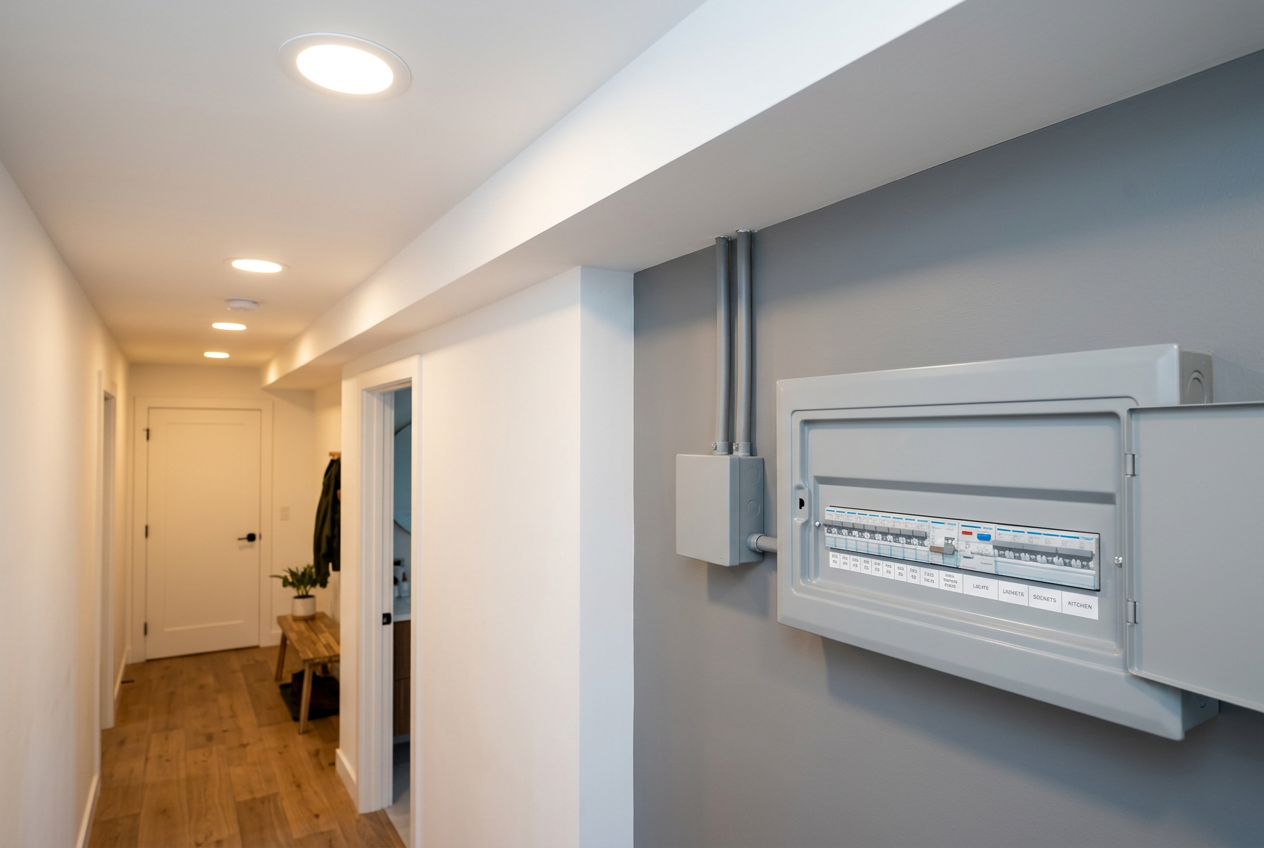
Installing a sensor light inside your home is a great way to improve convenience, security, and energy efficiency. However, in New Zealand, much of the electrical work involved is restricted work that must be carried out by a licensed electrician — so it's important to understand exactly where the line is before you pick up a screwdriver.
What Is a Sensor Light and How Does It Work?
An indoor sensor light (also called a motion-activated or PIR light) uses a passive infrared sensor to detect movement and heat, switching the light on automatically. They're commonly installed in hallways, stairwells, garages, laundries, and bathrooms. Some models also include ambient light sensors so they only activate in low-light conditions.
Sensor lights come in a few main types:
- Plug-in models — plug directly into a standard GPO (power point)
- Battery-operated models — completely wireless, no wiring needed
- Hardwired models — permanently wired into your home's electrical circuit
What Can a Homeowner Legally Do?
Under New Zealand law, electrical work is tightly regulated. The Electrical Workers Registration Board (EWRB) oversees who is permitted to carry out electrical work, and the rules are clear:
- Plug-in sensor lights: You can plug a sensor light into an existing power point yourself — no licence required. This is the simplest and safest DIY option.
- Battery-operated sensor lights: Fully DIY-friendly. These are ideal for cupboards, stairwells, or anywhere you want light without touching your wiring.
- Replacing a like-for-like light fitting (same type, same location, no new wiring): In some situations a homeowner may be permitted to do this, but the rules are nuanced. Check with the EWRB or a licensed electrician before proceeding.
- Any new wiring, new circuits, or connecting to your switchboard: This is restricted electrical work and must be done by a registered electrician. Doing this work yourself is illegal and can void your home insurance.
As a general rule: if it involves touching fixed wiring inside walls, ceilings, or your switchboard, stop and call a professional.
Choosing the Right Sensor Light
Before buying, consider:
| Factor | What to Look For |
|---|---|
| Location | Hallway, bathroom, garage — each has different requirements |
| Power source | Plug-in, battery, or hardwired |
| Detection range | Typically 5–12 metres for indoor PIR sensors |
| Time delay | Adjustable stay-on time (e.g. 10 seconds to 10 minutes) |
| Lux setting | Ambient light threshold to avoid daytime activation |
| IP rating | Bathrooms need a minimum IP44 rating for moisture resistance |
For bathrooms, the NZ Building Code **clause G9 does not exist in the NZ Building Code. The relevant electrical requirements for wet areas are covered under the electrical wiring regulations — check with a licensed electrician for the specific requirements and wiring rules set specific requirements around light fittings near water — another reason to use a licensed electrician in wet areas.
You'll find a good range of sensor lights at Bunnings and Mitre 10.
Installing a Plug-In or Battery Sensor Light (DIY Steps)
If you're going the plug-in or battery route, here's how to do it safely:
1. Choose Your Location
Pick a spot that gives the sensor a clear, unobstructed view of the area you want covered. Avoid pointing sensors directly at heat sources (heaters, sunny windows) as these can cause false triggers.
2. Mount the Fitting
Most sensor lights come with a mounting bracket and screws. Use a stud finder if fixing into a wall, and ensure fixings are appropriate for your wall type (plasterboard, timber, or masonry).
3. Adjust the Settings
Once mounted, adjust the sensitivity, time delay, and lux level using the dials or switches on the unit. Test by walking through the detection zone.
4. Test Thoroughly
Walk through the space at different angles and distances to confirm the sensor triggers reliably. Check it doesn't activate from outside the intended zone.
Safety Notes
- Never work on live wiring — always switch off the circuit at the switchboard and use a voltage tester to confirm power is off before touching any wiring.
- If you're unsure at any point, stop and call a licensed electrician.
- Electrical faults are a leading cause of house fires in New Zealand. WorkSafe NZ has guidance on electrical safety in the home.
- Unlicensed electrical work can void your home insurance and may create liability issues if you sell your property.
Healthy Homes and Energy Efficiency
Sensor lights are a smart energy-saving choice. Because they only activate when needed, they reduce unnecessary electricity use — particularly useful in rental properties where landlords are increasingly focused on efficiency. Energywise has helpful tips on reducing home energy consumption.
When to Call a Professional
You should always hire a licensed electrician if your project involves:
- Installing a hardwired sensor light where no fitting currently exists
- Running new cable through walls or ceilings
- Adding a new circuit or connecting to the switchboard
- Working in a bathroom or other wet area
- Replacing a fitting where you're unsure of the existing wiring condition
A registered electrician must issue you a Certificate of Compliance (CoC) for any restricted electrical work — this is your legal proof the work was done correctly. Always ask for this document.
You can find qualified, local electricians on tradedirectory.co.nz to get the job done safely and up to code.

 Site Safe
 Licensed Electrical Inspector







