Adding a new powerpoint in your garage is a common and practical upgrade — whether you need it for power tools, a workshop setup, or an EV charger. However, in New Zealand, installing a new powerpoint is restricted electrical work and must be carried out by a licensed electrician. Here's what you need to know before you start, and how to make the process smooth and safe.
Is Installing a Powerpoint DIY-Legal in New Zealand?
The short answer is no — not for a new circuit or a new outlet. Under the Electricity Act 1992 and associated regulations, restricted electrical work includes installing, altering, or adding to fixed wiring, outlets, and circuits. This applies to garages just as it does to the rest of your home.
Only a registered electrician — someone registered with the Electrical Workers Registration Board (EWRB) — can legally carry out this work. Doing it yourself or hiring an unregistered person is illegal, can void your home insurance, and creates serious fire and electrocution risks.
What homeowners CAN do:
- Replace a like-for-like fitting — check with EWRB to confirm exactly what is permitted before touching any fixed wiring
- Plug in extension leads and power boards to existing outlets
- Plan the location and discuss requirements with your electrician
If in doubt, always check with the EWRB or a licensed electrician before touching any fixed wiring.
Does a New Garage Powerpoint Need a Building Consent?
Electrical work itself doesn't typically require a separate building consent, but it does require an Electrical Certificate of Compliance (CoC), which your licensed electrician must issue on completion. This certifies the work meets the New Zealand Electrical Code of Practice and the NZ Building Code.
If your garage is a new structure or you're doing significant alterations, a building consent may be required for the building work itself — always confirm with your local council. The MBIE Building Performance website has useful guidance on Schedule 1 exemptions and when consents apply.
What to Consider Before Calling an Electrician
Being prepared helps your electrician give you an accurate quote and get the job done efficiently. Think about:
- Location: Where do you want the powerpoint(s)? Mark the wall with tape so the electrician can assess cable runs.
- Number of outlets: A double powerpoint is usually more practical than a single, especially in a workshop.
- Load requirements: Heavy-duty tools like table saws, compressors, or EV chargers may need a dedicated circuit with appropriate circuit breaker protection.
- Weatherproofing: Garages can be damp environments. Your electrician may recommend weatherproof or IP-rated outlets, particularly if the garage is not fully enclosed.
- RCD protection: Under current NZ wiring rules, new socket outlets in garages generally require residual current device (RCD) protection for safety. Your electrician will ensure this is in place.
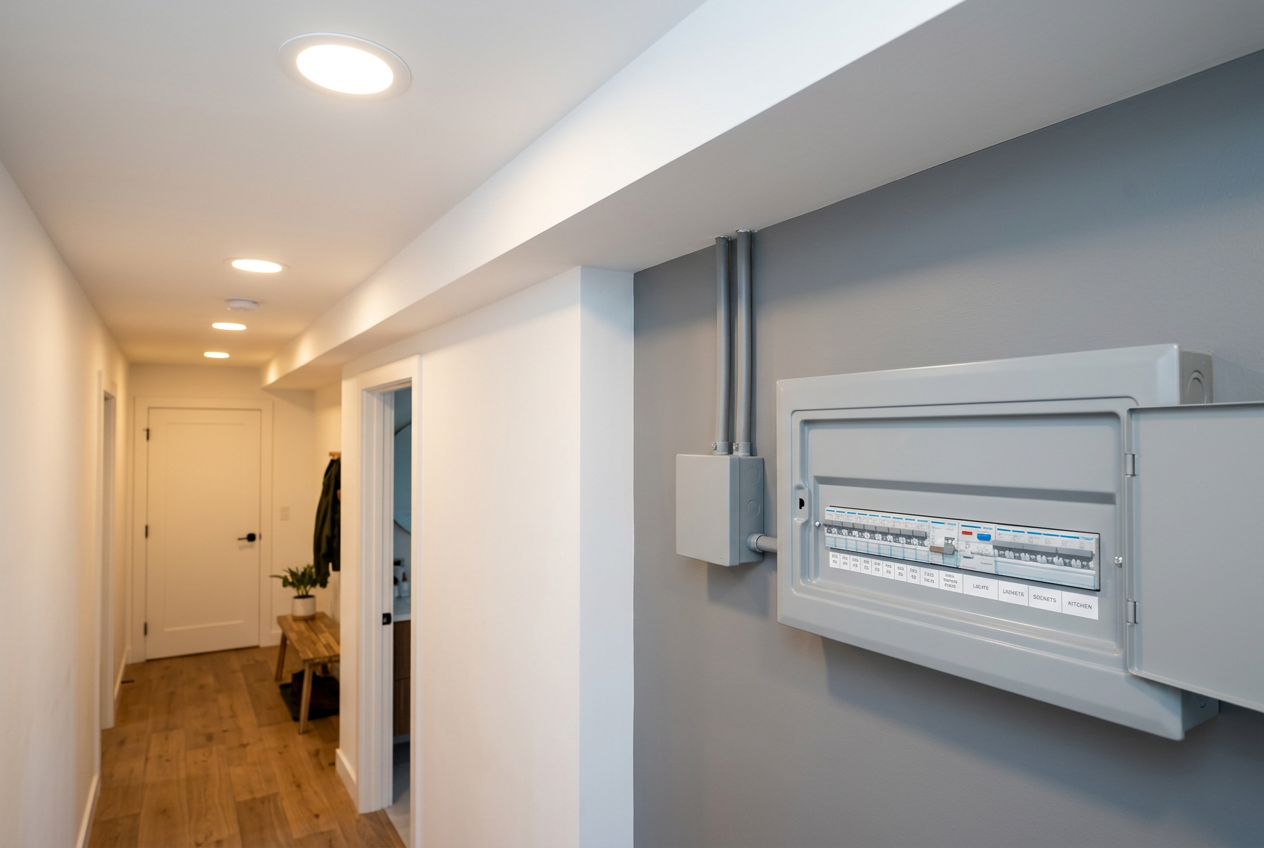
- Existing switchboard capacity: If your switchboard is old or already at capacity, additional work may be needed — your electrician will assess this.
What the Installation Process Looks Like
A licensed electrician will typically:
- Assess your switchboard to confirm there is capacity for a new circuit or outlet.
- Plan the cable route — through the wall cavity, along the garage framing, or in conduit on the surface.
- Install the wiring and outlet, ensuring it meets MBIE Building Performance requirements and the NZ Electrical Code of Practice.
- Test the installation thoroughly before energising.
- Issue a Certificate of Compliance (CoC) — keep this document safe with your property records.
For a straightforward single powerpoint added to an existing circuit, the job can often be completed in a couple of hours. A new dedicated circuit from the switchboard will take longer.
Garage-Specific Safety Considerations
Garages present some unique electrical hazards worth discussing with your electrician:
- Moisture and condensation can affect outlet safety — IP-rated fittings may be recommended.
- Flammable materials (petrol, solvents, LPG) stored in garages mean sparking or arcing from faulty wiring is a serious fire risk.
- Earthing and bonding of metal structures (like a metal garage door frame or workbench) may be required.
- If you're thinking about an EV charging point, this is a specialist installation — discuss your options with a qualified electrician, as dedicated circuits and specific outlet types are usually required.
For general electrical safety guidance, WorkSafe NZ is a reliable resource.
When to Call a Professional
You should always call a licensed electrician to install a new powerpoint in your garage. This is not a grey area — it is restricted work under NZ law. Attempting it yourself risks:
- Electrocution or serious injury
- House fires from faulty wiring
- Voided home and contents insurance
- Legal liability
You can find qualified, local electricians on tradedirectory.co.nz — look for someone registered with the EWRB and ask to see their licence. Always get at least two quotes for larger jobs.

 Site Safe
 Licensed Electrical Inspector







