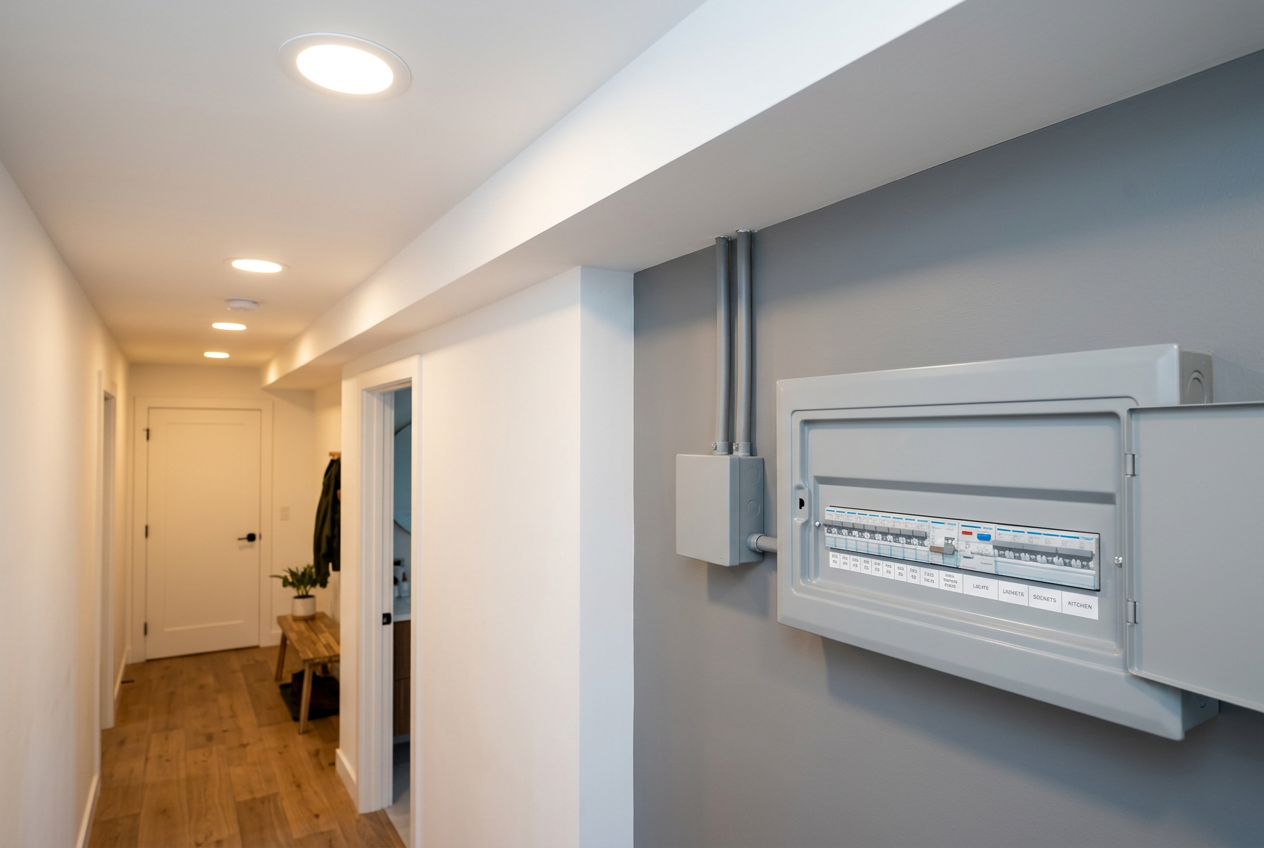
In New Zealand, installing a junction box in a ceiling space touches on restricted electrical work — meaning most of the actual wiring connections must be carried out by a licensed electrician. That said, understanding the process helps you work safely alongside a professional, or handle the non-electrical preparation yourself.
What Is a Junction Box and Why Is It Used?
A junction box (sometimes called a jointing box or terminal box) is an enclosure used to safely connect or splice electrical cables. In ceiling spaces, they're commonly used to extend circuits, connect lighting runs, or tidy up cable joins that would otherwise be left exposed. All joins inside must be enclosed — leaving bare cable joins in a ceiling space is both a safety hazard and a breach of the NZ Building Code.
NZ Law: What Is Restricted Electrical Work?
Under the Electricity Act 1992 and its regulations, restricted electrical work (REW) must be performed by — or under the direct supervision of — a registered electrician. This includes:
- Connecting cables to a junction box
- Any work on fixed wiring in walls, ceilings, or roof spaces
- Installing or altering any part of a household wiring system
The Electrical Workers Registration Board (EWRB) maintains the register of licensed electricians and outlines exactly what work is restricted. Doing REW yourself as a homeowner is illegal and can void your home insurance, create fire hazards, and result in fines.
What a Homeowner CAN Do
You are generally permitted to:
- Access the ceiling space to assess the situation
- Clear insulation away from the work area (carefully — see safety notes below)
- Purchase materials such as the junction box itself
- Prepare cable pathways if no live wiring is involved
Always confirm with your local council or a licensed electrician if you're unsure whether a specific task crosses into restricted work.
Choosing the Right Junction Box
For ceiling installations, use a junction box that is:
- Rated for the circuit voltage and current (typically 230 V / 10 A or 20 A for NZ domestic circuits)
- Enclosed with a secure lid — open joins are not permitted
- Suitable for the environment (standard plastic enclosures are fine for dry ceiling spaces; use IP-rated boxes near bathroom ceiling spaces where moisture may be present, in line with NZ Building Code clause G12)
- Compliant with relevant NZ/Australian standards — look for products meeting AS/NZS 3000 (the Wiring Rules)
You'll find suitable junction boxes at Bunnings, Mitre 10, or PlaceMakers.
How a Licensed Electrician Will Install It
While the actual wiring is your electrician's job, it helps to understand the process:
- Isolate the circuit — the electrician will switch off and lock out the relevant circuit breaker before any work begins.
- Route cables — cables are run to the junction box location, with enough slack to make neat, secure connections.
- Make connections — wires are joined using terminal blocks or approved connectors inside the box. Twisting wires together and taping them is not acceptable under AS/NZS 3000.
- Secure the box — the junction box is fixed to a joist, batten, or purpose-made bracket so it can't move and is accessible for future inspection.
- Label and document — a Certificate of Compliance (CoC) is issued by the electrician for all restricted electrical work. Keep this document — you'll need it if you sell your home.
Working Safely in a Ceiling Space
If you're accessing the ceiling space yourself for preparation work, follow these precautions:
- Never assume cables are dead. Treat all cables as live until a licensed electrician has confirmed otherwise.
- Watch for asbestos — homes built before the mid-1980s may have asbestos-containing materials in the ceiling space. If in doubt, have the area tested before disturbing anything. Check WorkSafe NZ for guidance on asbestos identification.
- Wear a dust mask and eye protection — ceiling insulation (particularly fibreglass or polyester batts) can irritate skin, eyes, and lungs.
- Step only on joists, never on the ceiling lining itself — plasterboard and fibre cement will not support your weight.
- Use adequate lighting — a head torch keeps both hands free.
- Watch for heat sources — keep clear of flue pipes and recessed downlights, which can be extremely hot.
Building Consent Considerations
For straightforward like-for-like repairs or minor circuit extensions, a building consent is generally not required — but the electrical work still requires a CoC. If you're doing more significant alterations (e.g., adding a new circuit as part of a renovation), check with your local council about consent requirements. MBIE Building Performance has useful guidance on Schedule 1 exemptions.
When to Call a Professional
You should always engage a licensed electrician for:
- Any wiring connections inside or leading to the junction box
- Diagnosing faults in existing ceiling wiring
- Any work near bathroom or kitchen ceiling spaces (moisture-affected zones)
- Situations where you discover damaged, burnt, or deteriorated wiring
A qualified local electrician will complete the work safely, issue the required CoC, and ensure your home meets the NZ Wiring Rules. You can find licensed electricians in your area on tradedirectory.co.nz.

 Site Safe
 Licensed Electrical Inspector







