See the latest posts from tradesmen around the country
DIY AnswersElectrician

How to Safely Connect a Portable Generator to Your Home

Connecting a generator to your home involves strict safety rules and NZ electrical law. Here's what you can and can't do yourself.

How to Safely Connect a Portable Generator to Your Home

Connecting a portable generator to your home can keep the lights on during a power cut, but it must be done correctly — both for your safety and to comply with New Zealand electrical law. The short answer is: you can run appliances directly from a generator using extension leads, but any permanent or semi-permanent connection to your home's wiring must be carried out by a licensed electrician.

Why This Is Serious — Backfeed and Electrocution Risk

The biggest danger when connecting a generator to household wiring is backfeed — where electricity generated by your unit travels back along the lines to the street, potentially electrocuting line workers who believe the network is de-energised. This is not a theoretical risk; it has caused deaths. Even a brief, accidental backfeed can be fatal to someone working on the network nearby.

For this reason, WorkSafe NZ and MBIE Building Performance take generator wiring very seriously, and New Zealand's electrical regulations are clear on what is and isn't permitted.

What the Law Says: Restricted Electrical Work

Under the Electricity Act 1992 and associated regulations, any connection of a generator to fixed household wiring is restricted electrical work. This means it must be designed, carried out, and certified by a registered electrician — someone registered with the Electrical Workers Registration Board (EWRB).

Doing this work yourself, or hiring an unregistered person, is illegal and could void your home insurance. Always ask to see your electrician's current practising licence.

The Safe, Legal Options

Option 1: Direct Plug-In with Extension Leads (DIY — Safe and Legal)

The simplest and safest approach is to run appliances directly from the generator using heavy-duty, outdoor-rated extension leads. This requires no connection to your home's wiring at all.

  • Plug appliances (fridges, lamps, phone chargers) directly into the generator's outlets
  • Use leads rated for the load — check the amperage and wattage ratings on both the lead and the appliance
  • Keep the generator outdoors at all times — never run it in a garage, shed, or enclosed space due to carbon monoxide risk
  • Position it at least one metre from windows, doors, and vents
  • Use a residual current device (RCD) on the lead for added protection

Option 2: Transfer Switch (Requires a Licensed Electrician)

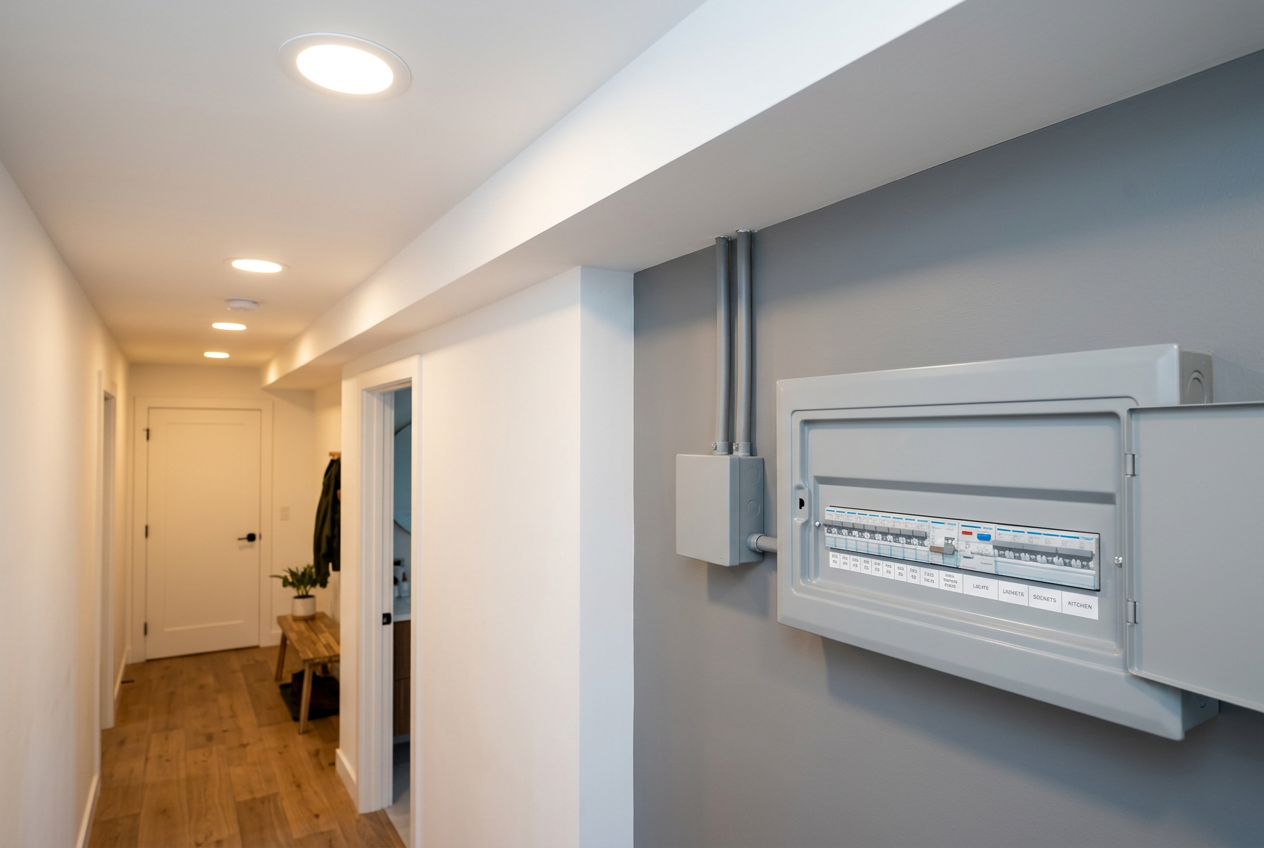
A manual or automatic transfer switch is the correct, legal way to connect a generator to your home's switchboard. The transfer switch physically disconnects your home from the network before connecting the generator, eliminating backfeed risk entirely.

  • A manual transfer switch requires you to flip a switch before starting the generator
  • An automatic transfer switch (ATS) detects a power outage and switches over automatically
  • Your electrician will install the switch at your switchboard and may need to obtain a building consent or notify your lines company — check with your local council and electrician, as requirements vary
  • Once installed, your electrician issues a Certificate of Compliance (CoC), which is your legal proof the work was done correctly

Option 3: Interlock Kit (Requires a Licensed Electrician)

A generator interlock is a mechanical device fitted to your switchboard that prevents the main breaker and generator breaker from being on at the same time. It's a lower-cost alternative to a full transfer switch but still requires installation by a registered electrician.

Sizing Your Generator Correctly

Before buying or hiring a generator, work out what you need to power. A rough guide:

ApplianceApproximate Running Watts
Fridge/freezer150–400 W
LED lighting (per circuit)50–200 W
Chest freezer100–300 W
Sump pump750–1,500 W
Electric kettle2,000–3,000 W

Note that many appliances (especially motors) have a higher starting (surge) wattage than their running wattage — your generator must handle both. A licensed electrician or generator supplier can help you size the unit correctly.

Generator Safety Essentials

  • Never run a generator indoors or in an attached garage — carbon monoxide is odourless and can be fatal within minutes
  • Store petrol safely in an approved container, away from the generator and your home
  • Allow the generator to cool before refuelling
  • Check the oil level before each use
  • Test your generator before an emergency, not during one
  • Keep a working carbon monoxide detector inside your home — available from hardware stores
  • Earthing: your electrician will ensure the generator is correctly earthed as part of any fixed installation

Notify Your Lines Company

If you're having a transfer switch installed, your electrician will typically notify your local lines company (e.g. Vector, Orion, Unison, PowerNet). This is standard practice and ensures network operators know a generator connection exists at your property.

When to Call a Professional

Call a registered electrician for any of the following:

  • Installing a transfer switch or interlock at your switchboard
  • Running a dedicated circuit or outlet for a generator
  • Assessing whether your switchboard is suitable for a generator connection
  • Any work that involves opening your switchboard or modifying fixed wiring

You can find qualified, local electricians on tradedirectory.co.nz. Always confirm they are registered with the EWRB before work begins.


Frequently Asked Questions

Can I connect a generator to my house myself in New Zealand?+

You can plug appliances directly into a generator using extension leads — that's perfectly legal and safe. However, any connection to your home's fixed wiring (such as installing a transfer switch or interlock) is restricted electrical work under NZ law and must be done by a registered electrician. Doing it yourself is illegal and could void your insurance.

What is a transfer switch and do I need one?+

A transfer switch is a device installed at your switchboard that safely disconnects your home from the power network before connecting your generator. It prevents dangerous backfeed to the lines. If you want to power circuits in your home (rather than just plugging appliances directly into the generator), a transfer switch or interlock is the legal and safe way to do it — and it must be installed by a licensed electrician.

How far away from the house does a generator need to be?+

As a general guide, keep your generator at least one metre away from windows, doors, and vents to prevent carbon monoxide from entering your home. Never run a generator inside a house, garage, or any enclosed space — CO poisoning can be fatal very quickly. Check the manufacturer's instructions for the specific clearance requirements for your model.

Do I need a building consent to install a generator transfer switch?+

This depends on your local council and the nature of the installation. Some transfer switch installations may be exempt under Schedule 1 of the Building Act, but you should confirm this with your local council before work begins. Your licensed electrician will also need to issue a Certificate of Compliance (CoC) for the electrical work regardless of consent requirements.

What size generator do I need to run my house during a power cut?+

It depends on what you want to power. A small 2–3 kVA generator can run a fridge, some lights, and charge devices. To power more circuits or larger appliances, you may need 5 kVA or more. Remember that motors (like pumps and fridges) draw higher wattage on start-up than when running. A licensed electrician or generator supplier can help you calculate the right size for your needs.

Need a Electrician?

Find qualified electricians near you in our directory.

Find a Electrician →

Electricians Near You

Mark Swords Electrical Ltd logo

Electrician

5.0(138)

Auckland, Auckland

Mark Swords Electrical Ltd is a fully registered master electrician company based in Auckland, offering residential, commercial, and industrial electrical services. They specialise in installations, maintenance, data communications, thermal imaging, and EV charger installation across Auckland.

  • Site Safe
  • Licensed Electrical Inspector
  • Master Electricians
  • Master Electricians member
Tech Electrical Ltd logo
Tech Electrical Ltd BOOSTED Verified

Electrician

5.0(9)

Auckland, Auckland

Tech Electrical Ltd is a registered and insured electrician business based in Auckland, specialising in residential and commercial electrical services. They offer switchboard upgrades, EV charger installation, data cabling, lighting, security systems, smart home automation, and maintenance across South Auckland.

  • Registered Electrician
Able Whiteware Services Ltd logo

Electrician

4.8(109)

Levin, Manawatū-Whanganui

Able Whiteware Services Ltd is an authorised appliance repair centre based in Levin, Manawatū-Whanganui. Since 1999, they have provided repairs for washing machines, fridges, dishwashers, ovens, and rangehoods, backed by genuine parts and a 12-month warranty.

Ampere Electrical logo

Electrician

Christchurch, Canterbury

Ampere Electrical is a Christchurch-based electrician specialising in residential, commercial, exterior, and architectural electrical projects. They focus on quality workmanship, safety, and clear communication throughout all stages of their work.

Tuakau Auto Electrical logo

Electrician

Auckland, Auckland

Auto Electrical Repairs Pukekohe deals with all jobs - no auto electrical repair job is too big or small. Pukekohe Auto electrical is owned by Aaron Maitland. Originally from the Papakura/Drury area, he and his family have been living locally in Pukekohe for 15 years now.

BP Electrical & Refrigeration logo

Electrician

Mount Maunganui, Bay of Plenty

Electrical -One Tree Point-Ruakaka-Waipu- comercial-domestic-breakdowns-maintenance work-heat pump install-refrigeration

  • Master Electricians
  • Master Electricians member

Electrical Supplies Stores Near You

Stock up for this job — electrical supplies suppliers and stores, with address, phone and email.

Lees Tech logo

Lees Tech

Rosedale, Auckland, Auckland

Electrical Supplies
Nexgear Ltd logo

Nexgear Ltd

Ponsonby, Auckland, Auckland

Electrical Supplies

Technology for you — carefully chosen tech, delivered fast across Aotearoa, backed by real Kiwi support.

Beyond Hardware logo

Beyond Hardware

Warkworth, Warkworth, Auckland

Electrical Supplies

Since 2001, we’ve designed and delivered lighting for the world’s most discerning hotels and residences across New Zealand, Australia, and beyond

Solar Signs logo

Solar Signs

Taharoto Road, Takapuna, Auckland

Electrical Supplies
Techstyle Ltd logo

Techstyle Ltd

Kumeu, Auckland, Auckland

Electrical Supplies
Mechtronics Ltd logo

Mechtronics Ltd

Forrest Hill, Auckland, Auckland

Electrical Supplies

Mechtronics Limited is a supplier and integrator of CNC control, motion control systems, servo drives, servo motors, inverters, and PLCs—serving the machine tool market and related engineering industries. Whatever motor needs to be controlled—AC or DC servo, or any induction motor—Mechtronics Limited has the right drive to do it.

Browse all electrical supplies suppliers →
Last updated: Last reviewed:

The information on this page is provided as a general guide only. Kiwi Trade Directory makes no representations or warranties regarding the accuracy, completeness, or suitability of this information for your specific situation. Costs, timeframes, and recommendations vary significantly depending on your location, property, and individual circumstances. Always obtain multiple quotes from qualified tradespeople and seek independent professional advice before undertaking any home improvement or building work. Kiwi Trade Directory accepts no liability for any loss or damage arising from reliance on the information provided on this site.